

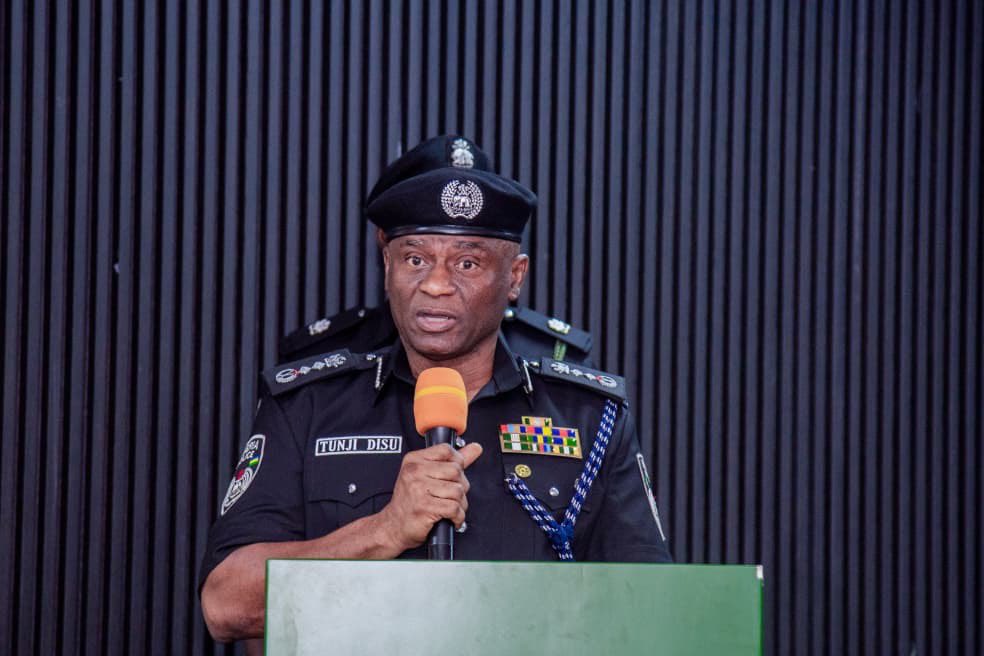
The Inspector-General of Police, Olukayode Egbetokun, has warned politicians against recruiting, arming, financing or inciting Nigerian youths to perpetrate violence ahead of the 2027 general elections.
Egbetokun issued the warning on Thursday at the National Youth Leadership and Security Dialogue organised by the Nigeria Police Force to mark International Youth Day 2026.
He urged political leaders across party lines not to use young Nigerians to advance their political interests, warning that the consequences of electoral violence would be borne by the youths long after politicians had settled their differences.

“I therefore appeal to political leaders and actors across the political spectrum: do not recruit our young people to fight your political battles. Do not arm them. Do not finance violence. Do not incite them against their fellow citizens. Do not encourage them to commit crimes today and promise to protect them tomorrow,” he said.
The police chief said the warning was particularly important as the country approaches the 2027 electoral cycle.
According to him, politicians could reconcile after elections, but victims of political violence who lose their lives would not have the opportunity to benefit from such reconciliation.
“Politicians contest elections, but you live with the consequences of those elections. When the campaign is over, political actors may reconcile. When political rivals disagree, they may eventually shake hands. But the young Nigerian who loses his or her life to electoral violence does not return home,” he said.
Egbetokun assured Nigerians that the police would protect their constitutional rights to participate in political activities, support political parties and campaign for candidates, provided such activities remained peaceful and lawful.
He, however, warned that the police would not allow political activities to be used as a cover for criminal conduct.
“We will not protect violence. We will not tolerate the recruitment or mobilisation of young Nigerians for political violence. We will not tolerate the possession or use of weapons for electoral purposes, attacks on political opponents, intimidation of voters, destruction of public or private property, or any other criminal conduct disguised as political participation,” he said.
He stressed that anyone who violated the law would face the consequences regardless of political affiliation.
The IGP also drew attention to the growing role of digital platforms in political conflicts, warning that electoral violence could now be triggered or amplified online.
He listed misinformation, disinformation, hate speech, cyberbullying, impersonation, deepfakes, online intimidation and coordinated digital attacks among the emerging threats to Nigeria’s democratic process.
According to him, such activities could damage reputations, inflame communities, trigger physical violence and undermine public confidence in democratic institutions.
Egbetokun therefore urged young Nigerians to verify information before sharing it and consider the potential consequences of their online activities.
“Before you forward a message, verify it. Before you publish an allegation, establish the facts. Before you attack someone online, remember that there is a human being behind the screen,” he said.
He called on youths to participate actively in the democratic process without allowing themselves to be used for violence, misinformation or online intimidation.
“Do not allow yourself to be recruited for violence. Do not carry a weapon for anybody’s political ambition. Do not become an instrument of misinformation, hate or digital intimidation. Participate actively, peacefully and lawfully in our democracy,” Egbetokun said.
The IGP said the police would continue to work with young Nigerians to prevent violence, combat cybercrime, promote responsible digital citizenship and encourage peaceful participation in elections.
He added that maintaining security was a collective responsibility involving law enforcement agencies, government, civil society, the private sector and other stakeholders.

- APC mocks Obi over claim of victory without evidence - October 9, 2026
- Nigerian Army graduates new Special Forces battalion to tackle terrorism - October 9, 2026
- Court remands terrorist over 170 AK-47 rounds in Kuje prison - October 9, 2026