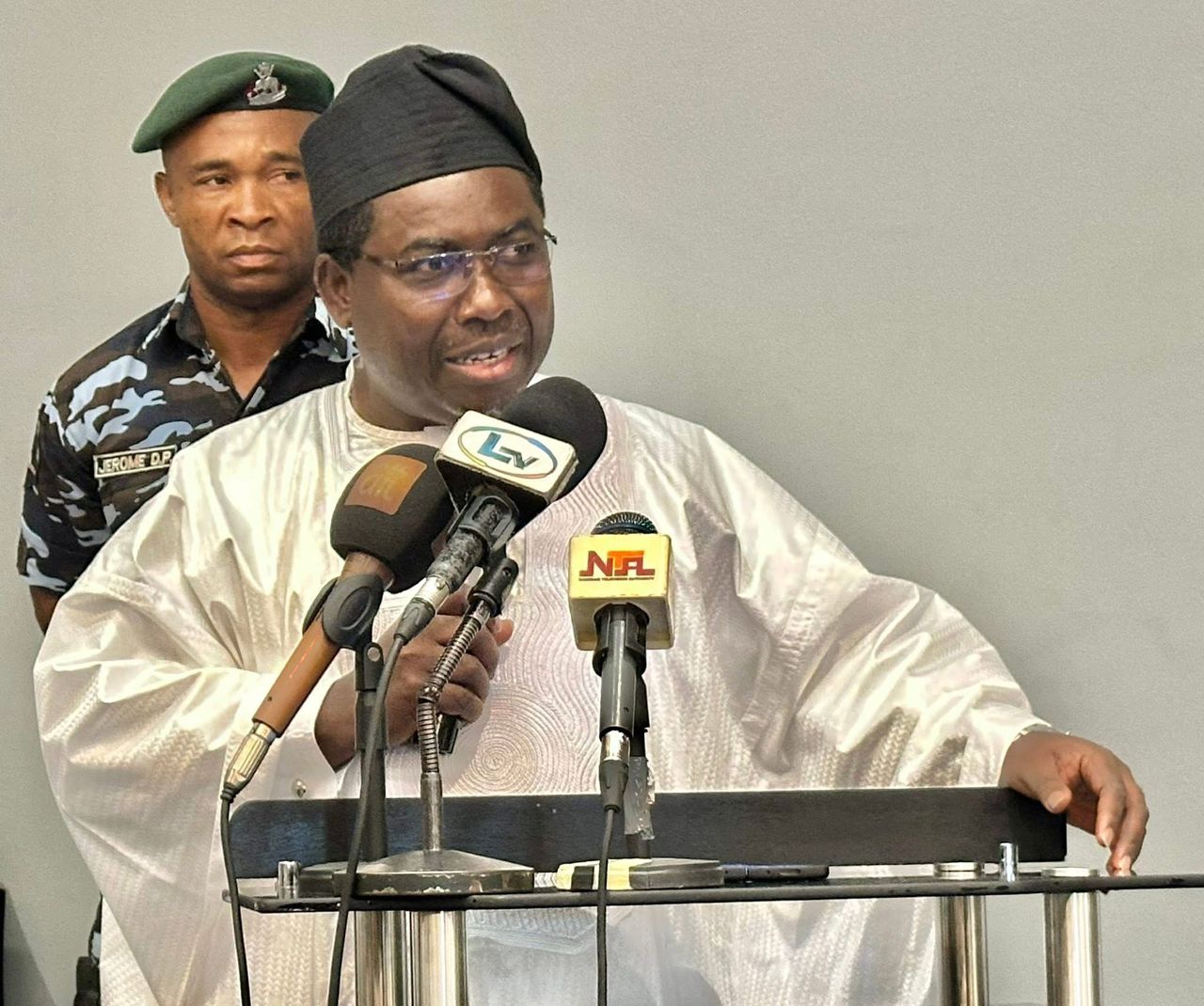

The Chairman of the Independent National Electoral Commission (INEC), Prof. Joash Amupitan, has assured Nigerians that the commission has the capacity to electronically transmit election results in 2027, but cautioned that it cannot guarantee a “100 per cent perfect election.”
Amupitan gave the assurance on Sunday during the Citizens’ Town Hall programme aired live on major television networks and themed, ‘Electoral Act 2026: What it Means for Your Votes and the 2027 Elections.’ The session was moderated by broadcaster Seun Okinbaloye and the Executive Director of Yiaga Africa, Samson Itodo.
Other participants included the National Chairman of the All Progressives Congress, Nentawe Yilwatda; the Interim National Chairman of the Labour Party, Nenadi Usman; former Minister of Education Oby Ezekwesili; and Senator Ireti Kingibe, among others.

Appealing to Nigerians to manage expectations, Amupitan said INEC would strive to deliver its best performance yet, though perfection may be unattainable.
“Nigerians desire a perfect election, and INEC will strive as much as possible to give this country the best election. However, we may not be able to achieve a 100 per cent perfect election for now,” he said.
On electronic transmission of results, a contentious issue since the 2023 general elections, the INEC chairman reiterated that the commission has the capacity to transmit results, though real-time transmission remains a challenge in some locations.
He cited the recent Federal Capital Territory Area Council elections as an example, explaining that while results from five of the six area councils were transmitted promptly, one ward in Kuje Area Council experienced delays due to poor terrain and network limitations.
According to him, polling officials deployed to Kabi ward were unreachable for hours due to lack of network coverage, and the results were eventually physically conveyed and collated the following day.
“I don’t see transmission as the core problem. From my experience in the last four months, the issue is not the network itself but the adequacy of the network in certain areas,” he explained.
Amupitan stressed that election credibility is closely tied to logistics, warning that operational lapses can erode public trust.
“Your election can only be as good as your logistics. Where there is logistics failure, you are beginning to fail,” he said, while admitting that the FCT poll witnessed some logistical and human errors that the commission is already addressing.
Despite the challenges, he expressed optimism that the 2027 elections would surpass previous polls, citing increased voter awareness and growing demand for accountability.
He described elections as the lifeblood of democracy and underscored the need for voter education and institutional transparency to strengthen public confidence.
Meanwhile, INEC has commenced a comprehensive review of its regulations and guidelines for political parties to align them with the Electoral Act 2026 ahead of the 2027 general elections.
In a statement issued by the Chief Press Secretary to the INEC chairman, Adedayo Oketola, the commission said the review workshop in Abuja involves national commissioners, directors, legal experts, election administrators and other stakeholders.
The exercise aims to strengthen oversight of political parties, improve compliance culture, reduce pre-election disputes and enhance transparency in candidate nomination processes, financial disclosures and internal party democracy.
Technical support for the review is being provided by the Westminster Foundation for Democracy. Its Nigeria Country Director, Adebowale Olorunmola, described the process as a significant step toward reinforcing democratic standards.
The commission noted that the Electoral Act 2026 introduces major changes affecting party administration, compliance obligations and dispute resolution mechanisms, necessitating updates to its subsidiary regulations.
At the conclusion of the review, a consolidated draft of the Revised Regulations and Guidelines (2026 Edition) will undergo internal validation before consultations with the Inter-Party Advisory Council and registered political parties.
In compliance with the new law, the Peoples Democratic Party and the African Democratic Congress have commenced nationwide digital membership registration exercises. The ruling APC is also considering reopening its e-registration portal to accommodate more members.
INEC had earlier scheduled the 2027 Presidential and National Assembly elections for February 20, 2027, and the Governorship and State Assembly elections for March 6, 2027. However, following concerns that the dates coincided with the Ramadan period, the timetable was revised.
Under the updated schedule, Presidential and National Assembly elections will now hold on January 16, 2027, while Governorship and State Assembly elections are slated for February 6, 2027.
INEC reaffirmed its commitment to continuous reform and pledged to deliver what Amupitan described as Nigeria’s “best election yet” in 2027, even as he maintained that perfection remains a work in progress.

- LIN glitch threatens 700,000 Ogun students’ WASSCE - March 2, 2026
- 2027 polls won’t be perfect — INEC chair - March 2, 2026
- Global markets brace for oil shock after US–Israel strikes - March 1, 2026