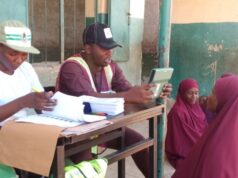



The National Human Rights Commission (NHRC) has raised alarm over Nigeria’s escalating internal displacement crisis, identifying Benue and Borno as the states most affected between February and April 2025.
During the launch of Nigeria’s first Human Rights Internal Displacement Dashboard and the presentation of its monthly human rights review in Abuja, NHRC Executive Secretary, Chief Tony Ojukwu (SAN), decried the worsening conditions of internally displaced persons (IDPs) across the country.
“This goes beyond statistics — it reflects the daily struggles of Nigerians who feel abandoned and unheard,” Ojukwu stated, highlighting the increasing normalization of suffering in the country.

Police beef up security in worship centres as bandits write Ondo church
According to NHRC data, April 2025 alone saw 44,295 individuals displaced, including 5,953 households and more than 20,000 children.
Key drivers of displacement included armed conflict, sexual violence, and environmental disasters such as flooding.
One major disaster highlighted was the recent flood in Mokwa, Niger State, described as the worst since the catastrophic 1996 flood that claimed over 200 lives.
Ojukwu emphasized the need for proactive disaster preparedness and response systems to mitigate such crises.
The newly launched Displacement Dashboard, developed in partnership with the United Nations High Commissioner for Refugees (UNHCR), provides real-time data on IDPs, refugees, asylum seekers, and returnees. It also maps out the human rights challenges they face.
In the first quarter of 2024, the NHRC received more than 1,460 complaints from displaced persons.
In May alone, it documented 275,256 human rights complaints nationwide, with the Northwest region accounting for 81,495 — the highest recorded.
“What’s most disturbing is our collective desensitization to human suffering.
“We cannot continue to treat this as normal — we must demand action and accountability,” Ojukwu urged.
The NHRC also announced a new partnership with the Human Rights Commission and the Ability Life Initiative to advance the rights and inclusion of persons with disabilities in Nigeria.
Despite existing legislation, Ojukwu noted that over 35 million Nigerians with disabilities still face systemic exclusion and limited access to opportunities.
“This initiative is about genuine inclusion — integrating persons with disabilities into all aspects of national life,” he said.
He called on government bodies, civil society organizations, and development partners to leverage the dashboard’s data to create impactful policies, ensure accountability, and uphold the rights of Nigeria’s most vulnerable populations.

- Low turnout recorded in Kano by-election - September 19, 2026
- Anambra reviews 180 criminal cases over land disputes - September 19, 2026
- Bandits demand N30m ransom for six Zamfara clerics - September 19, 2026