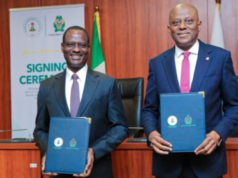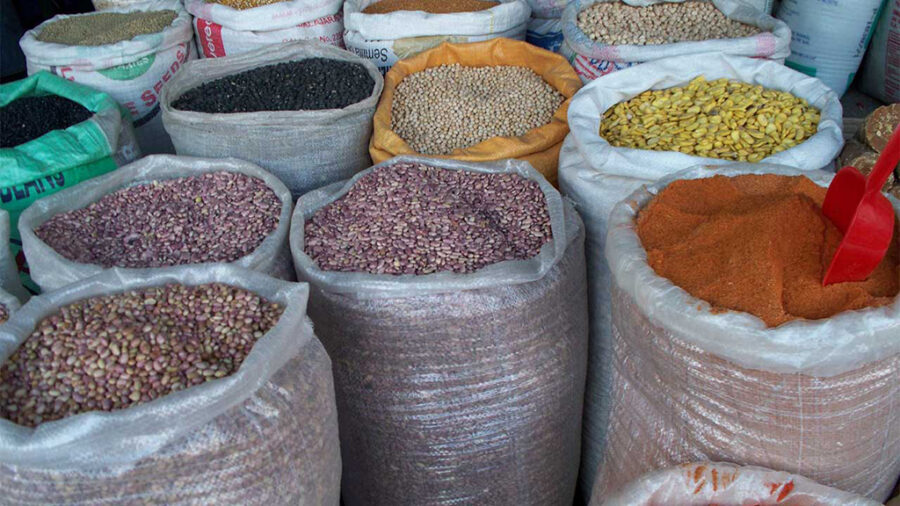
The Minister of Agriculture and Food Security, Abubakar Kyari, says Nigeria spends $10 billion annually on agro-imports, including wheat and fish.
The minister disclosed this at First Bank’s 2025 Agric and Export Expo in Lagos on Tuesday, August 18, 2025.
Kyari who decried the rising rate of agro-imports stressed the need for more financing of agro activities to boost local exports.
Kyari, who was represented at the event by his Special Adviser, Ibrahim Alkali, harped on the importance of increasing financing for the nation’s agriculture sector to boost food export revenue generation.
He said: “Nigeria spends over $10 billion annually importing food such as wheat, rice, sugar, fish and even tomato paste.
“Agriculture already contributes 35 per cent of our Gross Domestic Product and employs 35 per cent of our workforce.
“We sit on 85 million hectares of urban land with a youth population of over 70 per cent under the age of 30, yet Nigeria accounts for less than 0.5 per cent of global exports.
Abakaliki residents, businesses fume over 3-month blackout
“However, Nigeria earns less than $400 million from agro exports. To build a non-oil export economy, we must rethink how we finance agriculture.”
The minister reiterated the Tinubu administration’s stance on ensuring food sovereignty of the country, while insisting on increased financing of agriculture.
“President Tinubu’s administration has made it clear that food sovereignty is the goal. Nigeria must not only feed itself, but to do on its own terms, free from excessive dependency on imports.
“Sovereignty means ensuring that no Nigerian goes hungry because of shocks in global food supply chain, allowing every community to stand on the strength of our land, our people and our productivity.
“Boosting domestic production and building support for exports are not separate agenda. They are two sides of the same coin.
“We have the land, the labour, and the markets, but we lack the system of financing, value addition and infrastructure that converts potential into prosperity.
“The fundamentals compel that we pilot from dependence on oil rigs to resilience in food and export earnings from rural commodity exports to value-added agribusiness.
“From fragmented farmer credit to structured financial systems that attract significant capital and from stereotyped perceptions to improved participation of youth in the agricultural sector.”

- Trump bans CNN, 2 other media outlets from White House - September 18, 2026
- Navy uncovers illegal refining site in Rivers, recovers 119,850 litres of crude oil - September 18, 2026
- Otuaro urges academic excellence as 31 PAP scholarship beneficiaries depart for UK - September 18, 2026