


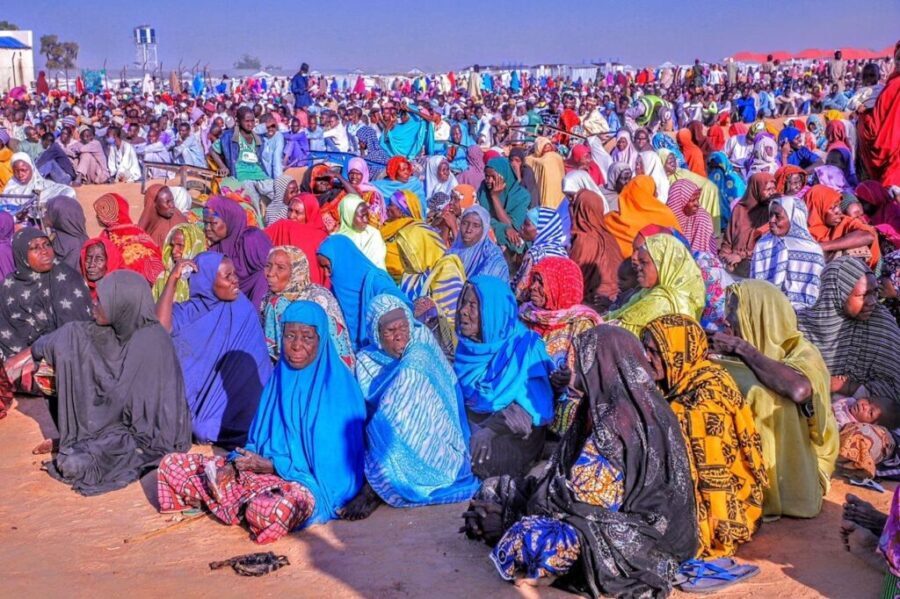
The World Food Programme (WFP) has revealed that about 673 million people, representing nearly 8% of the global population, are suffering from hunger.
Ahead of the 2025 World Food Day on Thursday, October 16, the UN agency said export restrictions, tariffs, inflation, and volatile commodity prices are making food less affordable, especially in low-income and food-deficit countries.
The WFP listed Nigeria as one of the eight countries facing acute food insecurity, adding that out of the nearly 700 million people who live in extreme poverty globally, two-third resides in Sub-Saharan Africa.

Other countries facing acute food insecurity are Somalia, Sudan, South Sudan, Mali, Burkina Faso, the Democratic Republic of the Congo, and Ethiopia.
“Somalia, Sudan, South Sudan, Mali, Burkina Faso, the Democratic Republic of the Congo (DRC), Nigeria, and Ethiopia all face acute food insecurity driven by a combination of conflict, droughts, floods and desertification,” it said.
The WFP said conflict, climate change and inequality were all playing roles in the development, adding that there were also other reasons for food insecurity.
Reps summon CBN gov, bank CEOs over excessive charges
It said armed conflicts such as those in Ukraine, Sudan and Gaza disrupt food production, supply chains and access to markets.
“This leads to the displacement of people, creating acute food insecurity for millions,” the agency added.
WFP also said that increasing climate variability, including droughts, floods and heat waves, were all affecting ability of farmers to grow food.
It said: “This undermines agricultural productivity and food availability, especially in vulnerable regions.
“Global and regional economic downturns, rising food and energy prices and inflation have combined to reduce purchasing power and access to nutritious food, particularly in low-income countries.
“The COVID-19 pandemic, the war in Ukraine and climate shocks all contributed to food prices surges between 2020 and 2024.
“As food prices rose, real wages fell and inflation kicked in, people, especially in low-income countries, were less able to afford nutritious food and often ate fewer meals per day.”
It said wars in Ukraine, Sudan, and Gaza have disrupted food production and supply chains, while droughts, floods, and heat waves continue to undermine agricultural output.

- FAAC shares N2.338trn August revenue to FG, States, LGs - September 17, 2026
- Gunmen kill Police Inspector at commissioner’s residence in Imo - September 17, 2026
- ‘His supporters struggling for answer’: Again, Presidency dares Obi to address Anambra debt claims - September 17, 2026