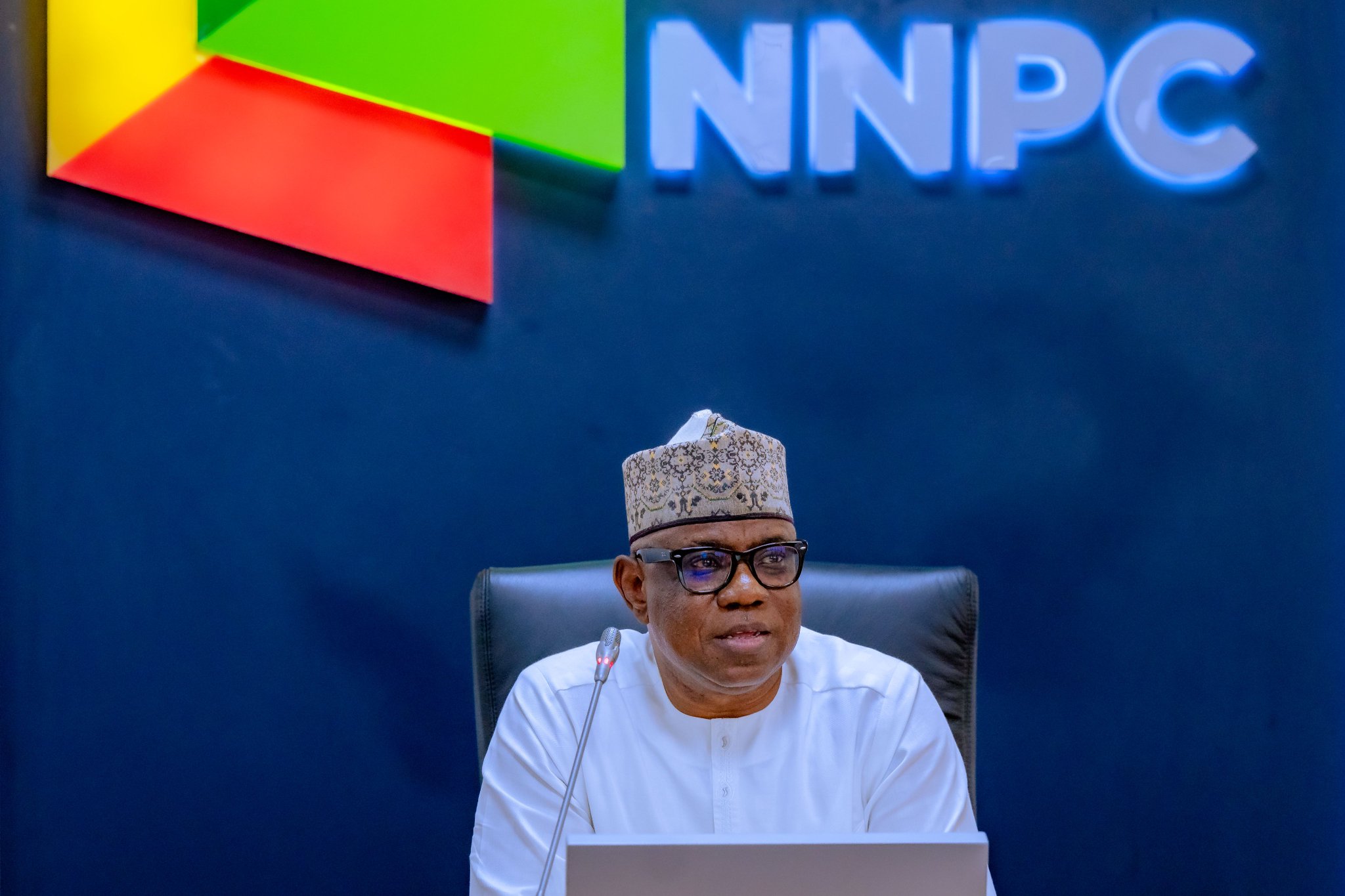
The Nigerian National Petroleum Company (NNPC) Limited says Nigeria remains on track to grow crude oil production to two million barrels per day (bpd) by 2027 and three million bpd in 2030.
The Executive Vice President, Upstream, NNPC Limited, Udy Ntia, made this known at the ongoing 2025 Abu Dhabi International Petroleum Exhibition and Conference (ADIPEC) on Monday, November 3, 2025.
ADIPEC, the world’s largest energy exhibition and conference, is being hosted by the Abu Dhabi National Oil Company (ADNOC).
Speaking during the ADIPEC 2025 session “Beyond the Barrel: The Future of Upstream Strategy,” Ntia said its collaborative upstream growth plan was anchored on technology, efficiency, and decarbonisation.
Ntia outlined three key forces shaping the upstream landscape globally and in Nigeria energy transition pressures as industry fragmentation and technological inflection points.
He said innovation, particularly Artificial Intelligence (AI) and digital technologies, would drive efficiency gains and unlock value from mature fields.
NOG energy week: Stakeholders target 3m bpd oil output, gas expansion by 2030
On energy transition and decarbonisation, Ntia said the NNPC Limited and its partners were committed to reducing emissions while maintaining responsible oil production.
He said Africa contributed less than three per cent of global emissions, emphasising that “we can decarbonise and still produce responsibly.”
The NNPC Limited official cited ongoing initiatives such as monetisation and flare reduction, through commercial partnerships and regulatory compliance.
He also listed major gas pipeline projects, including the Nigeria, Morocco Gas Pipeline and links to demand centres in western and northern Nigeria; refinery optimisation and development of hybrid partnerships for co-investment in upstream projects.
“Co-investment is the new round of financing. We are stepping in as co-investors to ensure projects are bankable and decisions are made quickly in a rapidly changing environment,” Ntia stated.

- Man City top EPL after Sunderland thriller as Liverpool beat Bournemouth - September 20, 2026
- APC to Atiku: Explain legal, financial basis of proposed petrol subsidy - September 20, 2026
- FG secures £746m facility to modernise Apapa, Tin-Can ports - September 20, 2026