Barely a month after its launch, Nigeria’s National Education Repository and Databank (NERD) has already recorded over 11,000 academic project submissions, signaling strong adoption of the federal government’s education digitisation initiative.
NERD, a centralised digital platform, stores, manages, preserves, and verifies educational records, publications, and credentials across all tiers of the education system.
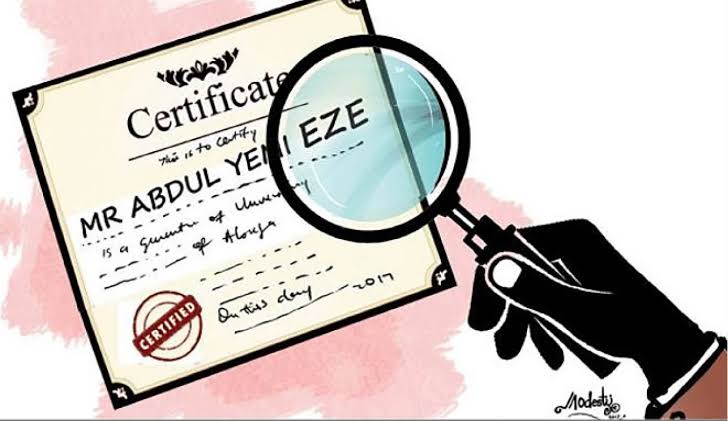
It enables instant certificate authentication and serves as a permanent archive for academic outputs.
Introduced by Education Minister Dr. Tunji Alausa, NERD is a key pillar in the government’s crackdown on academic credential fraud.
More than 40,000 students are now enrolled, and 135 tertiary institutions are integrated into the system for credential verification.
This aligns with the federal government’s October 6, 2025 directive requiring all Ministries, Departments, Agencies, and security formations to verify staff academic certificates, strengthening measures against forgery and fake qualifications.
Analytics from NERD show Ekiti State University leading institutional participation with 990 curated entries, followed by Bayero University, Kano (611) and Auchi Polytechnic, Edo State (532).
Other top contributors include Ambrose Alli University, Osun State Polytechnic, University of Ilorin, and the University of Nigeria, Nsukka.
Science and Innovation dominates thematic submissions with 5,952 entries, followed by Multidisciplinary Studies (2,091) and Engineering and Technology (1,958).
Female students slightly outnumber male participants, with 6,142 submissions against 4,995.
NERD spokesperson Haula Galadima emphasized the platform’s broader impact, noting that it enhances academic supervision quality and transparency.
“Supervisors’ names are permanently linked to each project, visible globally to researchers and industry leaders.
“The system also tracks lecturers’ earned allowances through measurable supervision data,” she said.
NERD is proving to be a decisive tool in modernising Nigeria’s education system and enforcing integrity in academic credentials.

- Bauchi woman stabs husband over belongings - October 25, 2026
- FG releases N38.93bn for 166 tertiary institutions - October 25, 2026
- Ebola: NCDC isolates nine fresh contacts as tracing expands - October 25, 2026