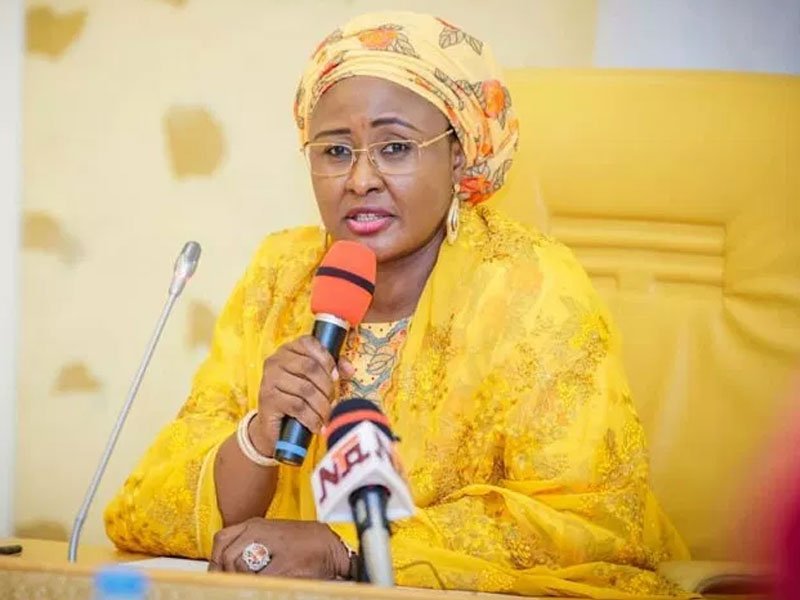
Former First Lady Aisha Buhari has revealed that rumours circulating within the Presidential Villa led her late husband, President Muhammadu Buhari, to briefly believe she planned to kill him, a development she said disrupted his health routine and contributed to the medical crisis that kept him away from office for months in 2017.
Her account is contained in a newly released 600-page biography titled From Soldier to Statesman: The Legacy of Muhammadu Buhari, written by Dr Charles Omole and launched at the State House on Monday.
According to the book, Aisha Buhari said the former president’s illness was neither mysterious nor the result of poisoning, as widely speculated at the time, but stemmed from a breakdown in his long-established nutrition and feeding routine.
She explained that for years she personally supervised Buhari’s meals and supplements, a regimen she said helped manage his long-standing malnutrition-related health challenges. The routine involved carefully timed meals, vitamins, oils and protein supplements, which she described as essential for an elderly man.
The former First Lady said the routine was disrupted after rumours spread within Aso Rock alleging she intended to harm the President.
“They said I wanted to kill him,” the book quotes her as saying. “My husband believed them for a week or so.”
She disclosed that Buhari began locking his room and changing his habits, and that meals were delayed, skipped or stopped altogether, while supplements were discontinued.
“For a year, he did not have lunch. They mismanaged his meals,” she said.
The disruption, she argued, marked the beginning of the health crisis that eventually forced Buhari to take two extended medical trips to the United Kingdom in 2017, spending a total of 154 days away from the country and temporarily handing over power to then Vice President Yemi Osinbajo.
Aisha Buhari said she had earlier convened meetings with key aides, including the President’s physician, the Chief Security Officer, the housekeeper and the Director-General of the State Security Service, to explain Buhari’s dietary needs and feeding schedule after they moved into Aso Villa.
However, the plan gradually collapsed amid fear, suspicion and internal politics, she said.
On his return from medical treatment, Buhari publicly admitted he had never been so ill and confirmed receiving blood transfusions. His prolonged absence at the time fuelled widespread speculation, conspiracy theories and rumours, including claims that he had been poisoned or replaced by a body double.
Mrs Buhari dismissed those claims, insisting that the loss of routine nutrition was the true cause of the crisis.
In London, the book noted, doctors placed Buhari on a more intensive supplement regimen. Initially fearful, he reportedly resisted taking them until his wife intervened, discreetly mixing the supplements into his meals.
She described his recovery as rapid, saying that within days he abandoned the walking stick he had been using and soon began receiving visitors again.
“That was the genesis, and also the reversal of his sickness,” she said.
The book also touches on broader issues surrounding Buhari’s presidency, including allegations of internal mistrust, surveillance and poor communication, which Aisha Buhari said allowed rumours and conspiracy theories—such as the “Jibril of Sudan” body-double claim—to flourish.
Omole noted that Buhari’s reliance on medical care abroad drew criticism but argued that a more sympathetic view acknowledges the limitations of Nigeria’s healthcare system after decades of underinvestment. He also praised Buhari’s decision to formally transfer power during his absences as a demonstration of respect for democratic and institutional norms.

- NDLEA arrests 85-year-old woman, seizes tonnes of cannabis in nationwide raids - October 18, 2026
- Kaduna pays N7bn compensation to 4,865 property owners — Uba Sani - October 18, 2026
- One injured as Abuja five-storey building collapses - October 18, 2026