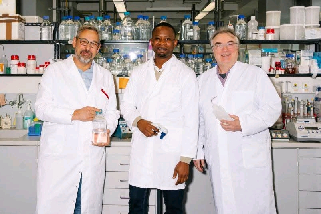
A Nigerian scientist, Dr. Ismaila Francis Yusuf (PhD), has made a major scientific breakthrough that could reshape the understanding and treatment of several diseases.
Dr. Yusuf, currently conducting research in Germany, has discovered a previously unknown cellular quality-control pathway that plays a critical role in maintaining protein integrity within cells.
The findings, published in the prestigious Cell Reports journal under Cell Press, open new possibilities for the treatment of neurodegenerative diseases, cancer and other conditions linked to protein malfunction.

The discovery is the result of years of intensive research focused on how cells repair and manage damaged proteins.
Dr. Yusuf identified a novel pathway known as RADAR, which enhances the efficiency of protein quality control by detecting and eliminating defective proteins before they accumulate and cause cellular damage.
Such protein buildup is a key factor in diseases like Alzheimer’s, Parkinson’s and certain cancers.
“This discovery changes our understanding of cellular quality control,” Dr. Yusuf said.
“While we have long known about mechanisms for protein repair and degradation, this newly identified pathway is more specialized and efficient, with significant implications for disease treatment.”
According to him, the RADAR pathway provides an additional layer of cellular protection by identifying faulty proteins much earlier than previously known systems.
“This early intervention could form the basis for new therapeutic approaches targeting protein misfolding and aggregation.
“This pathway could be crucial in developing treatments for diseases that are currently difficult to manage,” he added.
“By improving how cells handle protein malfunctions, we may be able to slow disease progression and strengthen the body’s natural defense mechanisms.”
Beyond its medical significance, the discovery highlights the growing impact of African scientists on global research.
Dr. Yusuf graduated as the best student of Obafemi Awolowo University, Ile-Ife, in 2013, before moving to Germany, where he earned a master’s degree in molecular medicine and a PhD, graduating with top grades in both programmes.
Reflecting on his journey, Dr. Yusuf described it as both challenging and rewarding, expressing hope that his success would inspire young Africans to pursue careers in science and innovation.
As he continues his research, experts say the discovery marks a significant milestone in molecular cell biology and holds promise for advancing disease therapy worldwide.

- Unity Colleges workers suspend strike over King’s College concession - September 23, 2026
- Former Super Eagles captain Troost-Ekong embraces Islam in Qatar - September 23, 2026
- Military training will give Nigerians ‘different perspective about life’ — Defence Minister - September 23, 2026