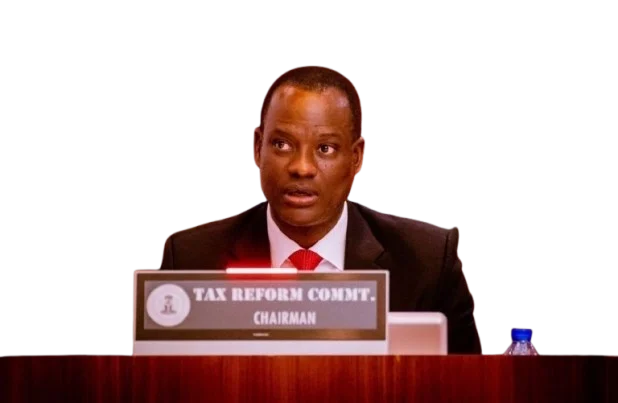
The Chairman of the Presidential Committee on Fiscal Policy and Tax Reforms, Taiwo Oyedele, has disclosed that he has received threats to his life over his involvement in implementing Nigeria’s far-reaching tax reforms.
Oyedele made the revelation in Abuja at a governance colloquium held to mark the 50th birthday of the Special Adviser to the President on Policy and Coordination, Hajiya Hadiza Bala-Usman.
According to him, driving reforms that disrupt entrenched interests demands uncommon courage, especially within a system that has resisted meaningful change for decades.
“Reforms are hard, and tax reforms are even harder. You need courage.
“I receive threats simply for trying to fix a broken system,” Oyedele said.
He identified widespread distrust of government, weak tax compliance and poor understanding of how taxes translate into public services as key challenges confronting the reform process.
Oyedele noted that Nigeria’s tax-to-GDP ratio remains significantly lower than that of comparable countries, making comprehensive reform unavoidable.
He urged supporters of the reforms to be more vocal, warning that silence allows critics to shape public opinion.
He described public trust as the biggest hurdle, explaining that many Nigerians mistakenly believe the reforms introduce new taxes, whereas they are largely aimed at reducing and harmonising existing levies.
“There is suddenly a national awareness, and people think the government has imposed taxes everywhere, when in reality we are reducing what people used to pay and harmonising them,” he said.
Oyedele acknowledged that the reforms carry political, economic and reputational risks but insisted they are necessary for long-term stability.
“What we’ve done with the tax system all my adult life was like using pain relievers. Now we are doing surgery.
“It will be painful, but it is the right thing to do,” he said.
Despite facing online attacks and personal threats, Oyedele expressed optimism, describing the current reform drive as unprecedented and calling on Nigerians to stay committed to the process.
The federal government began enforcing the new tax regime on January 1, 2026, following the introduction of four key laws: the Nigeria Tax Act 2025, the Nigeria Tax Administration Act 2025, the Nigeria Revenue Service Establishment Act 2025, and the Joint Revenue Board Establishment Act 2025.

- Singapore court rejects CEO’s $468,000 claim against ex-girlfriend - September 13, 2026
- Five Islamic clerics abducted after prayer for Tinubu’s re-election in Zamfara - September 13, 2026
- NDLEA intercepts UK Colos shipments, arrests seven in Lagos - September 13, 2026