

Months after surviving deadly Boko Haram attacks and returning to their homes, residents of Kirawa, a border community in Gwoza Local Government Area of Borno State, are grappling with another crisis: lack of access to potable water, forcing them to cross into neighbouring Cameroon daily to meet basic needs.
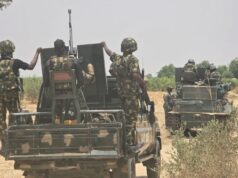
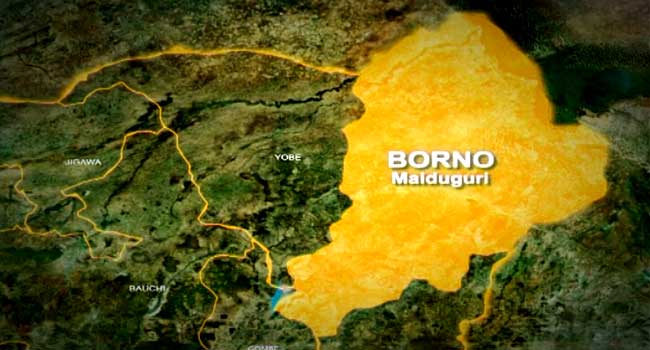
Kirawa, about 128 kilometres from Maiduguri, lies in Borno South and borders Cameroon’s Far North region. The town was attacked twice by Boko Haram in August and October 2025, leaving homes, public facilities and livelihoods destroyed, and displacing thousands of residents.
Although many residents have since returned following assurances of improved security and reconstruction, they say promises by the Borno State Government to provide water, healthcare facilities and roads are yet to be fulfilled.
During a visit to the community after the October 2 attack, in which two people were killed and dozens of houses destroyed, Governor Babagana Zulum pledged to mobilise security forces and approved the construction of hospitals, water facilities and other infrastructure. A statement by his spokesperson described the approvals as “immediate.”
Four months later, however, residents say access to water remains a daily struggle.
Investigations by Arewa PUNCH revealed that women and children, some as young as six, leave their homes as early as 5:30am and again in the evening to fetch water from a tap located just across the Nigerian border in Cameroon, using wheelbarrows and moving in groups for safety.
Hadiza Audu, a resident, described the ordeal as exhausting and humiliating. “Sometimes, people mock us and our government when we go there to fetch water,” she said.
Residents warned that the situation could worsen as schools resume, with children forced to combine long treks for water with school activities. A community member, Mustapha Ahmed, said even teachers face the same hardship, making it difficult to penalise pupils for lateness.
Another resident, Modu Aji, explained that while parts of Kirawa have limited water access, many areas do not. “For some places, it is easier to go to Cameroon than to look for water within Nigeria,” he said.
Confirming the situation, Isah Lawan, son of the village head of Thala Malama in Kirawa, said fetching water from Cameroon had become routine. “We suffer a lot. Every day, we push wheelbarrows across the border just to get water. The promises of water and a hospital are yet to be fulfilled,” he said.
Lawan added that residents whose homes and shops were destroyed during the attacks were also still waiting for promised support. “We believe the governor will still redeem these promises. We are grateful for the peace, but we hope he will not forget us,” he said.
The ward head of Tashan Kirawa, Abubakar Alhaji, popularly known as Babikir, commended the government for restoring security through the deployment of troops and the Civilian Joint Task Force, noting that displaced residents had returned. However, he stressed that water and healthcare remained major concerns, especially after the community’s only health centre was burnt down during the attack.
A teacher at Kirawa UBE Junior Secondary School, Danladi Modu, also appealed for urgent government intervention. “The entire community is facing water challenges. We go as far as Cameroon to fetch water,” he said.
For many residents, the unfulfilled promises were central to their decision to return. Amina Hassan, a mother of two, said access to water should be treated as an emergency. “Security has improved, but what is life without water? How long will we continue crossing the border to fetch water?” she asked.
Efforts to reach the General Manager of the Borno State Rural Water Supply and Sanitation Agency, Dr Mohammed Musa, were unsuccessful as calls and messages were not returned as of press time.
Meanwhile, residents say they are hopeful their community will benefit from the 2026 budget presented by Governor Zulum, which prioritises key sectors including water resources. The Ministry of Water Resources was allocated over N21 billion in the proposed budget.
“We hope Kirawa will be among the beneficiaries,” Amina Hassan said, echoing the community’s plea for relief from a daily struggle that has become a symbol of neglect despite their resilience.

- Bago vows probe as Niger holds prayers for 37 miners who died in custody - September 20, 2026
- Troops rescue two kidnap victims, arrest 11 in Plateau - September 20, 2026
- APC challenges Atiku over proposed petrol subsidy - September 20, 2026