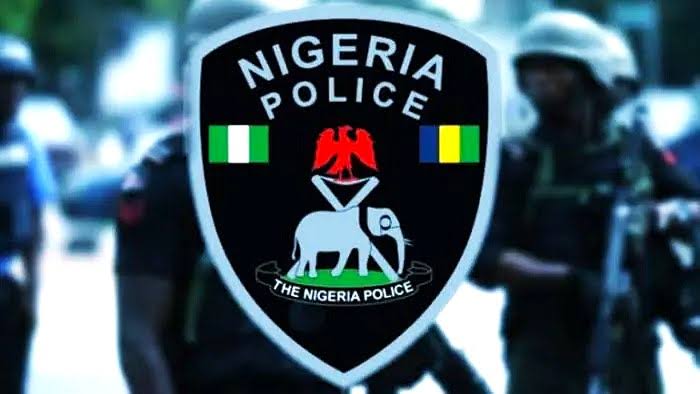
The Nigeria Police Force has stepped up enforcement of its social media policy, sanctioning at least 10 officers in the past month over various violations.
Sources within the Force disclosed that the disciplinary actions range from dismissal and demotion to severe reprimand and demobilisation, following intensified monitoring of officers’ activities on social media platforms.
A senior police officer, who spoke on condition of anonymity on Tuesday, said the Force had increased surveillance to curb unprofessional conduct online.
“The Force is actively monitoring social media platforms and identifying erring officers who are being sanctioned accordingly. So far, 10 officers have been punished. One was dismissed, another demoted, while others received punishments ranging from severe reprimand to demobilisation,” the source said.
One of the latest cases involved a female officer, Anemena Favour, who was demoted from Sergeant to Corporal after conducting a live broadcast on TikTok while dressed in police uniform.
Favour, with force number 068919 and attached to the Special Protection Unit Base 25 in Asaba, Delta State, was found guilty of discreditable conduct and disobedience of lawful orders.
According to the source, she was sanctioned under Paragraphs E(iii) and F of Police Regulation 370, Act 2, Laws of the Federation of Nigeria, 2020, following a review of an orderly-room proceeding by the Department of Finance and Administration at the Force Headquarters in Abuja.
Another source explained that officers who receive severe reprimands would be barred from promotions and certain benefits for a period of six months.
“Such officers will also forfeit additional benefits that may arise within the period. The Force has been sensitising personnel on the social media policy, especially through training programmes at police colleges, to prevent future violations,” the source added.
A copy of the Nigeria Police Force Social Media Policy obtained by TheStar warns against unauthorised use of social media by officers, with limited exceptions based on rank and official duties.
The policy, which contains 18 sections, allows police personnel and auxiliary staff to use social media platforms of their choice but under strict guidelines, restrictions and exceptions.
It states that all police officers are prohibited from directly or indirectly identifying themselves as police officers on social media, except when expressly authorised.
Those permitted to do so include the Inspector-General of Police; Zonal Assistant Inspectors-General and State Commissioners of Police; the Force Public Relations Officer; Zonal and State Police Public Relations Officers; PPROs of police training institutions and formations; and the officer in charge of the Complaint Response Unit.
Efforts to reach the Delta State Police Public Relations Officer, Bright Edafe, were unsuccessful, as calls to his phone went unanswered and a text message had not been replied to as of the time of filing this report.
Attempts to contact the Force Public Relations Officer, Benjamin Hundeyin, were also unsuccessful.
Concerns over the public display of police officers on social media have grown in recent years, with viral videos and live broadcasts involving officers in uniform often sparking public debate and disciplinary action by the authorities.

- Bago vows probe as Niger holds prayers for 37 miners who died in custody - September 20, 2026
- Troops rescue two kidnap victims, arrest 11 in Plateau - September 20, 2026
- APC challenges Atiku over proposed petrol subsidy - September 20, 2026