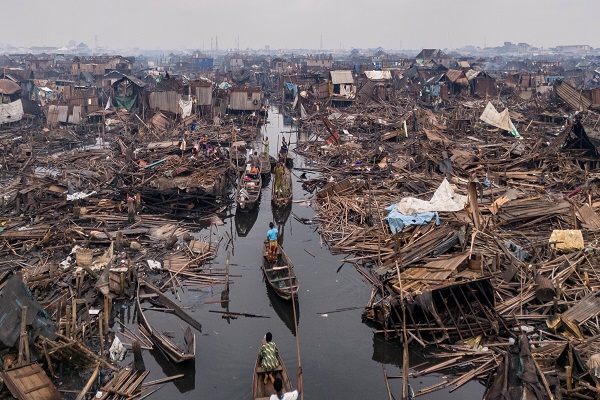
The Lagos State Government has defended its demolition of structures in Makoko and other waterfront communities, insisting the exercise is aimed at protecting lives, property and critical infrastructure.
Speaking during Ask Lagos, a weekly X (formerly Twitter) engagement with residents, Commissioner for Information and Strategy, Gbenga Omotoso, and the Special Adviser to the Governor on e-GIS and Urban Development, Olajide Abiodun Babatunde, said the removals were necessary to address safety, environmental and security risks.
The demolitions have drawn criticism from residents and civil society groups, who described them as “anti-poor” and unnecessary.

However, Omotoso said the government’s actions were preventive rather than punitive.
“No responsible government can allow people to live under high-tension power lines or block vital waterways,” he said.
“These steps are to avert disasters and secure the future of Lagos.”
He added that affected communities had been engaged for years, noting that regulations require buildings to be set back significantly from power lines and waterways.
According to him, many of the structures violated these safety standards.
Babatunde said the demolitions form part of a broader urban regeneration plan to make Lagos safer and more resilient.
He cited previous relocations, including the movement of residents from Oko Baba to newly built housing estates with modern facilities.
“Decisions are guided by master plans, safety codes and environmental standards, not arbitrary actions,” he said, urging developers and residents to comply with planning regulations.
During the session, some participants raised concerns about alleged casualties, forceful enforcement, lack of compensation and unclear relocation plans.
Officials acknowledged the emotional toll but urged residents to rely on verified information.
They also pointed to the state’s e-GIS platform, which allows residents to check zoning rules and building restrictions to prevent future disputes.
While advocacy groups have described the demolitions as “class cleansing,” the government maintains that failing to act could expose residents to greater risks from flooding, power hazards and other disasters.

- Unity Colleges workers suspend strike over King’s College concession - September 23, 2026
- Former Super Eagles captain Troost-Ekong embraces Islam in Qatar - September 23, 2026
- Military training will give Nigerians ‘different perspective about life’ — Defence Minister - September 23, 2026