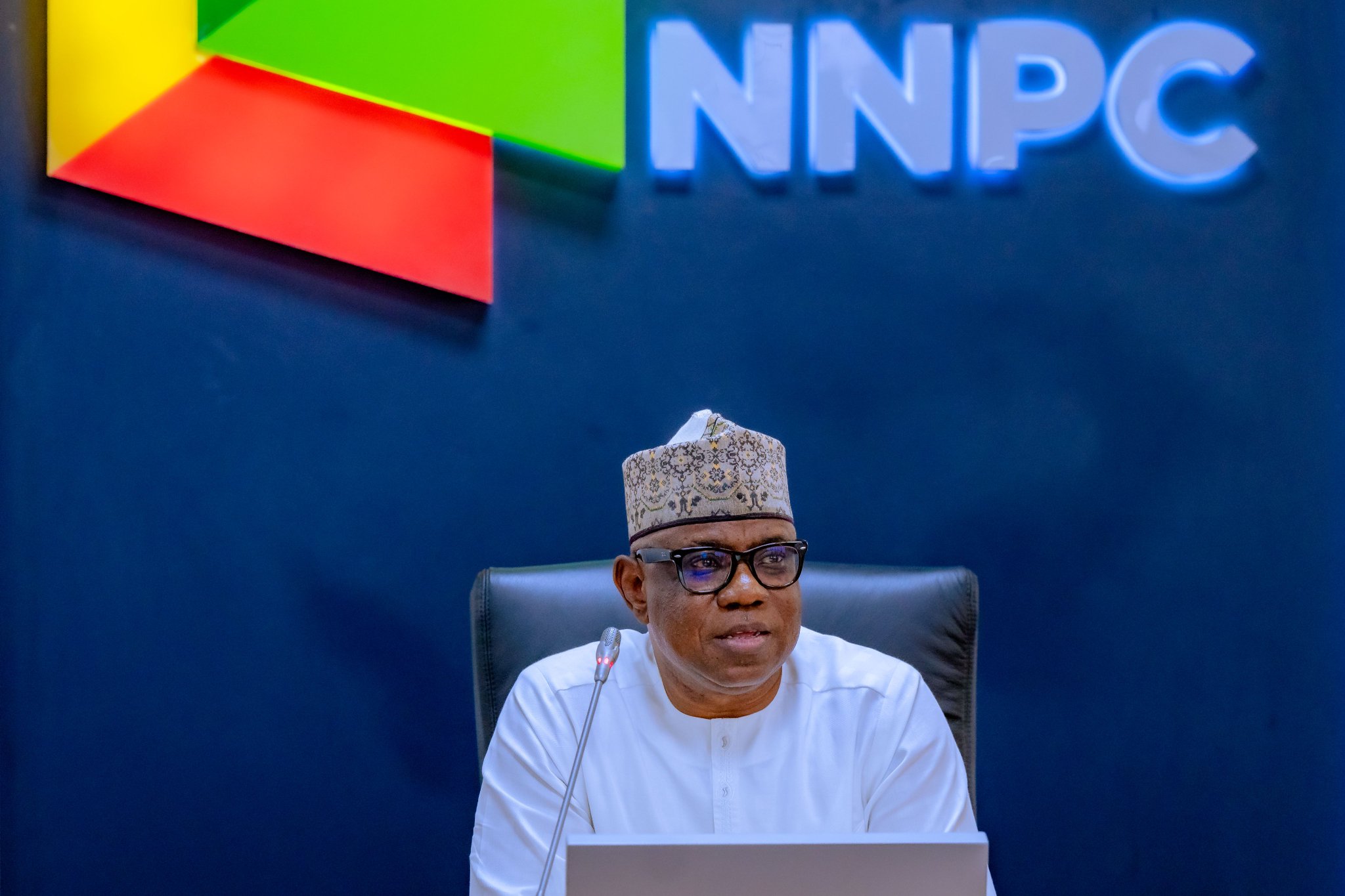
The Group Chief Executive Officer of NNPC Limited, Engr. Bayo Ojulari, has described the reopening of the Port Harcourt Refinery as a waste of public funds, admitting that the national oil company currently lacks the capacity to operate refineries profitably.
Ojulari spoke on Wednesday at the ongoing 2026 Nigerian International Energy Summit, where he said the decision to restart the refinery resulted in heavy financial losses and offered little value to the country.
According to him, a review of the refinery’s performance showed it was operating far below expectations despite significant investment and steady crude supply.
“The first thing that became clear was that we were running at a monumental loss to Nigeria. We were just wasting money. I can say that confidently now,” he said.
The Port Harcourt Refinery and Petrochemical Company was rehabilitated at a cost of about $1.5 billion under the previous NNPC leadership and reopened in November 2024 after nearly three years of repairs. It was, however, shut down again in May 2025 following sustained losses.
Ojulari said the facility was operating at only 50 to 55 per cent capacity while incurring high operational and contractor costs.
“We were pumping cargo into the refinery every month, but utilisation was around 50 to 55 per cent. Those cargoes have value, and we were losing that value. We were spending a lot of money on operations and contractors.
“When you look at the net outcome, we were just leaking value, with no clear path to profitability,” he added.
He explained that effective refinery operations require adequate financing, competent Engineering, Procurement and Construction (EPC) contractors, and strong operational and maintenance expertise — capabilities he said NNPC currently does not fully possess.
As a result, the company is shifting strategy to seek partnerships with experienced refinery operators rather than relying on contractors.
“We are not looking for contractors or O&M service providers. We are looking for entities that actually run refineries,” he said, noting that the new approach has been approved by the NNPC board.
Ojulari added that the successful operations of the privately owned Dangote Refinery had reduced pressure on the government to hastily revive state-owned refineries.
“Thank God for Dangote Refinery. Whether you love Dangote or hate him, thank God. It has given us breathing space because we now have a refinery that is working,” he said.
On oil production, the NNPC boss expressed confidence that Nigeria could reach 1.8 million barrels per day (bpd) in 2026 but described the Federal Government’s earlier benchmark of 2.06 million bpd as unrealistic.
He noted that average production last year stood at about 1.7 million bpd.
“For this year, we are targeting about two million barrels per day, but the budget is based on roughly 1.8 million barrels per day, so we are not overcommitting,” he said.
Ojulari warned that overestimating oil output and revenues had previously created fiscal challenges.
“One of the financial problems Nigeria faced last year was overprojection.
“We overprojected production and revenue, but oil prices fell and output was lower than expected, while spending had already been planned based on those assumptions. That has far-reaching consequences,” he said.
He stressed the need for realistic production targets and credible planning to avoid future budget shortfalls and financial instability.

- Nigerian oil tycoon Indimi loses $60m on Jaiz Bank shares - October 26, 2026
- Nigeria could be declared Ebola-free on December 7 — Minister - October 26, 2026
- NUPRC plans crude swap to cut refinery costs by $4 per barrel - October 26, 2026