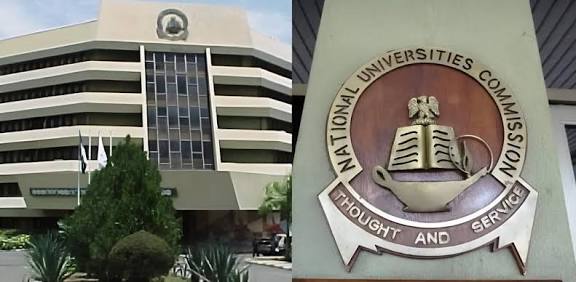
The National Universities Commission has released fresh guidelines regulating the award and use of honorary doctorate degrees in Nigeria, citing growing concerns over indiscriminate conferment and misuse of such honours across the university system.
In a public notice shared on its official X page, the Commission said the framework was approved under its powers in the Education (National Minimum Standards and Establishment of Institutions) Act, CAP E3, Laws of the Federation of Nigeria, 2004, as part of efforts to ensure orderly development of university education.
According to the regulator, the new rules are designed to standardise the conferment process, protect academic integrity and safeguard the credibility and global reputation of Nigeria’s university system. Universities and other degree-awarding institutions were directed to strictly comply, with sanctions promised for violations.
The Executive Secretary of the Commission, Abdullahi Yusufu Ribadu, said the guidelines were developed in line with established academic traditions and resolutions of the Association of Vice-Chancellors of Nigerian Universities, including the Keffi Declaration of 2012, alongside inputs from universities submitted in December 2025.
He noted that the framework aims to strengthen institutional practices and promote a transparent and accountable system for awarding honorary doctorates.
The Commission clarified that honorary doctorate degrees are non-earned distinctions granted honoris causa to recognise distinguished merit, public service, scholarly impact, creative achievement or other significant contributions aligned with the values of the awarding institution.
An investigation conducted by the Commission found widespread misuse of honorary degrees, with 32 entities among 61 institutions and professional bodies identified as operating as honorary degree mills — including unaccredited foreign universities, unlicensed local institutions and organisations without degree-awarding powers. Some were also found issuing fake professorships.
Under the new rules, only approved universities that have graduated their first set of PhD students are eligible to award honorary doctorates. The purpose, criteria and selection procedures must be clearly defined and publicly accessible, while nominations must pass through statutory committees and receive approval from both the University Senate and Governing Council.
The guidelines limit honorary awards to a maximum of three recipients per convocation and require that the degrees carry the designation “Honoris Causa,” such as Doctor of Science (D.Sc. h.c.) or Doctor of Law (LL.D. h.c.). Awards must be conferred in person, except in exceptional circumstances where they may be given virtually, in absentia or posthumously.
The Commission stressed that honorary doctorates must be granted free of charge and recipients must not present the honour as an earned academic qualification. It specifically warned that recipients cannot use the title “Dr.” — which is reserved for holders of earned doctoral or medical degrees — nor use the award to supervise research, practise as scholars or manage academic units.
Universities are also required to provide recipients with orientation on the proper use of the honour, publish lists of awardees on their websites to promote transparency and establish clear mechanisms for revoking awards if recipients are convicted of fraud or engage in unethical conduct.
The NUC said all eligible universities must comply strictly with the framework, reiterating that regulatory sanctions will apply to institutions that confer honorary doctorates in breach of the new guidelines.

- Security forces kill 18 bandits, recover 96 livestock in Katsina - September 23, 2026
- Mohamed Salah bags six-month driving ban in England - September 23, 2026
- Four suspected illegal miners die as pit collapses in Plateau - September 23, 2026