

Two weeks after Power Minister Adebayo Adelabu promised Nigerians a return to stable electricity supply, the national grid remains well below expectations, with generation hovering between 3,000 and 4,000 megawatts — deepening frustration among households and businesses still enduring prolonged outages.
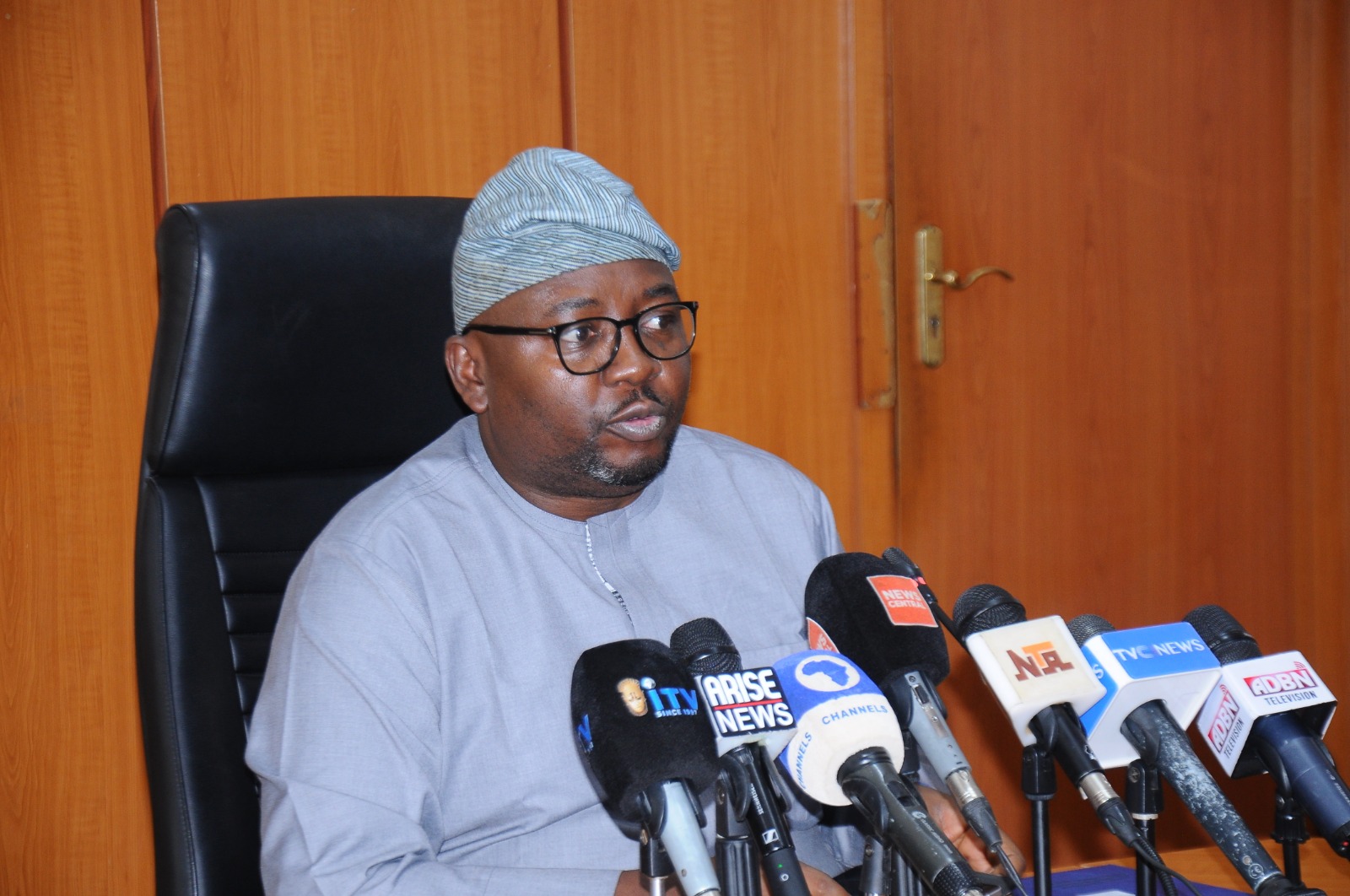
Adelabu had, at an Abuja press conference, apologised for what he described as temporary disruptions driven by gas shortages and pipeline repairs, pledging that improvements would be visible within a fortnight. That deadline has passed with supply yet to recover to the levels recorded in 2025, when generation consistently exceeded 5,000MW.
As of Wednesday morning, Nigeria’s 11 electricity distribution companies were sharing just 3,500MW — an improvement from a recent low of 2,900MW, but far short of the volumes needed to meaningfully ease the crisis. Many Nigerians said they had seen little change on the ground.
The power sector’s woes, investigations reveal, go beyond gas supply alone. Generation companies have confirmed that gas suppliers threatened to halt deliveries to thermal plants over unpaid debts, while distribution companies have compounded shortfalls by rejecting load allocations — a practice GenCos say is causing significant financial damage to the sector.
Joy Ogaji, Chief Executive Officer of the Association of Power Generation Companies, said DisCos were declining to pick up available power, forcing the system operator to instruct GenCos to scale back output.
“DisCos are not taking load; hence, there is high frequency,” Ogaji told our correspondent, confirming that load rejection — not just gas scarcity — is contributing to the current crisis.
She disclosed that in January, average power generation stood at 4,541MW, with 2,985MW stranded and undelivered. In February, generation averaged 4,218MW, of which 3,274MW went unpicked. Nigeria’s 30 grid-connected power plants carry a combined installed capacity of 15,500MW. GenCos, however, can make only 7,000MW available due to mounting unpaid debts — and of that, the transmission and distribution networks can off-take no more than 4,000MW to 4,500MW, a ceiling that has remained largely unchanged since 2013.
DisCos, for their part, deny deliberate load rejection. Operators told our correspondent in confidence that transmission inefficiencies — including the delivery of power to wrong locations — leave them no choice but to decline allocations they cannot effectively distribute or recover revenue from.
“You want your load in Magboro, but I could not move it there; on my way from Ibadan, I decided to dump it at Sagamu Interchange. Will you accept that? No, you will not,” one operator explained.
The Transmission Company of Nigeria has pushed back against claims of limited wheeling capacity, insisting its verified transmission capacity now stands at 8,700MW — dismissing a 7,300MW figure cited by the Port Harcourt Electricity Distribution Company as outdated. TCN also noted that daily grid output is determined by what DisCos nominate and what GenCos declare they can generate, with penalties applicable for shortfalls.
As the blame trading continues across the power value chain, Nigerians remain in the dark — literally and figuratively — with no clear timeline for the stable electricity supply the minister assured them was just two weeks away.

- Wike to Rivers voters: Support Tinubu in 2027, don’t hand Nigeria to political gamblers - October 17, 2026
- Ogun hospital probes nursing student’s death amid oxygen denial - October 17, 2026
- Neto strikes twice as Chelsea sink Everton to break into top four - October 17, 2026