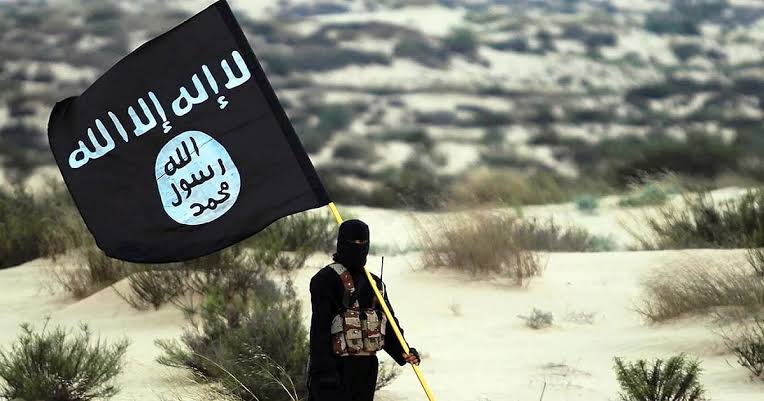
The reported killing of Abu-Bilal al-Manuki, described as a senior commander of the Islamic State and allegedly its second-in-command globally, in a joint operation involving United States and Nigerian forces, is being viewed as a major development in the ongoing counterterrorism campaign in the Lake Chad Basin.
Beyond the elimination of a high-ranking extremist figure, the operation is seen as a signal of deeper intelligence cooperation between Nigeria and the United States, and a potential shift in the strategy used to confront Islamic State West Africa Province (ISWAP) and related jihadist groups in the region.
According to a statement attributed to U.S. President Donald Trump, the operation was carried out through a “meticulously planned and complex mission” involving coordinated efforts by American and Nigerian forces.

However, official details from Nigerian authorities are still limited.
Security sources suggest al-Manuki was not a typical field commander but a key figure within ISIS-linked networks operating across West Africa.
He is believed to have played a role in coordinating strategy, logistics, funding channels, and communication between ISIS leadership and ISWAP factions in the Lake Chad region.
Reports also indicate that foreign fighters deployed to the region over recent years contributed to tactical changes within ISWAP, including night raids on military positions, coordinated mobile attacks, increased use of improvised explosive devices (IEDs), and improved battlefield communication systems.
The introduction of drone technology for surveillance and attacks has also been observed in the conflict, reflecting evolving insurgent capabilities.
Analysts say these shifts marked a transition from earlier, more localized insurgent tactics to more complex operations resembling ISIS methods in Iraq and Syria.
Al-Manuki is believed to have been central to this operational transformation.
The reported removal of such a figure is considered significant for three main reasons.
First, it may disrupt ISWAP’s command structure, which relies heavily on coordination between battlefield units and external support networks.
Second, it suggests improved intelligence penetration into militant hideouts in the Lake Chad Basin and surrounding Sahel regions.
Third, it highlights growing international concern over the spread of ISIS-linked activity in West Africa.
The Sahel region has in recent years become a major hotspot for jihadist violence, particularly following instability in countries such as Mali, Burkina Faso, and Niger. Western governments increasingly view the area as a transnational security threat rather than a purely regional conflict.
Despite the reported success, experts caution that ISWAP remains resilient and capable of recovering from leadership losses.
The group has survived previous military pressure, internal fractures, and sustained counterterrorism operations.
Its continued strength is often linked to underlying challenges in the region, including poverty, unemployment, displacement, weak state presence, and porous borders, which continue to provide fertile ground for recruitment and expansion.
Nevertheless, the reported killing of al-Manuki could temporarily disrupt the group’s operational planning and slow its tactical evolution, particularly if he played a central role in coordinating advanced strategies.
The development also carries psychological implications. For extremist networks, it reinforces the perception that even high-ranking leaders are vulnerable to targeted operations.
For Nigerian security forces, it serves as a morale boost in a prolonged conflict. For affected communities in the North-East, it offers cautious optimism amid ongoing insecurity.
Ultimately, analysts say the long-term impact will depend on whether the operation is followed by sustained intelligence-driven pressure, regional cooperation, and effective stabilization efforts in conflict-affected areas.
Without such measures, they warn, the death of a key commander may remain a symbolic victory rather than a decisive turning point in the fight against ISWAP in the Lake Chad Basin.

- APC mocks Obi over claim of victory without evidence - October 9, 2026
- Nigerian Army graduates new Special Forces battalion to tackle terrorism - October 9, 2026
- Court remands terrorist over 170 AK-47 rounds in Kuje prison - October 9, 2026