

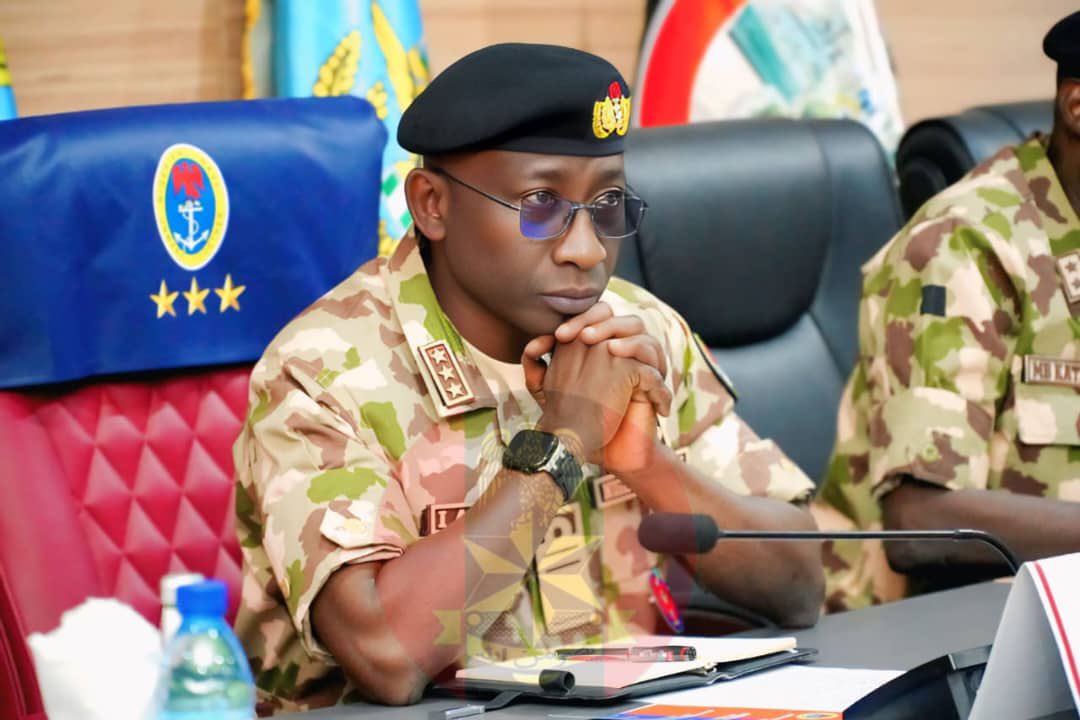

The Chief of the Naval Staff, Idi Abbas, has said that the masterminds behind crude oil theft in Nigeria largely remain beyond the reach of security agencies, while those arrested are often low-level operatives with little knowledge of the criminal networks they serve.
Speaking on a programme on Channels Television on Friday, Vice Admiral Abbas explained that oil theft syndicates operate through complex and highly compartmentalised structures, making intelligence gathering and prosecution difficult.
According to him, security operatives frequently apprehend workers at illegal refining sites, but the individuals who finance and coordinate the operations are rarely identified or arrested.
“Most of the faces behind these thefts are not really known or are not the ones we always catch. The people arrested at illegal refinery sites are usually paid small amounts, while the real beneficiaries remain in the background,” he said.
Abbas noted that prosecution efforts are often hampered because suspects at the lower levels of the network possess limited information about those directing the operations.
He said many of those arrested do not even know the identities of the individuals they work for, making it difficult for investigators to trace the criminal chain to its organisers.
Despite the challenge, the Naval Chief said the Nigerian Navy and other security agencies continue to adapt their strategies to counter evolving methods employed by oil thieves.
He highlighted the increasing use of technology, surveillance systems and intelligence-led operations in efforts to reduce crude oil theft across the country’s oil-producing regions.
“As they evolve new tactics, we also continue to develop new strategies. Technology remains the way forward, and it has helped us reduce the level of theft,” he stated.
Abbas added that the deployment of advanced monitoring systems and improved coordination among security agencies has strengthened enforcement efforts in maritime and coastal areas.
While acknowledging that crude oil theft remains a significant threat to national revenue and the environment, particularly in the Niger Delta, he maintained that security conditions in Nigeria’s coastal and riverine communities have improved.
“Our coastal and riverine areas are relatively safe. The major issues we still contend with are crude oil theft and isolated cases of sea robbery, which we have largely been able to contain,” he said.
The Naval Chief also advocated judicial reforms to enhance the prosecution of maritime offenders, including the establishment of a specialised court dedicated to maritime crimes.
According to him, a dedicated court would accelerate the administration of justice and reduce the burden on the Navy, which currently spends significant resources maintaining seized vessels while awaiting the conclusion of legal proceedings.
“If such a court is established, justice would be delivered much faster and the burden of maintaining arrested vessels in our custody would be greatly reduced,” he said.
Abbas reaffirmed the Navy’s commitment to combating crude oil theft and other maritime crimes, stressing that lasting success would require sustained collaboration among security agencies, industry stakeholders and host communities.

- Former adult film actress sworn in as Colombian senator - July 24, 2026
- Kano to launch state-owned airline — Gov Yusuf - July 24, 2026
- Fake doctor confesses treating 15 patients before arrest - July 24, 2026