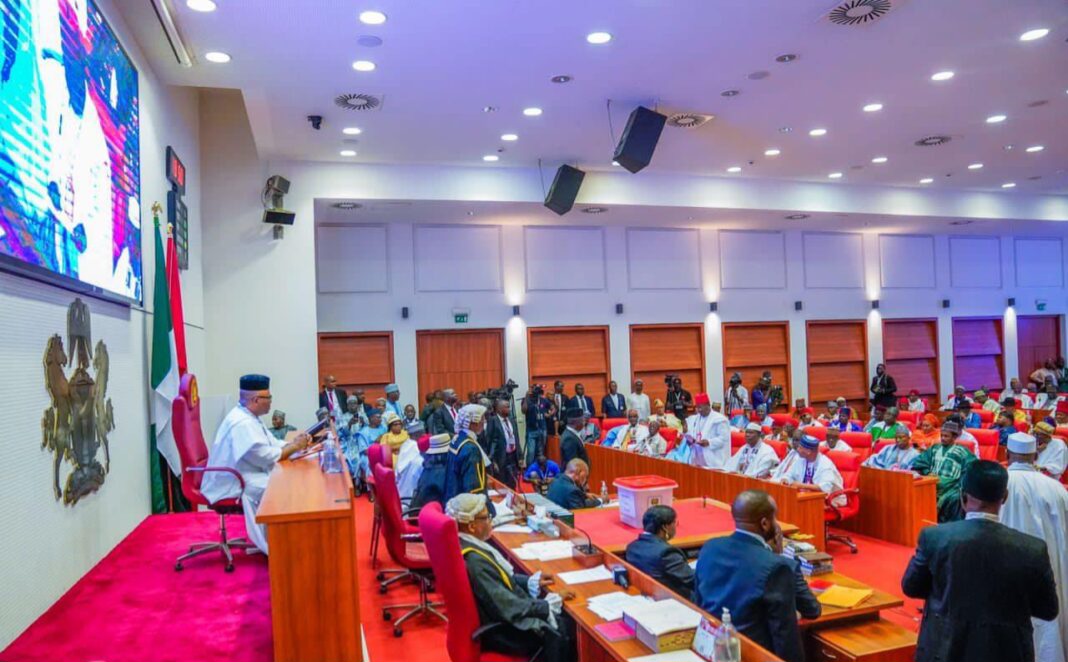

Former Chief Financial Officer of the Nigerian National Petroleum Company Limited (NNPCL), Umar Ajiya, has rejected allegations that ₦210 trillion is unaccounted for in the company’s finances, describing the claim as inconsistent with its audited records and actual revenue performance.
Appearing before the Senate Committee on Public Accounts, Ajiya said the figure being circulated is “mathematically impossible” and unsupported by NNPCL’s financial data.
According to him, the company generated a total revenue of about ₦54.5 trillion between 2017 and 2023, making it impossible for nearly four times that amount to be missing or unaccounted for.
“There is no missing money,” Ajiya told lawmakers. “The ₦210 trillion being referenced is not backed by any cash flow records or revenue data in NNPC’s books. Even the total revenue for the period stands at about ₦54.5 trillion, so the claim does not align with financial reality.”
He attributed the controversy to what he described as a misinterpretation of audit queries raised by the Office of the Auditor-General, explaining that such observations are routine reconciliation issues aimed at improving reporting standards rather than evidence of fraud or missing funds.
Ajiya maintained that NNPCL’s audited financial statements, which have been publicly released in recent years, remain the most credible source for evaluating the company’s financial position, as they are independently verified.
He noted that while the company’s accounts were not consistently published in a transparent and audited format for more than four decades, recent reforms have significantly improved financial disclosure and accountability.
The former CFO warned that spreading unverified financial allegations could damage Nigeria’s reputation and negatively influence investor confidence.
“Unfounded claims harm individuals, institutions and the country as a whole,” he said. “International rating agencies rely on public information when assessing countries. Inaccurate figures can distort perceptions and even affect financing decisions.”
Ajiya further recalled that misinterpretation of financial and project data in the past had contributed to delays in securing international funding for major infrastructure projects.
To resolve the matter, he called on the Economic and Financial Crimes Commission (EFCC) and the Nigerian Financial Intelligence Unit (NFIU) to conduct an independent review of the disputed figures.
According to him, only a forensic examination based on audited records and financial statements can establish the facts and restore public confidence.
“When people claim ₦210 trillion is missing, the question should be: where is the evidence?” he said. “The EFCC and NFIU should verify the claims independently so Nigerians can see the facts clearly.”
Ajiya added that he is willing to provide all relevant documents and explanations to any authorised institution reviewing NNPCL’s financial operations.

- High interest rates push drugmakers’ finance costs up 47% - July 26, 2026
- I never told anyone not to marry — GehGeh - July 26, 2026
- ISWAP finance chief surrenders to troops in Borno - July 26, 2026