


The world is losing an estimated 324 trillion litres of freshwater annually, enough to meet the needs of about 280 million people each year, according to the World Bank’s 2025 report.
The phenomenon, known as continental drying, is being driven by worsening droughts, climate change and unsustainable land and water management practices.
As part of activities marking the World Day to Combat Desertification and Drought on June 17, Al Jazeera highlighted 10 examples of shrinking lakes, rivers and reservoirs across different parts of the world, using satellite imagery to illustrate the extent of water loss.

Among the affected water bodies is the Parana River in Argentina, South America’s second-longest river, where multi-year droughts have significantly lowered water levels, disrupting grain transportation and reducing hydroelectric power generation.
In Bolivia, Lake Poope, once the country’s second-largest lake, has virtually disappeared due to prolonged drought, rising temperatures and water diversions, devastating local fisheries and Indigenous communities.
Botswana’s Lake Ngami has also experienced extreme fluctuations, with severe droughts and reduced inflows causing it to nearly dry up before partially recovering.
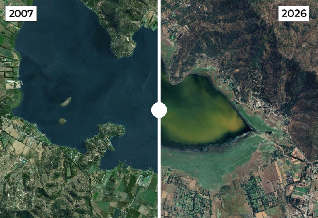
Chile’s Aculeo Lagoon, once a popular recreational destination near Santiago, has largely vanished following years of drought and water stress.
Iran’s Lake Urmia, formerly the Middle East’s largest saltwater lake, has shrunk to less than 10 per cent of its original size due to drought, river diversion and excessive agricultural water use.
The al-Chibayish Marshes in southern Iraq have also undergone significant changes, with severe drying in the 1990s followed by partial recovery through increased rainfall and restoration efforts.
In southern Madagascar, the Ambovombe region has suffered a severe ecological crisis caused by prolonged drought and rising temperatures, resulting in degraded water sources, failed farmlands and widespread hardship.
Lake Faguibine in northern Mali has largely disappeared after years of reduced flooding from the Niger River, prolonged drought and sediment accumulation, accelerating desertification in the region.
In the United States, Lake Mead, the country’s largest reservoir by capacity, has experienced a dramatic decline in water levels due to persistent drought, rising temperatures and increasing demand for water resources.
Similarly, the South Aral Sea in Uzbekistan has shrunk by more than 90 per cent after decades of river diversions for irrigation, creating one of the world’s most severe human-induced environmental disasters.
The report underscores growing concerns over global freshwater depletion and highlights the urgent need for sustainable water management and climate adaptation measures to prevent further environmental degradation.

- Wike to Kingibe: You won’t return to Senate - September 22, 2026
- NSCIA sets September 30 for national prayer over Nigeria - September 22, 2026
- NMDPRA moves to curb monopoly, abuse of dominance in oil sector - September 22, 2026