The death toll from Venezuela’s twin earthquakes has risen to 2,954, as international search-and-rescue teams began scaling back operations more than a week after the disaster.
The latest official figures represent an increase of more than 300 deaths from Friday’s tally following the June 24 earthquakes, which measured 7.2 and 7.5 in magnitude and struck just 38 seconds apart.
While thousands of people remain displaced and are sheltering in temporary camps, tens of thousands are still unaccounted for.
Although the Venezuelan government has not released an official estimate of the missing, the United Nations believes up to 50,000 people remain unaccounted for.
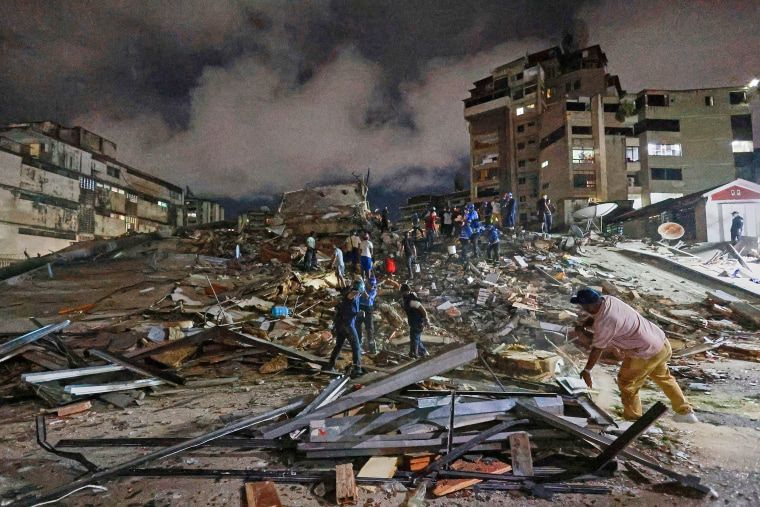
The earthquakes caused widespread devastation, particularly in the coastal state of La Guaira, north of the capital, Caracas, where numerous residential buildings were reduced to rubble in one of Latin America’s deadliest earthquake disasters.
Ten days after the catastrophe, rescue efforts are gradually giving way to recovery operations as hopes of finding more survivors diminish. Although the critical rescue window for earthquake victims typically closes within 72 hours, emergency workers have managed to rescue a handful of survivors in recent days.
Interim President Delcy Rodriguez on Saturday honoured international rescue teams and their search dogs during a ceremony marking their contribution to the emergency response.
“Venezuela is experiencing a profound grief gripping our people, where families still hold out hope of finding loved ones alive, people who have lost everything,” Rodriguez said.
Several international rescue teams, including personnel from the United States and other South American countries, confirmed they were concluding their operations after recent searches yielded no further signs of life.
Thousands missing as Venezuela earthquake death toll surpasses 1,400
Rescue teams from the Los Angeles County Fire Department, as well as crews from Florida and Virginia, were among those preparing to return home.
The disaster response has drawn criticism from many Venezuelans, who accused the government of reacting too slowly in the crucial hours after the earthquakes, forcing relatives and volunteers to dig through collapsed buildings before international assistance arrived.
Rodriguez, however, defended the government’s handling of the emergency, stressing that thousands of soldiers and emergency officials had been deployed immediately after the disaster.
In the worst-hit areas of La Guaira, heavy machinery has begun demolishing unstable buildings, while families continue searching through the debris to recover the bodies of relatives for burial.
“We’re still working, still searching for bodies. We’re still going. It hasn’t been easy,” volunteer rescuer Francisco Sasquia said after helping recover two bodies from a collapsed residential building.
According to the United Nations, the twin earthquakes caused an estimated $6.7 billion in physical damage, equivalent to about six per cent of Venezuela’s gross domestic product, dealing a severe blow to the oil-exporting nation’s economy.

- Zenith Bank launches girl-child empowerment programme Monday - October 10, 2026
- Policeman’s son arrested for raping 5-year-old girl in Oyo - October 10, 2026
- UN cuts global growth outlook, warns poorer countries of inequalities - October 10, 2026