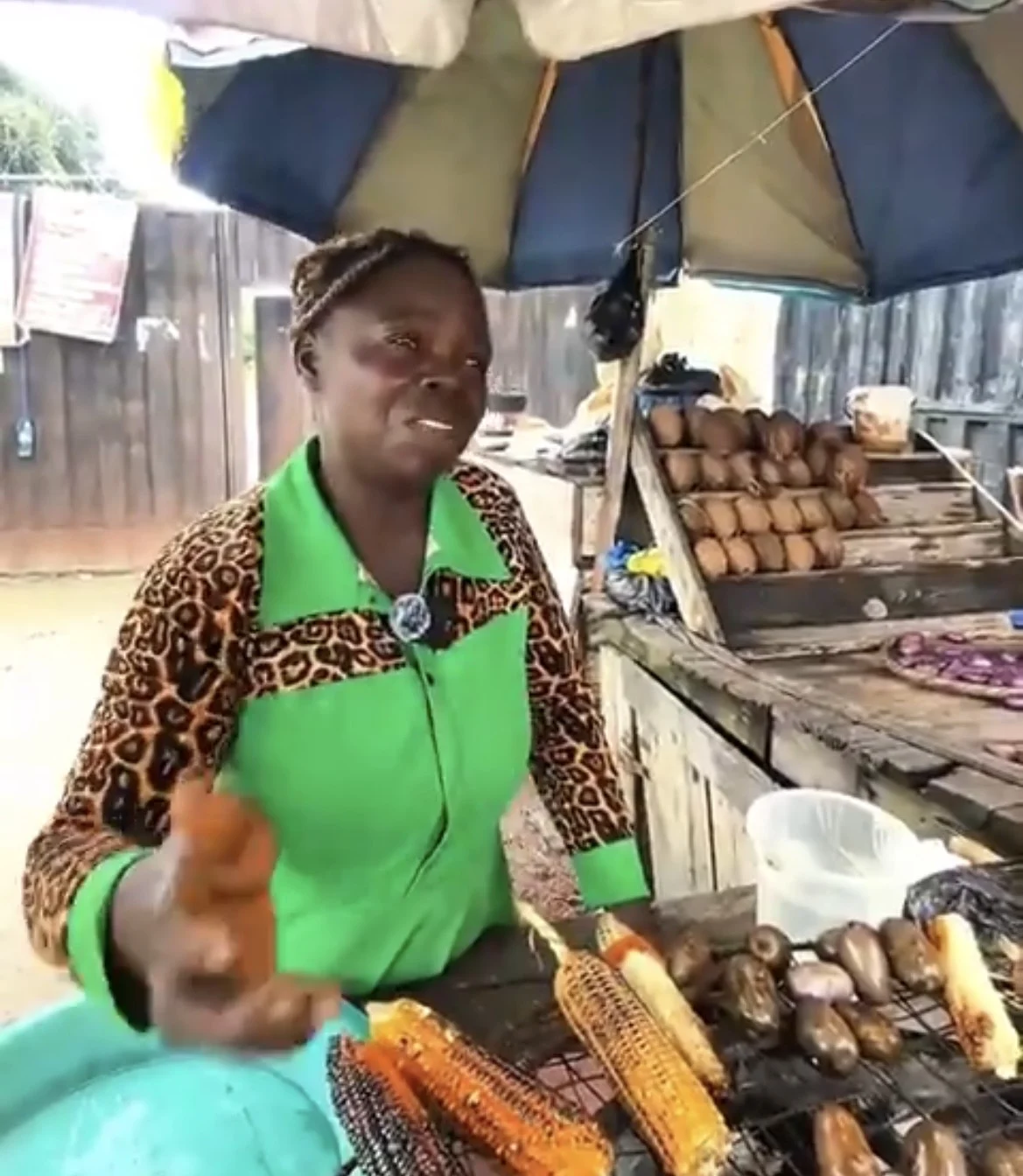
A video of a woman selling roasted corn claiming she earns more than ₦2.5 million every month has ignited heated discussions on social media, with many Nigerians divided over whether the figure is realistic.
The clip, shared on X on Sunday by user #ChuksEricE, captured the seller responding to a question about her monthly income by saying she makes about ₦2.5 million from the business.
Although it remains unclear whether the footage was a genuine street interview or staged content, it quickly gained traction online, drawing thousands of comments from users across multiple platforms.
Many social media users dismissed the claim, arguing that the numbers did not add up based on the selling price and profit margin of roasted corn.
One user, #okafor_nna, estimated that such earnings would require an average daily profit of over ₦80,000, describing the claim as unrealistic. Another, #DrLeguzo, suggested the seller may have misunderstood the question or exaggerated her earnings.
Others, however, refused to rule out the possibility entirely, with some arguing that a well-established business operating across several locations could generate such revenue.
Some commenters also expressed concern that publicising such earnings could expose the woman to security risks, while others reacted with humour, turning the video into a source of memes and jokes.
The viral debate has revived conversations about the profitability of small businesses, especially after recent remarks by First Lady Oluremi Tinubu, who encouraged women to explore low-cost ventures such as roasting corn, frying akara and producing kulikuli as sustainable means of livelihood.
Her comments sparked widespread criticism from Nigerians, who argued they failed to reflect the country’s economic realities. President Bola Tinubu later defended the initiative, saying the government’s empowerment programmes extend to a broader range of small-scale traders and entrepreneurs.
The discussion has since grown beyond social media, becoming part of wider conversations on entrepreneurship, economic survival and the earning potential of informal businesses in Nigeria.

- INEC omits PDP’s Adebutu, Pantami from final 2027 governorship lists - October 10, 2026
- US inmate who survived failed execution returns to prison - October 10, 2026
- South African great-grandmother jailed for 20 years over deaths of three children - October 10, 2026