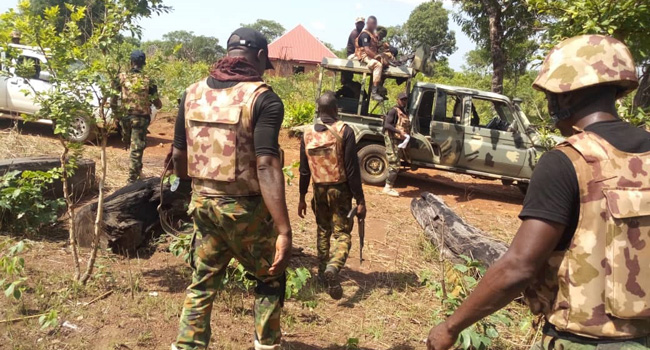
Nigeria recorded 882 security incidents and 792 deaths across the 36 states and the Federal Capital Territory in June 2026, with security forces killing 274 insurgents during the period, according to a new report by security intelligence firm SARI Global.
The report, titled Nigeria Monthly Security Overview for June 2026, said violence peaked in the second week of the month as insurgent attacks, banditry and military operations intensified across several parts of the country.
According to the report, non-state armed groups were responsible for the highest number of fatalities, killing 337 people in 224 incidents, while government forces were linked to 375 security operations that resulted in 274 insurgent deaths.
Borno State remained the country’s deadliest hotspot, recording 109 security incidents and 172 fatalities, followed by Zamfara with 63 incidents, Plateau with 51, Katsina with 44, Lagos with 40 and the Federal Capital Territory with 36.
SARI Global said the Islamic State West Africa Province (ISWAP) intensified attacks in northern Borno, particularly around Monguno, Cross Kauwa, Baga and Kukawa, disrupting humanitarian operations and restricting aid deliveries to thousands of internally displaced persons.
The report cited the June 24 abduction of an international aid worker and a local security guard in Monguno, as well as repeated attacks on humanitarian supply trucks along the Monguno-Gajiram road, describing the incidents as a deliberate strategy to cut off food supplies to vulnerable communities.
According to the report, ISWAP also raided Government Day Secondary School in Lassa, Askira/Uba Local Government Area, on June 29, abducting students and teachers in an attack it described as both ideological and strategically designed to attract international attention.
SARI Global warned that schools located near insurgent strongholds should now be treated as high-risk locations, urging stronger surveillance and improved security around educational institutions.
The report also noted the spread of improvised explosive device attacks into parts of the North-West, including Zamfara, Katsina, Sokoto and Kebbi states, suggesting that armed groups were increasingly adopting tactics previously associated with insurgents in the North-East.
In the Federal Capital Territory, the report linked most of the 36 recorded incidents to protests and civil unrest associated with preparations for the 2027 general elections.
Looking ahead, SARI Global warned that worsening food insecurity and continued attacks on humanitarian supply routes could deepen the humanitarian crisis in the coming months, particularly in conflict-affected communities across northern Nigeria.
The report stressed that while security agencies maintained a high operational tempo throughout June, increased military activity had yet to translate into a significant improvement in the country’s overall security situation.

- Wike rallies Rivers monarchs for Tinubu’s re-election - October 17, 2026
- Shettima inaugurates Tinubu campaign office, says North’s support is not a blank cheque - October 17, 2026
- Okonjo-Iweala: My mother was kidnapped over $2.4bn fuel subsidy fraud probe - October 17, 2026