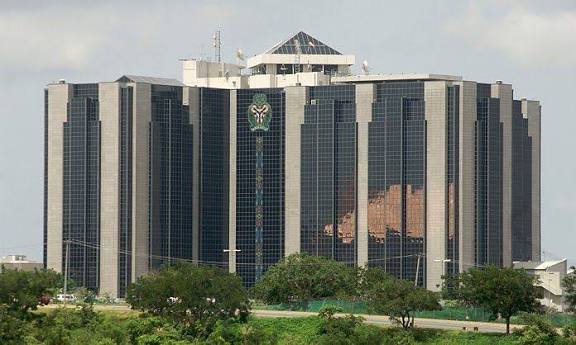
The Central Bank of Nigeria (CBN) is set to enter its next Monetary Policy Committee (MPC) meeting with conflicting inflation signals after the National Bureau of Statistics (NBS) reported a slight decline in headline inflation but a renewed increase in monthly food prices.
According to the NBS Consumer Price Index report for June 2026 released on Wednesday, headline inflation eased marginally to 15.91 per cent from 15.93 per cent recorded in May, marking the first decline after three consecutive months of increases.
The figures come ahead of the MPC meeting scheduled for July 20 and 21, where policymakers are expected to review inflation trends and determine the country’s monetary policy direction.
The NBS said headline inflation also slowed on a monthly basis, falling to 1.66 per cent in June from 1.75 per cent in May, indicating a slower pace of increase in consumer prices.
However, food inflation continued to exert pressure on households. The bureau reported that monthly food inflation rose to 3.75 per cent in June from 2.98 per cent in May, driven by higher prices of fresh pepper, tomatoes, crayfish, beef, garri, yam flour, water yam, bananas, cassava flour, cowpea and Irish potatoes.
On an annual basis, food inflation stood at 17.52 per cent, lower than the 25.41 per cent recorded in June 2025, largely due to the statistical base effect.
The Consumer Price Index also increased to 143.0 points in June from 140.7 points in May, while core inflation, which excludes farm produce and energy, eased to 15.92 per cent year-on-year. Core inflation also slowed on a monthly basis to 1.66 per cent, down from 1.94 per cent in May.
Food and non-alcoholic beverages remained the biggest contributors to headline inflation, accounting for 6.37 percentage points, followed by restaurants and accommodation services, transport, housing and utilities, education and healthcare.
The report further showed that average headline inflation for the 12 months ending June 2026 declined to 17.63 per cent, compared with 29.82 per cent in the corresponding period of 2025. Average annual food inflation also dropped to 16.42 per cent from 31.93 per cent a year earlier.
Urban inflation stood at 16.08 per cent, while rural inflation was 15.48 per cent.
Among the states, Niger recorded the highest annual inflation rate at 42.23 per cent, followed by Kogi at 41.59 per cent and the Federal Capital Territory at 39.91 per cent. Imo posted the lowest annual inflation rate at 19.47 per cent, followed by Ebonyi and Katsina.
For food inflation, Kogi recorded the highest year-on-year rate at 53.02 per cent, ahead of Niger and Benue, while Katsina posted the lowest rate.
The latest inflation figures are expected to play a key role in the MPC’s deliberations as members balance signs of easing headline inflation against persistent food price pressures, exchange rate stability, external reserves and broader economic conditions.
Commenting on the outlook, President of the Capital Market Academics of Nigeria, Prof. Uche Uwaleke, said the MPC is likely to retain its current monetary policy stance.
He said the CBN has consistently highlighted improvements in policy coordination, banking sector resilience, external reserves and monetary policy transmission, warning that another round of tightening could undermine investor confidence.
According to Uwaleke, the committee is expected to maintain the Monetary Policy Rate at 26.5 per cent, retain the current asymmetric corridor around the MPR and leave other policy parameters unchanged while continuing to monitor inflation and exchange rate developments closely.

- Gombe court grants woman bail over N60,000 oil theft - August 31, 2026
- ANTP dispels cancer rumours as Elesho undergoes surgery - August 31, 2026
- Troops kill two terrorist leaders in Katsina, wound commander - August 31, 2026