

The Independent National Electoral Commission has said the deployment of the Armed Forces during elections should only occur under exceptional security circumstances, stressing that election security remains primarily the responsibility of the Nigeria Police Force.
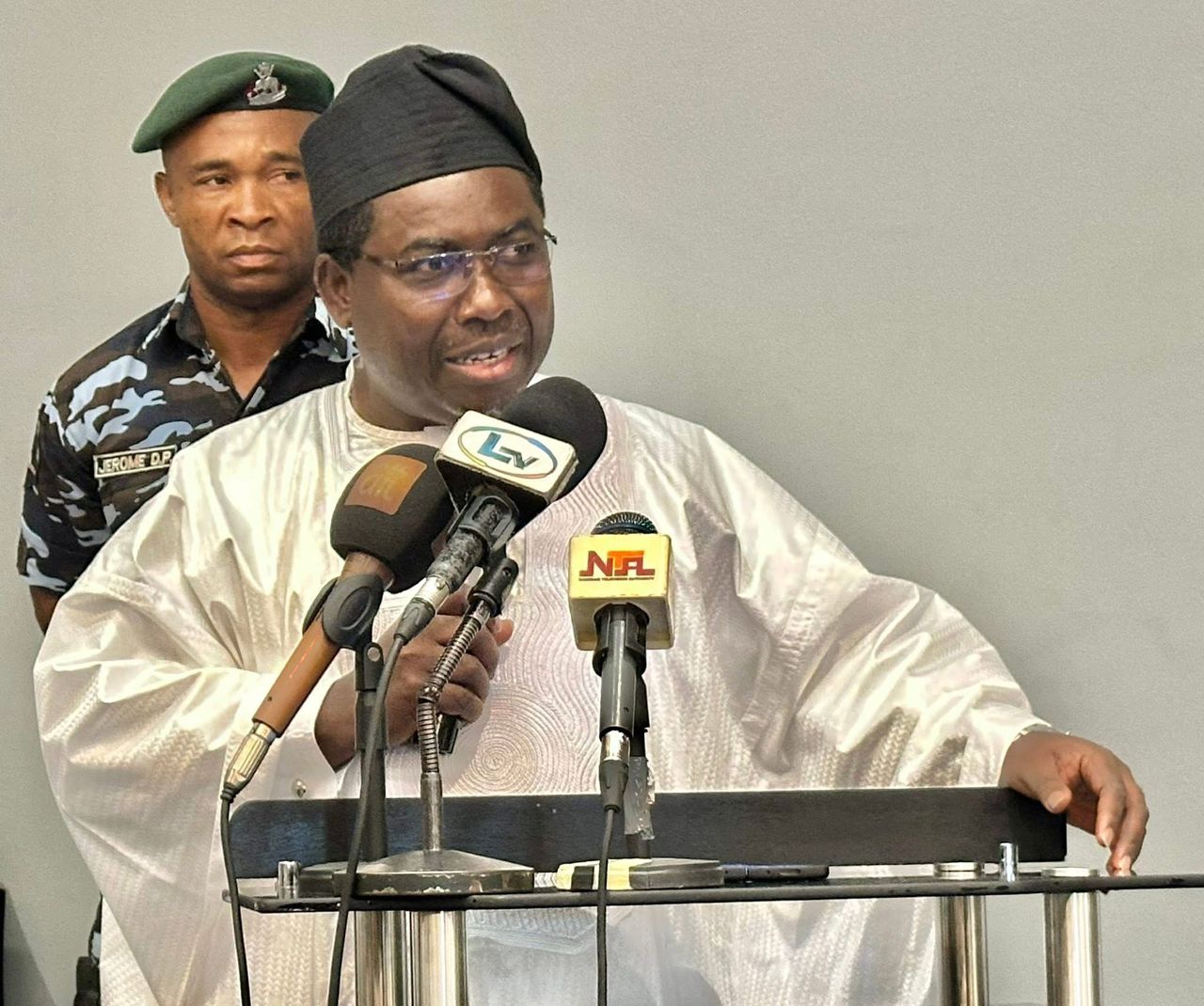
The Chairman of INEC, Prof. Joash Amupitan, made the position known on Thursday at a seminar in Abuja. He was represented by the commission’s Director of Legal, Al-Hassan Umar.
Amupitan said the Constitution clearly assigns INEC the responsibility of conducting elections, while the police serve as the lead agency for election security under the Inter-Agency Consultative Committee on Election Security.

He noted that military involvement should only be considered when prevailing security conditions require support for civil authorities.
“The role of the Armed Forces is exceptional rather than routine. Their deployment arises only where prevailing security conditions require military support in aid of the civil authorities and strictly in accordance with the Constitution and other applicable laws,” he said.
According to him, the military’s role during elections is supportive, not supervisory, and includes securing critical national assets, protecting key infrastructure, assisting in the movement of sensitive electoral materials where necessary and providing support during extraordinary security situations.
He said maintaining the distinction between civilian election management and military assistance was essential to preserving public confidence in the electoral process.
Amupitan also urged military personnel to remain politically neutral whenever deployed for election duties.
“The Armed Forces serve the Nigerian State and the Constitution—not any political party, candidate or individual,” he said, adding that officers must demonstrate professionalism, discipline, restraint and respect for citizens throughout election operations.
Looking ahead to the 2027 general elections, the INEC chairman warned that election security challenges now extend beyond physical violence to include insurgency, banditry, kidnapping, organised political violence, cyber threats, misinformation, disinformation and the misuse of emerging technologies.
He said the commission was working with security agencies through the Inter-Agency Consultative Committee on Election Security to strengthen intelligence sharing, risk assessment and coordinated responses to emerging threats.
“Our objective is to ensure that every eligible Nigerian can exercise the constitutional right to vote freely, safely and without intimidation,” he said.
Amupitan reaffirmed INEC’s commitment to conducting transparent, inclusive and technology-driven elections, stressing that the commission remained impartial and had no preferred candidate in any election.
Representing the Chief of Defence Staff, Gen. Christopher Musa, the Chief of Defence Civil-Military Relations, Rear Admiral Abolade Ogunleye, said the Armed Forces would continue to provide constitutional support to civil authorities whenever required.
He urged military personnel to uphold neutrality, professionalism and respect for human rights during election operations, noting that their conduct in recent off-cycle and by-elections in states including Ekiti, Kano, Kebbi, Rivers, Nasarawa, Enugu and Ondo contributed to peaceful polls.
Ogunleye added that the success of Operation SAFE CONDUCT 2027 would be measured not only by the absence of violence but also by strict adherence to impartiality, neutrality and respect for fundamental human rights.

- Tinubu hails ICC tribunal verdict rejecting $680m Sunrise Power claim against Nigeria - September 17, 2026
- I’ll retire from politics after 2031 — Otti - September 17, 2026
- 2027: Obi-Kwankwaso movement unveils 59-member campaign council - September 17, 2026