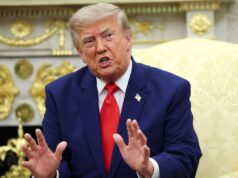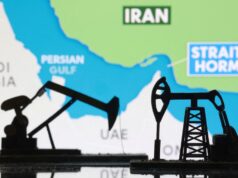



United States President Donald Trump has accused ExxonMobil and Chevron of profiting excessively from rising fuel prices, urging the oil majors to share some of their earnings with Americans as energy costs remain elevated.
Addressing reporters on Monday, August 3, 2026, Trump said he was unhappy with the companies’ soaring profits, which came on the back of high oil prices linked to the ongoing conflict involving Iran.
“I don’t like it. Chevron, too much money. ExxonMobil, too much. Too much money,” the president said.
His comments followed the release of the companies’ second-quarter earnings last week, which reflected strong financial performances amid sustained crude oil prices.
ExxonMobil and Chevron did not immediately comment on Trump’s remarks.
The criticism is unusual for Trump, who has generally maintained a close relationship with the oil and gas industry. However, he has often relied on public statements to pressure major corporations into altering their business practices.
During his first administration, Trump publicly challenged automakers over overseas production, criticised defence contractors over contract costs and pushed pharmaceutical companies to lower medicine prices.
Since returning to office, he has continued using public messaging to influence corporate decisions.
Earlier on Monday, Trump also criticised Chevron Chief Executive Mike Wirth for failing to acknowledge his administration’s support for the energy industry during an appearance on Fox News’ ‘Sunday Morning Futures with Maria Bartiromo’.
Oil prices rise over stalled US-Iran peace talks
In a post on his Truth Social platform, Trump said his administration had strengthened the U.S. oil sector and helped pave the way for Chevron’s expanded operations in Venezuela, saying the company was now positioned to reap significant profits.
Chevron has maintained operations in Venezuela for more than 100 years and remained in the country after former President Hugo Chavez nationalised oil assets in 2007.
ExxonMobil and ConocoPhillips, however, exited the South American nation following the nationalisation.
Meanwhile, the American Petroleum Institute defended the industry’s earnings, saying fuel prices were being driven by broader geopolitical and market conditions rather than corporate actions.
According to the trade group, ongoing uncertainty surrounding the Strait of Hormuz and other critical shipping routes, alongside global supply and demand dynamics, continues to shape oil prices worldwide.

- Brighton thrash Arsenal 3-0 to go third in Premier League - September 19, 2026
- NGX investors trade N237.9bn shares, gain N4.57trn in one week - September 19, 2026
- Davido announces 3-day concert at National Theatre - September 19, 2026