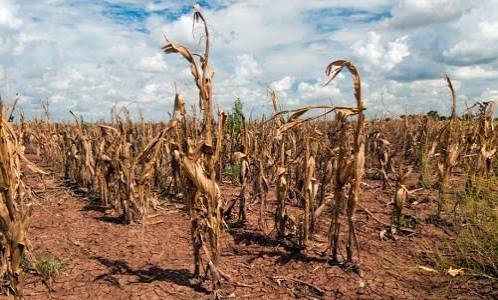

Food security concerns are growing in the United Kingdom as severe drought and record dry conditions continue to hit farmers, with some reporting crop yields falling by as much as 30 per cent.
Farmers in England have been battling the driest July ever recorded by the Met Office, with prolonged heat and a lack of rainfall damaging crops across several agricultural regions.
John Pawsey, a farmer in Suffolk, said the impact became evident when harvesting began, with yields of oats, wheat and vetch significantly below expectations.
“All of our fears were realised when we got our combines into the field and realised that actually the yield was between 25 and 30 percent down,” Pawsey said.
He said his farm had also lost an entire crop of quinoa because of the lack of rainfall, while only weeds such as docks and thistles managed to thrive in some fields.
The prolonged drought is the latest in a series of weather-related challenges facing British farmers in recent years, prompting renewed concerns about the resilience of the country’s food supply.
Food security expert Timothy Benton said Britain would need to move towards more diverse and less intensive farming systems to reduce its vulnerability to climate change and dependence on imported food and agricultural inputs.
“Climate impacts will become greater. Food systems will have to change,” Benton said.
Farmers are already experimenting with crops that can better withstand hotter and drier conditions. Pawsey’s organic farm, for instance, has introduced fava beans and chickpeas while testing methods that involve growing different crops together to improve resilience.
Nicola Cannon, a professor at the Royal Agricultural College, said climate change could also force changes in British diets as traditional crops become more difficult to produce.
She said pea yields this year were only about half of the expected output because of insufficient moisture since March, while she has been cultivating soya as a potential alternative crop for British farmers.
National Farmers’ Union president Tom Bradshaw warned that continued drought could lead to shortages of some food products.
“We have taken our food supply for granted for far too long,” he said.
Experts also warned that falling yields could reduce farmers’ profitability, leaving them with less money to invest in new technologies, irrigation and climate-adaptation measures.
Cannon urged consumers to buy seasonal British produce, saying this would provide farmers with greater market certainty and enable them to invest in adapting to changing weather conditions.
Meanwhile, the UK government has pledged increased investment in water infrastructure, including plans for nine new reservoirs, as part of efforts to strengthen the country’s resilience to drought.
Benton, however, said greater government intervention would be required to transform the food system, warning that adapting to climate change would become increasingly expensive.
Pawsey said the long-term outlook was worrying if current weather patterns persist, warning that some farmers could eventually be forced out of business.
“If farmers go out of business, it’ll either mean higher prices or the government will have to continue to support farmers,” he said.

- Atiku raises the alarm over unauthorised payment into private bank account - August 7, 2026
- Two Nigerians jailed 20 years each in Ghana for human trafficking - August 7, 2026
- N40m theft sparks deadly ISWAP-JAS battle in Borno - August 7, 2026