


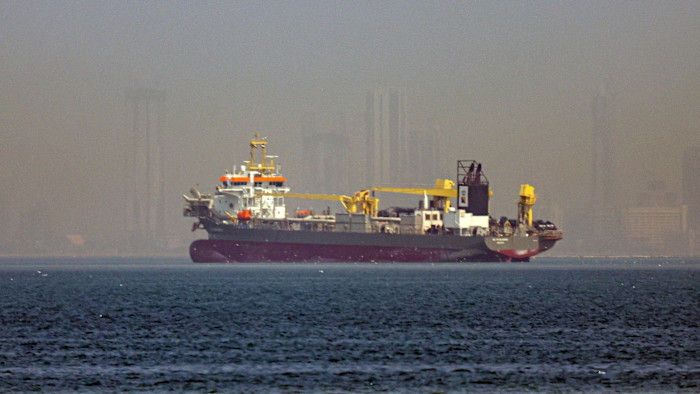
Oil prices rose for a second straight session on Friday, August 7, 2026, as renewed uncertainty over shipping through the Strait of Hormuz stoked fears of potential disruptions to global crude supplies.
Brent crude futures gained 85 cents, or 1.03%, to trade at $83.34 per barrel, while U.S. West Texas Intermediate (WTI) crude rose 52 cents, or 0.67%, to $77.81 per barrel.
The gains followed a sharp rally on Thursday after Iran moved to review legislation that could restrict United States and Israeli vessels from passing through the Strait of Hormuz, one of the world’s busiest oil transit routes, responsible for transporting nearly 20% of global oil and liquefied natural gas.

Fresh market jitters emerged after Iran, in partnership with Oman, proposed new regulations that would deny passage to ships considered hostile and impose significant financial penalties on vessels that violate the rules.
The development reversed earlier market optimism that the conflict in the region could ease. Although both Brent and WTI were still headed for weekly losses of about 8%, investors shifted focus back to geopolitical risks after Brent crude recovered above the $80-per-barrel mark.
Analysts said the latest proposals suggest the standoff between Iran and the United States remains far from resolved.
According to Iran’s Fars News Agency, lawmakers are considering a bill that would prohibit U.S., Israeli and other vessels classified as hostile from using the Strait of Hormuz. The draft legislation also proposes fines of up to 20% of a ship’s cargo value for any breach of the restrictions.
FG spent N1.16trn on fuel subsidy in 2021 ― RMAFC
Iran is reportedly seeking transit fees of between 5% and 7% of cargo value, while Oman is discussing charges of around 3%. The United States has opposed any such fees, insisting on unrestricted access.
However, industry sources warned that any agreement could prove difficult to implement because U.S. sanctions on Iran and insurance limitations could complicate payment arrangements.
The founder of Vanda Insights, Vandana Hari, said the market has experienced sharp swings this week as investors weigh the prospects of a deal, but uncertainty over the outcome continues to cloud the oil market outlook.
The Vice President for Oil Markets at Rystad Energy, Lin Ye, said traders were reacting to the prospect of tighter controls over Hormuz rather than a return to normal maritime operations.

- Dutch firm begins project to convert Nigeria’s flared gas to LPG, electricity - September 21, 2026
- Spain coach De la Fuente gets new deal after World Cup win - September 21, 2026
- Court adjourns El-Rufai’s N1bn suit against ICPC, others - September 21, 2026