

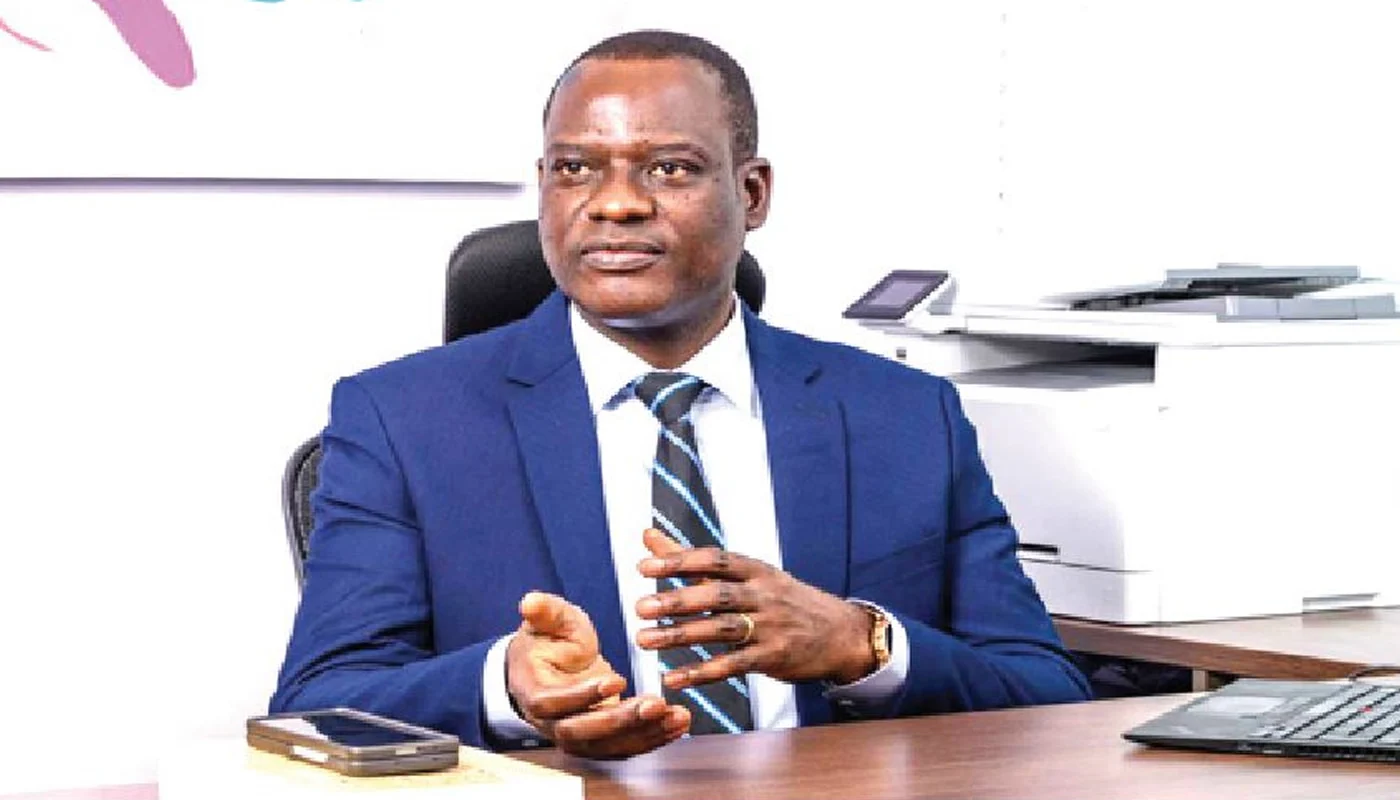
The Federal Government has dismissed calls for detailed disclosure of how funds obtained under its $5bn financing arrangement with First Abu Dhabi Bank will be spent.
Minister of Finance and Coordinating Minister of the Economy, Taiwo Oyedele, said on Wednesday that the facility was not different from other government borrowings and had already received approval from the National Assembly.
Oyedele spoke during a media briefing in Abuja amid growing concerns over the transparency and risks associated with the financing arrangement.
Nigeria recently accessed about $1.5bn from the $5bn Total Return Swap facility arranged with First Abu Dhabi Bank. The facility, approved by the National Assembly on March 31, 2026, is expected to support the 2026 budget, infrastructure projects and the refinancing of existing debt.
Asked whether the government would publish details of how the funds would be spent, Oyedele said such disclosure would not be made specifically for the Abu Dhabi facility.
“We will not publish how we are spending it. We will publish how we spend government money. There’s nothing special about that loan,” he said.
The minister questioned why the facility was attracting greater scrutiny than other sources of government financing, including World Bank loans, Eurobonds and Sukuk.
“Nobody has asked us whether we’re going to publish the money we took from the World Bank, whether we publish the one from Eurobond, whether we publish the one from Sukuk. Why is this one special?” he asked.
Oyedele also rejected suggestions that the transaction was undertaken without adequate scrutiny, pointing to its approval by the National Assembly.
“The loan was approved not only by FEC, it was taken to National Assembly,” he said, arguing that parliamentary approval provided a significant level of public disclosure.
He explained that the government was drawing the facility in phases rather than accessing the entire $5bn at once to avoid paying costs on funds that had not yet been deployed.
“We’re assessing it in phases. You don’t want to take all the money at once because if you don’t spend it at once, you incur cost on the extra amount you’ve taken,” he said.
The minister said the facility also differed from Nigeria’s conventional fixed-rate borrowing because its interest rate was flexible.
According to him, the arrangement would allow Nigeria to benefit if global interest rates decline, although borrowing costs could rise if rates increase.
“This First Abu Dhabi Bank transaction is flexible rates. It means if rates go up, we pay more. If rates come down, we benefit more,” Oyedele said.
He added that the all-in cost of the facility was lower than Nigeria’s existing debt portfolio.
Oyedele said the government’s main objective was to use the facility to refinance more expensive debt and reduce borrowing costs.
“So the objective is to use it to refinance expensive debt so you can save money,” he said.
Under the arrangement, the Federal Government is required to pledge securities worth about 133 per cent of the amount drawn as collateral.
The financing structure has attracted scrutiny from the International Monetary Fund and Fitch Ratings, which raised concerns about transparency and potential sovereign debt risks.
The IMF warned that derivative-based financing arrangements such as total return swaps could be difficult to track and value in real time, potentially making a government’s financial obligations less transparent.
Fitch Ratings similarly cautioned that the planned $5bn facility could increase Nigeria’s sovereign debt risks and reduce transparency in public debt reporting.
Oyedele, however, said the government would provide additional information to address concerns surrounding the facility.
He said the Ministry of Finance and the Debt Management Office would publish frequently asked questions on their websites in the coming days.
“In the next few days, you will see on the website both the Ministry of Finance and DMO the frequently asked questions about this particular debt or bond, just so everybody can please themselves,” he said.
Oyedele maintained that the facility was being subjected to disproportionate scrutiny despite being approved through the established government process.
“I spend time on it because I think it’s important and the international media also, for some reason, have taken so much interest in it. But that is what it is,” he said.

- APC mocks Obi over claim of victory without evidence - October 9, 2026
- Nigerian Army graduates new Special Forces battalion to tackle terrorism - October 9, 2026
- Court remands terrorist over 170 AK-47 rounds in Kuje prison - October 9, 2026