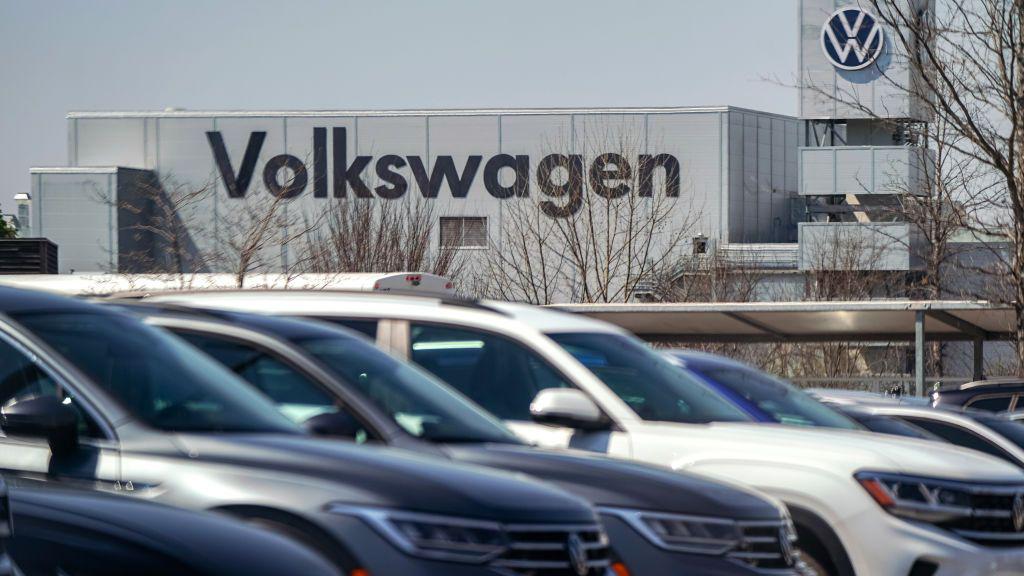
German carmaker Volkswagen Chief Executive Officer (CEO) Oliver Blume warned workers on Tuesday to brace for more job losses, earning boos from the crowd, as the crisis-hit company faces a drastic round of cost-cutting.
Volkswagen has struggled with Chinese competition, United States tariffs, and patchy demand in Europe, including for its electric vehicles.
About 50,000 job cuts have already been agreed across the 10-brand Volkswagen Group – mostly at VW, Audi, and Porsche – but the firm has said another 50,000 could be required worldwide to slash costs.
Speaking in front of about 10,000 workers at VW’s Wolfsburg factory, Blume said for the first time that it was likely “about half of the adjustments required would fall in Germany”.
Blume also cast doubt on the long-term future of three VW plants and an Audi factory, all in Germany, while stressing the company was searching for ways to keep them open into the 2030s.
“If we carried on in Germany as we have been, we would be at a permanent disadvantage to the tune of 1.5 billion euros ($1.75 billion) a year. We are under real pressure to act,” the CEO said.
Unions have accused VW of not being straight with workers after the latest plans were first reported by media and only later communicated internally.
Speaking to the crowd, VW Works Council chief Daniela Cavallo earned hearty applause as she accused management of keeping employees in the dark.
She said: “Our trust in the board, in particular in its head Oliver Blume, has been damaged.
“You can’t work with a CEO who doesn’t tell his staff what’s going on.”
Again, Volkswagen to sack 50,000 workers in cost-saving drive
Blume’s speech was repeatedly interrupted by jeering and whistling, with workers saying: “Don’t balance your books with our jobs”.
IG Metall union leader Christiane Benner in a radio interview acknowledged the difficulties brought by Chinese competition and US tariffs but advocated cost-cutting measures other than job cuts.
Collapsing sales in China have started to look less like a blip for VW and more like the new normal at the same time as Chinese competitors like Chery and BYD gain market share in Europe.
Other carmakers have warned that German auto plants need to learn to do more with less as cost pressure has risen.
BMW opened a new plant in lower-cost Hungary in 2025 and Mercedes-Benz unveiled an extension to its Hungarian Kecskemet plant last month, making it the firm’s largest in Europe.

- Brazil sues Shell for $108m over 2024 floods - October 10, 2026
- Portugal suspends Ronaldo after Nations League walkout - October 10, 2026
- EPL: Arsenal come from behind to beat Leeds at Emirates - October 10, 2026