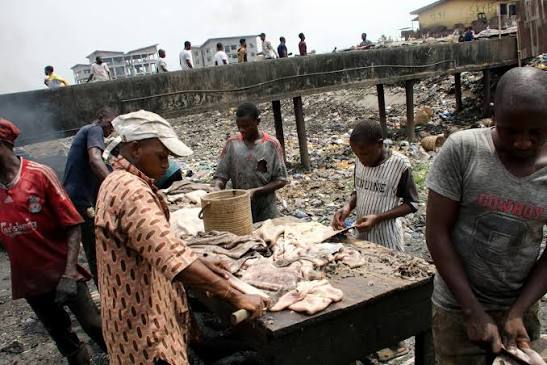
The Lagos State Government has announced plans to convert waste generated from abattoirs and slaughterhouses into biogas, organic fertiliser and other commercially useful products as part of efforts to tackle environmental pollution.
The initiative was disclosed at a one-day workshop for abattoir operators held at ABIS Farmers Market, Ajah, Lagos, with the theme, “Red to Green: From Waste Disposal to Resource Recovery.”
The Permanent Secretary, Office of Environmental Services, Lagos State Ministry of the Environment and Water Resources, Dr Gaji Tajudeen, said the state was seeking to move the abattoir sector away from traditional waste disposal practices towards resource recovery and waste-to-wealth opportunities.
Represented by the Director, Public Sanitation Utility, Rahman Fagbolade, Tajudeen said slaughtering activities produce large quantities of blood, rumen contents, bones, horns, hooves, faecal matter and wastewater, which could become environmental and public health hazards when improperly disposed of.
He said the waste could instead be processed into useful products, noting that blood, rumen contents, wastewater and faecal matter could be used in the production of biogas and organic fertiliser.
According to him, bones, horns and hooves could also be processed for use in different industries, creating additional sources of income for operators and supporting the development of a circular economy.
“When properly segregated, processed and managed, materials traditionally regarded as waste can become valuable resources that support enterprise development, job creation, additional income generation and the growth of a circular economy,” he said.
Tajudeen said the government would continue to enforce environmental and sanitation standards across abattoirs and slaughterhouses, while providing operators with the education and capacity required to comply with the regulations.
He urged operators to see environmental compliance as more than a regulatory requirement, stressing that proper waste management could improve public health, consumer confidence and the sustainability of their businesses.
The permanent secretary also called on farmers, young entrepreneurs and other stakeholders to explore business opportunities in waste recovery, particularly in areas that could boost agricultural productivity and create jobs.
He said the government, businesses and communities must work together to achieve a cleaner environment, adding that the success of the programme would ultimately depend on practical action after the workshop.
The guest lecturer, Muyiwa Semowo, said abattoir by-products could provide raw materials for several industries, including agriculture, manufacturing, pharmaceuticals, cosmetics and animal feed.
Speaking on “From By-products to Business: Unlocking the Economic Value of Bones, Horns, Hooves and Other Abattoir By-products,” Semowo encouraged operators to adopt proper waste segregation, handling and processing techniques to improve the quality and commercial value of the materials.
He said turning abattoir waste into useful products would not only reduce pollution and improve sanitation but also create new businesses, generate employment and increase the income of operators.
The workshop brought together abattoir and slaughterhouse operators from across Lagos State and focused on sustainable waste management, public health protection and opportunities for converting waste into economic resources.

- Wike rallies Rivers monarchs for Tinubu’s re-election - October 17, 2026
- Shettima inaugurates Tinubu campaign office, says North’s support is not a blank cheque - October 17, 2026
- Okonjo-Iweala: My mother was kidnapped over $2.4bn fuel subsidy fraud probe - October 17, 2026