An audit of federal ministries, departments and agencies has uncovered financial management breaches involving more than N1.34 trillion, with government institutions faulted over unretired advances, unsupported payments, unremitted revenues and irregular contracts.
The findings are contained in the Auditor-General for the Federation’s Annual Report on Non-Compliance/Internal Control Weaknesses in MDAs for the financial year ended December 31, 2024.
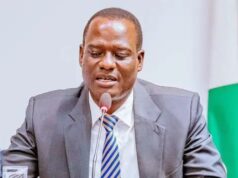
The report, transmitted to the National Assembly on July 17, 2026, by the Auditor-General for the Federation, Shaakaa Kanyitor Chira, identified 31 categories of infractions across the institutions examined.
The Auditor-General warned that the weaknesses could compromise accountability, public financial management and the delivery of government services.
One of the major findings was that 25 MDAs obtained cash advances amounting to N1.403 billion above approved limits.
The National Institute for Construction Technology and Management (NICTM), Uromi, Edo State, recorded the largest amount, with excess cash advances of N467.77 million.
The audit also found that 20 MDAs had failed to retire cash advances totalling N2.74 billion. NEPAD accounted for the largest portion, with N1.01 billion outstanding.
Beyond the unretired advances, NEPAD was linked to N1.78 billion in payments which the audit said were not adequately accounted for. The figure formed part of N6.73 billion in unaccounted payments identified across 14 MDAs.
Revenue remittances were another major area of concern.
Five MDAs were found to have under-remitted N1.169 billion in internally generated revenue to the Consolidated Revenue Fund, with the National Identity Management Commission responsible for N627.35 million of the amount.
In a separate finding involving nine MDAs, N8.089 billion in IGR was reportedly not remitted to the CRF. The University of Lagos accounted for N3.29 billion.
The audit further flagged N3.27 billion in unsubstantiated payments across 20 MDAs, with the Federal Ministry of Communication, Innovation and Digital Economy recording the highest amount at N447.67 million.
Another N37.081 billion in payments across 21 MDAs lacked supporting documentation. The National Cash Transfer Office accounted for N33.75 billion of that figure.
The National Theatre Commission was also singled out over N36.74 billion in payments made without pre-payment audit. The amount represented the bulk of N39.17 billion recorded under the infraction across seven MDAs.
Procurement and contract management also came under scrutiny.
The report identified N76.96 billion worth of irregular contracts across the institutions examined, with the National Population Commission recording the highest amount at N10.96 billion.
It also identified N27.252 billion paid for contracts and projects that were not properly executed. NICTM accounted for N11.36 billion of the amount.
Taken together, the findings expose weaknesses throughout the public expenditure process, including fund approvals, procurement, contract implementation, documentation, revenue collection and pre-payment checks.
The Auditor-General said the identified infractions had been forwarded to the Public Accounts Committees of the National Assembly for consideration.
The audit also raised questions over the management of government assets after vehicles with a carrying value of N117 million listed in the Nigerian Agricultural Insurance Corporation’s 2023 vehicle register were missing from its 2024 register.
The vehicles were not sighted during physical inspection, while the auditors found no documentation showing that they had been disposed of through an approved auction or another authorised process.
The report attributed the discrepancy to weaknesses in NAIC’s internal control system.
The concerns come amid renewed calls for stronger legal backing for the Office of the Auditor-General for the Federation.
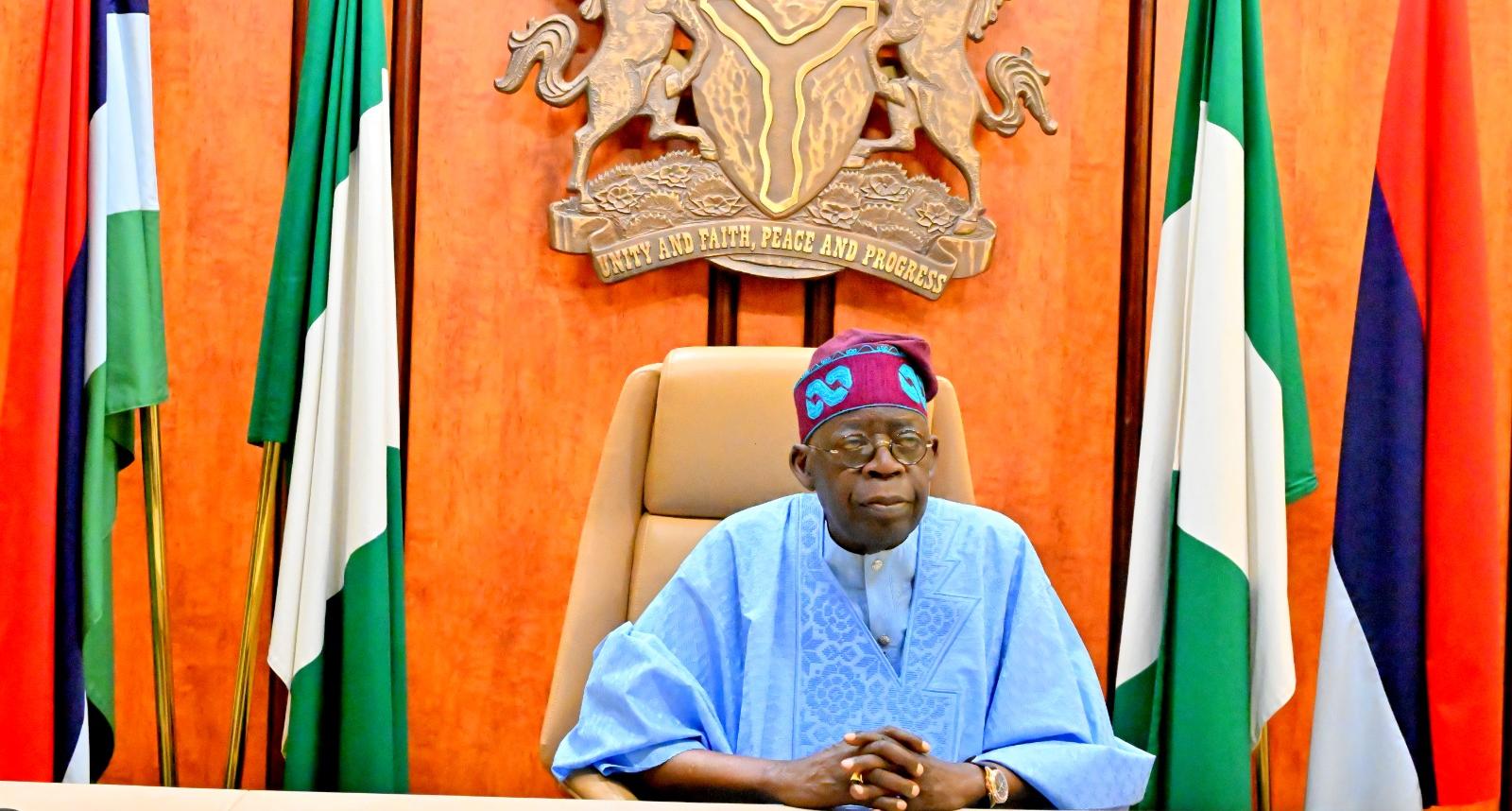
President Bola Tinubu has yet to assent to the Federal Audit Service Bill, which is intended to strengthen the independence and enforcement powers of the audit office.
The proposed legislation would, among other things, empower the Auditor-General to take action against heads of MDAs who fail to satisfactorily respond to audit queries.
It would also establish deadlines for the submission of government financial statements. Under the proposed law, the Accountant-General of the Federation would be required to submit the Federal Government’s financial statements to the Auditor-General by June 30 of the following financial year.
Accounting officers of MDAs and other public institutions would have 90 days after the end of a financial year to submit their financial statements to the Accountant-General.
Failure to meet the stipulated deadlines would attract a N500,000 fine under the proposed legislation.
The Bill would further give the Auditor-General powers to surcharge public officers over expenditures that are not properly accounted for and withhold the emoluments of officials who fail to respond to audit queries within 30 days.
The institutions covered by the audit include government agencies, research institutions, medical centres, universities and other tertiary institutions, as well as Nigerian diplomatic missions abroad.
Among those listed are the Cocoa Research Institute of Nigeria, Nigeria Agricultural Quarantine Service, Nigerian Agricultural Insurance Corporation, Nigerian Extractive Industries Transparency Initiative, Nigerian Communications Satellite Limited, Nigerian Press Council, Voice of Nigeria, National Biotechnology Development Agency and National Cash Transfer Office.
Other institutions include the National Commission for Refugees, Migrants and Internally Displaced Persons, National Film and Video Censors Board, National Social Safety Net Coordinating Office, Federal Medical Centres in Birnin Kebbi and Daura, and the Institute of Peace and Conflict Resolution.
Several higher institutions also featured in the audit, including the Federal University of Agriculture, Bassambiri; Michael Okpara University of Agriculture, Umudike; University of Calabar; Federal University, Gashua; Federal University Oye-Ekiti; Modibbo Adama University, Yola; Obafemi Awolowo University; University of Abuja; University of Lagos; University of Uyo; Usmanu Danfodiyo University, Sokoto; and Federal University of Technology, Akure.
Other audited institutions included the Maritime Academy of Nigeria, Oron; Nigerian College of Aviation Technology, Zaria; Nigeria Institute for Oil Palm Research, Benin City; Federal College of Freshwater Fisheries Technology, Baga; Federal College of Land Resources Technology, Owerri; and Federal College of Animal Health and Production Technology, Jos.
Hospitals and professional regulatory bodies, including the National Eye Centre, Kaduna, National Orthopaedic Hospital, Igbobi and Jos, Medical Laboratory Council of Nigeria, Council for Regulation of Engineering in Nigeria and Surveyors Council of Nigeria, were also among the institutions listed.
Nigerian diplomatic missions in Bamako, Tunis, Rabat, Lomé, Tel Aviv, Kampala, Bangui, Nairobi, Port of Spain and Ankara, as well as Nigeria’s Permanent Mission to ECOWAS and the Nigerians in Diaspora Commission, were also covered by the audit.
The breadth of the findings places renewed attention on the effectiveness of existing financial controls and the ability of government institutions to account for public funds and assets entrusted to them.

- No deal to step aside for ADC — Kwankwaso - October 18, 2026
- Presidency dismisses Makinde’s claim of N250bn NLNG dividend per state - October 18, 2026
- After 40 years apart, Fatai Okoya begs billionaire father for forgiveness - October 18, 2026