

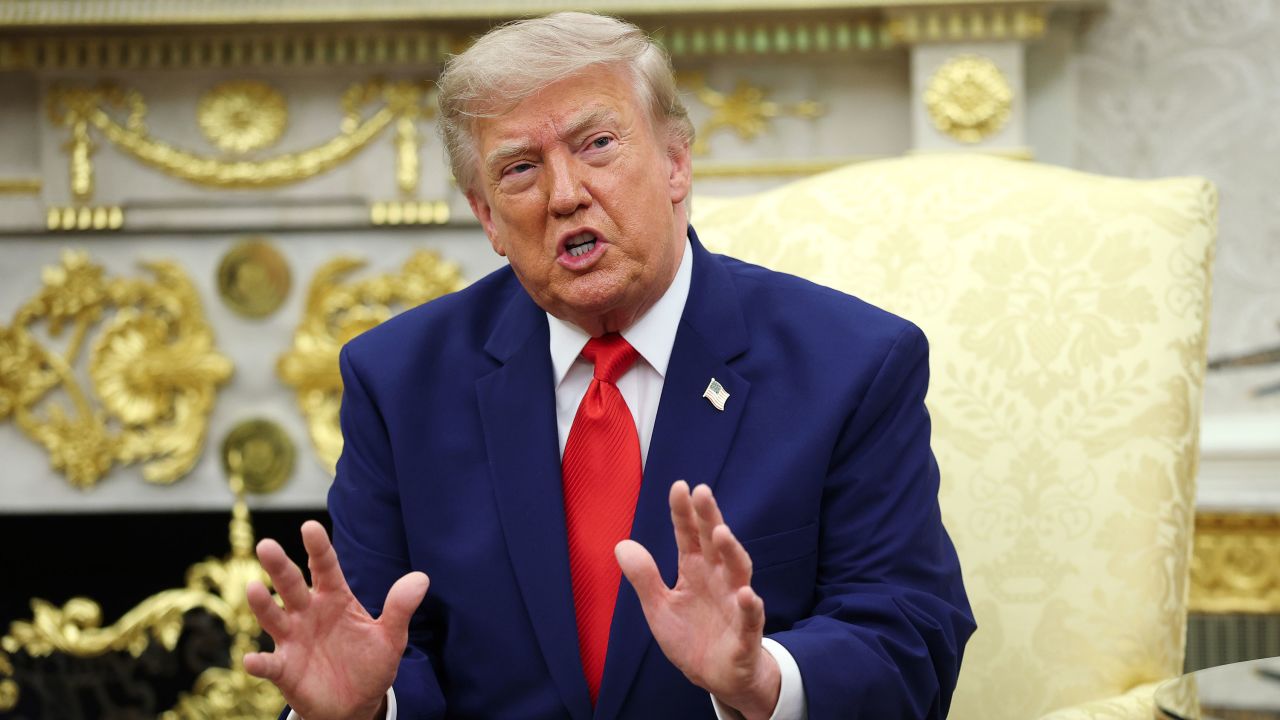
United States President Donald Trump has reportedly rejected Iran’s seven-day plan to reopen the strategic Strait of Hormuz and end hostilities in the Middle East.
Iranian Foreign Minister Abbas Araghchi said on Friday that Tehran had conveyed the proposal to Washington through Qatar during mediation efforts on the sidelines of the United Nations General Assembly in New York.
According to Araghchi, Iran would restore normal maritime traffic through the vital oil shipping route within seven days if certain conditions were met.
“Iran has conveyed to the United States, through Qatar, a concrete seven-day plan. If the necessary conditions are met, the strait can be reopened, and normal maritime passage restored within seven days,” he said.
However, The Wall Street Journal reported hours later that Trump had rejected the proposal, citing US officials familiar with the discussions. The report said the president remained sceptical that Iran would meet Washington’s demands and believed renewed military action was a likely option.
Trump also appeared to signal his position by posting a map on his Truth Social platform showing the Strait of Hormuz circled and labelled “Trump Strait.”
Media reports said Iran’s proposal included a seven-day ceasefire across the Middle East, including Lebanon, the release of an estimated $12 billion in frozen Iranian assets, the lifting of sanctions on Iranian oil exports, and an end to the US naval blockade of Iran.
Iran proposes 7-day plan to reopen Strait of Hormuz
Under the proposal, Tehran would reopen the Strait of Hormuz on the seventh day of the truce.
Iranian President Masoud Pezeshkian said Tehran was ready to begin implementing the ceasefire process once the United States accepted the terms.
The Strait of Hormuz remains one of the world’s most important oil transit routes and has been at the centre of tensions between Washington and Tehran since hostilities escalated nearly seven months ago.
The two countries signed a memorandum of understanding in June aimed at reopening the waterway and launching talks on Iran’s nuclear programme, but the agreement collapsed after renewed clashes in the Gulf.

- TikTok agrees $100m settlement with US state, introduces stricter teen safety measures - September 26, 2026
- Mbappe injured as Zidane wins France debut, Italy lose on Mancini’s return - September 26, 2026
- President Lula bans sports betting ahead of Brazil’s election - September 26, 2026