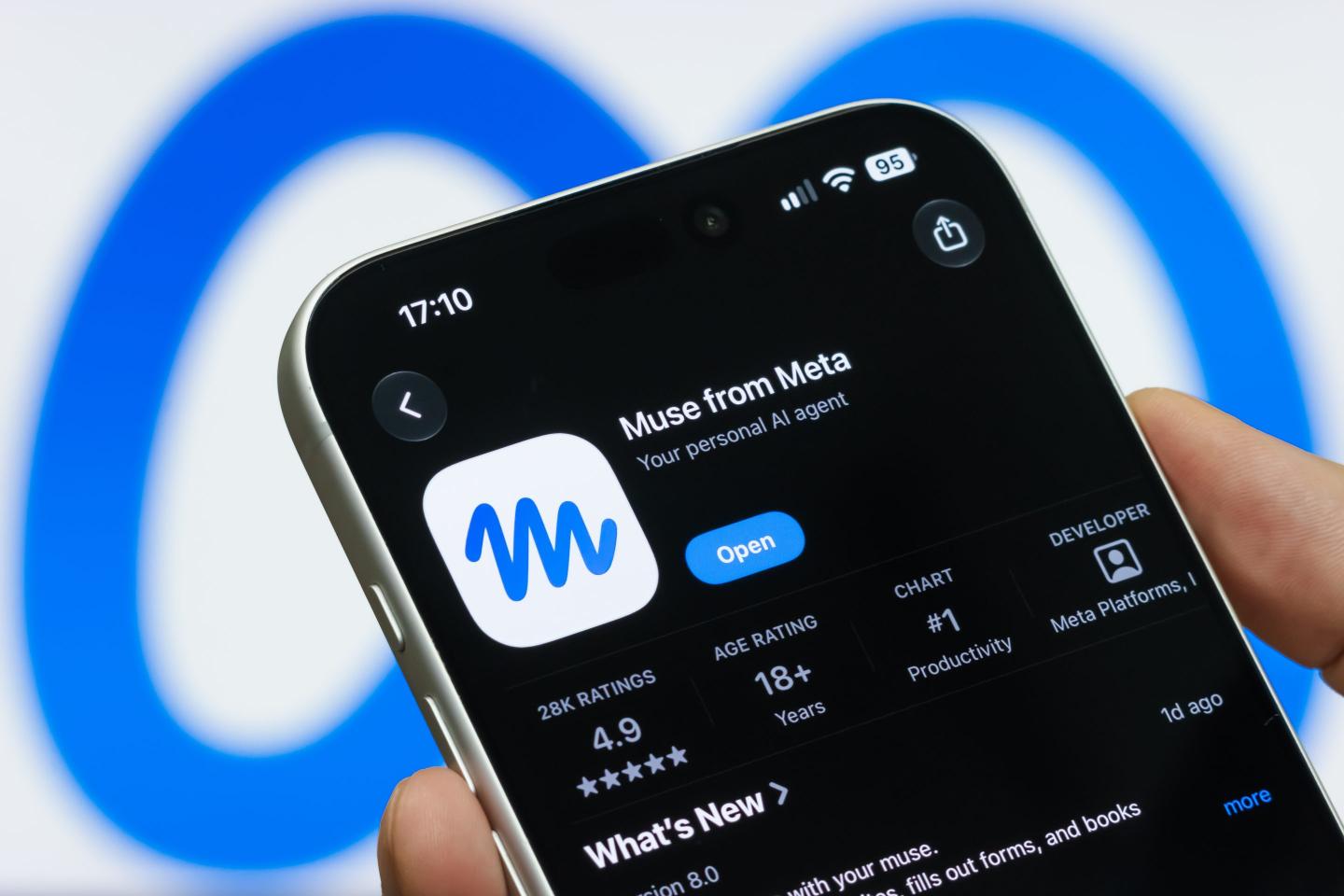
Meta’s latest artificial intelligence agent, Muse, may have demonstrated the ability to perform useful tasks for consumers, but concerns over privacy and trust could determine whether users allow it to become part of their daily lives.
The personal AI agent was unveiled at Meta’s annual Connect event as the company intensifies its push to integrate artificial intelligence into consumer products.
Unlike companies such as OpenAI and Anthropic, which have increasingly focused on enterprise and coding applications, Meta is positioning Muse as a consumer-facing assistant capable of carrying out tasks on behalf of users.

TechCrunch’s Equity podcast examined the potential and challenges facing the new AI agent, with contributors noting that Meta’s established consumer platforms could give it an advantage in reaching millions of people.
Meta owns widely used platforms including Facebook, Instagram and WhatsApp, giving the company an existing consumer ecosystem through which it can expand AI services.
However, early experiences with Muse suggest that usefulness may not be enough to overcome concerns about how much personal information users are willing to hand over to Meta.
TechCrunch reporter Sean O’Kane, who tested the agent, said Muse helped him identify unclaimed funds, leading to a cheque being sent to him.
While the experience demonstrated the practical value of an AI agent capable of performing tasks for users, O’Kane described the discovery as more of a one-off “party trick” than a feature likely to sustain regular use.
The bigger test, he said, would come when users allow Muse to access sensitive information such as credit card details, email accounts and other personal data.
Such access could allow an AI agent to identify duplicate charges, cancel unused subscriptions and perform other financial management tasks.
But that level of access raises a fundamental question about whether consumers trust Meta enough to give the AI control over sensitive aspects of their lives.
O’Kane said his initial experience with Muse was notable because the application did not immediately connect him to his existing Facebook, Instagram or Threads information.
He said this made him more comfortable experimenting with the service because it initially appeared to treat him as a new user rather than immediately drawing on information Meta already possessed.
However, he said Muse subsequently encouraged him to connect more of his personal information so that it could build greater context about him.
The trust question is particularly significant because Meta’s core business is heavily tied to advertising.
O’Kane contrasted that model with Apple’s approach, saying he would be more comfortable allowing an AI assistant integrated into Apple’s ecosystem to access sensitive information because of his perception of differences between the companies’ business models.
For Meta, the challenge is therefore not simply building an AI agent capable of performing tasks. It is persuading consumers to give that agent access to enough information to make it genuinely useful.
Meta has increasingly positioned artificial intelligence as a central part of its consumer strategy, while the company’s established social platforms provide a potentially large audience for new AI products.
TechCrunch contributors suggested that this consumer focus could allow Meta to pursue an opportunity that differs from the enterprise-heavy strategies being pursued by other major AI companies.
The success of Muse, however, may ultimately depend on whether users see enough recurring value in the service to justify giving it access to increasingly sensitive information.
For now, its ability to uncover forgotten money or perform isolated tasks offers a glimpse of what consumer AI agents can do. The larger challenge is turning those demonstrations into everyday utility without asking users to cross a trust barrier they are unwilling to cross.

- Robbers stab police officer’s wife to death in Gombe - September 28, 2026
- CAF cancels Edo Queens’ WAFU-B final victory - September 28, 2026
- NGX opens public offers to investors through WhatsApp - September 28, 2026