The Independent National Electoral Commission (INEC) has assured Nigerians that voters will determine the winner of the 2027 general elections, declaring that the electoral body has no preferred candidate or political party.
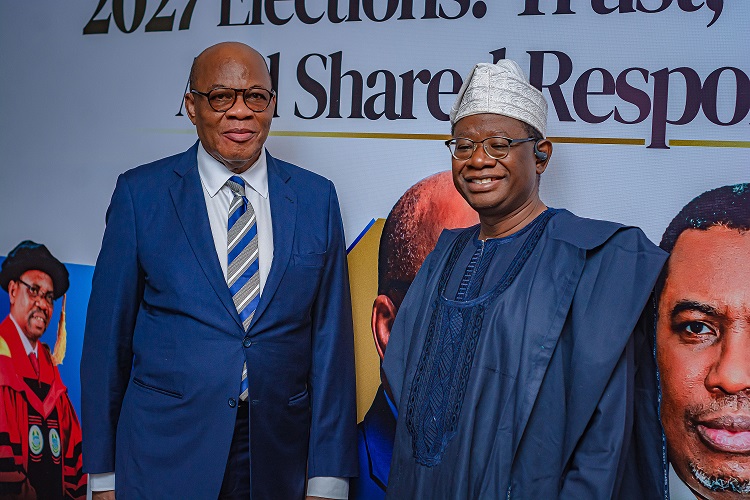
INEC Chairman, Prof. Joash Amupitan, gave the assurance on Thursday at the 10th annual conference of the Guild of Corporate Online Publishers (GOCOP) in Lagos.
Amupitan, who was represented by the Lagos Resident Electoral Commissioner, Prof. Ayobami Salami, said the commission’s allegiance was to the Constitution, the law and Nigerian voters.
“On behalf of the commission, in the 2027 election, by the grace of God, what will determine the winner would be the votes of Nigerians, and the will of Nigerians will prevail,” he said.
He said INEC had no preferred candidate, favoured political party or institutional interest beyond protecting the will of voters.
Amupitan urged online publishers to support efforts to ensure a credible electoral process, warning that misinformation, unverified reports, political violence narratives and AI-generated deepfakes could undermine public confidence in the 2027 elections.
He said fake news and sensational reporting could fuel tension, discourage voter participation and cause lasting damage to trust in electoral institutions.
“When an unverified claim regarding electoral fraud is published, the damage to public confidence is immediate and enduring; subsequent retractions or fact-checks rarely repair the injury,” he said.
The INEC chairman also cautioned online publishers against allowing the pressure to break stories ahead of competitors to compromise accuracy.
“Being first with a false story is a costly failure; being accurate with a verified fact is a public service,” he said.
He urged media organisations to verify reports of electoral fraud, security incidents, polling-unit results and other sensitive election information before publication.
Amupitan also disclosed that INEC was proposing stronger collaboration with GOCOP on election-related information management, including mechanisms for verifying field reports, stronger editorial self-regulation and voter education.
He said the commission had undertaken structural, technological and logistical reforms ahead of the 2027 elections.
According to him, INEC has been deploying personnel and resources across more than 176,000 polling units nationwide and completed a three-phase Continuous Voter Registration exercise.
He said the national register of voters had reached more than 103 million after the commission’s biometric verification process to eliminate duplicate registrations.
The INEC chairman announced that nationwide collection of newly printed Permanent Voter Cards would commence on Friday, October 9, urging online publishers to use their platforms to educate registered voters about where and how to collect their cards.
On election technology, Amupitan said INEC had upgraded and audited its Bimodal Voter Accreditation System (BVAS) and procured additional devices to strengthen accreditation at polling units.
He also highlighted the enhanced electronic transmission of polling-unit result sheets, saying the system would improve transparency by making results available for public viewing after counting.
He said INEC was also strengthening cybersecurity around its databases, including the deployment of artificial intelligence-based data-auditing tools and firewalls against cyberattacks.
Amupitan said the commission had equally begun early procurement and distribution of non-sensitive electoral materials to its state offices and the Federal Capital Territory.
He added that INEC had introduced systems to monitor the movement of electoral materials, storage security and logistics in real time.
The chairman said the commission was also intensifying voter education across traditional, digital and grassroots platforms, with emphasis on voting procedures, accreditation requirements, BVAS, PVC collection and Election Day regulations.
The GOCOP conference, themed “2027 Elections: Trust, Transparency and Shared Responsibilities,” brought together online publishers and other stakeholders to examine the role of the media in strengthening public confidence in the electoral process.

- Petrol subsidy return could push dollar to N3,000 — FG - October 8, 2026
- 2027: Nigerians will determine election winner with their votes — INEC chair - October 8, 2026
- EFCC chair warns corps members against get-rich-quick schemes, cybercrime - October 8, 2026