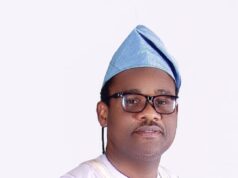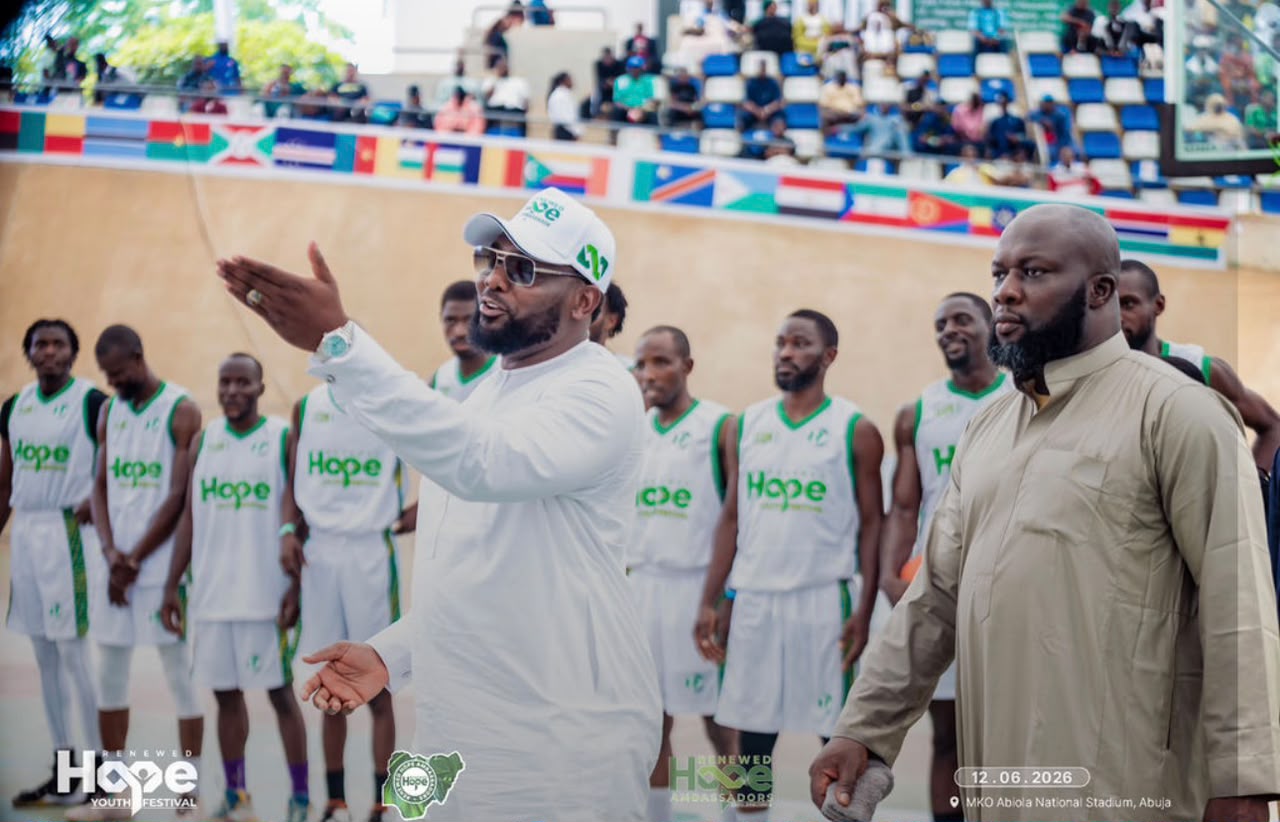
The Director-General and Chief Executive Officer of the Energy Commission of Nigeria and Director of Youth of the Renewed Hope Ambassadors, Dr. Mustapha Abdullahi, speaks on the President’s youth development agenda, reforms at the National Sports Commission, grassroots investment and the future of Nigerian basketball.
Abdullahi believes President Bola Tinubu’s renewed attention to sports development could help unlock one of Nigeria’s most underutilised economic opportunities.
The Director-General of the Energy Commission of Nigeria and Director of Youth of the Renewed Hope Ambassadors has spent over two decades involved in basketball, both as a competitive player and an investor in grassroots development.
Through the DAM Foundation, he has supported sporting facilities, competitions and an academy serving more than 500 children.
In this interview with theasovilla, he discusses the President’s economic policies, the changing direction of Nigerian sports under the National Sports Commission and the institutional reforms required to create lasting opportunities for young Nigerians.
President Bola Ahmed Tinubu has made youth empowerment and economic opportunity central to his administration. How do you assess his approach, and where does sports development fit into the wider Renewed Hope Agenda?
I believe President Tinubu understands the importance of investing in Nigeria’s young population.
His administration has introduced initiatives in education financing, skills development, entrepreneurship and access to credit. Programmes such as NELFUND and the 3 Million Technical Talent initiative are examples of efforts to address barriers facing young Nigerians.
Sports presents another important opportunity.
We have talented young people who can build successful careers as athletes, coaches, administrators and professionals working across the sporting industry.
I believe the President’s emphasis on economic diversification and private-sector investment provides an opportunity to develop sports beyond international competitions.
We should be building an industry that creates employment, attracts investment and gives young Nigerians more pathways to economic independence.
One of President Tinubu’s major interventions was the restructuring of sports administration through the National Sports Commission. What has changed under the leadership of Mallam Shehu Dikko and Hon. Bukola Olopade?
The restoration of the National Sports Commission was an important decision because it created an opportunity to give sports administration greater technical focus.
Under Mallam Shehu Dikko and Hon. Bukola Olopade, we are seeing greater emphasis on developing the sports economy, encouraging private investment and strengthening the institutions responsible for managing our sporting activities.
I find the focus on commercial sustainability particularly important.
For many years, the conversation around Nigerian sports has been dominated by preparation for major competitions and the performance of our national teams.
We must also consider the domestic structures that produce those athletes.
Our leagues need stronger administration, our athletes need better welfare arrangements, and sporting federations must become more attractive to corporate partners.
The Commission’s new direction provides an opportunity to address these issues.
The real measure of progress will be the extent to which these reforms improve opportunities for athletes, strengthen domestic competitions and attract sustainable investment.
2027: Tinubu begins re-election campaign in Kaduna October 24
You have personally invested in basketball infrastructure and grassroots development for years. What have those experiences taught you about the opportunities and challenges facing young Nigerian athletes?
I have been involved in basketball for more than twenty years.
I played in Nigeria’s domestic basketball leagues, university competitions, the national youth setup and with Trafford Basketball Club in Manchester.
Those experiences helped me understand the game from the perspective of an athlete.
Through the DAM Foundation, we have constructed a basketball court in Kano, organised grassroots competitions in Okene and supported an academy serving more than 500 children.
I have encountered young people with exceptional talent who lack access to proper facilities, regular competitions and professional coaching.
Sometimes, providing a training facility or an opportunity to participate in an organised competition can make an enormous difference.
But I have also learned that individual investments have their limitations.
We need stronger institutions capable of coordinating grassroots development, supporting clubs and creating pathways into professional sports.
That is how we can make opportunities available to more young Nigerians.
You recently announced your intention to contest the presidency of the Nigeria Basketball Federation. Having spent over two decades involved in the sport, what is driving this decision, and how does your vision align with President Tinubu’s broader agenda for youth development and the sports economy?
My decision comes from a longstanding commitment to basketball and my belief that the sport can achieve much more with stronger institutions and effective leadership.
I have experienced basketball as a player, invested personally in grassroots development and acquired experience managing a federal institution.
These experiences have given me an understanding of the challenges facing the game and the opportunities available to address them.
President Tinubu’s restructuring of sports administration, particularly the renewed emphasis on the sports economy under the National Sports Commission, creates an opportunity for sporting federations to strengthen their operations.
I believe basketball should benefit from that direction.
My vision is to help build a professionally managed federation with stronger domestic leagues, better player welfare, sustainable commercial partnerships and clear development pathways for young athletes.
I also want to strengthen collaboration with state associations, clubs, coaches and other stakeholders.
Ultimately, I believe Nigerian basketball can become an important contributor to the country’s sports economy.
That ambition is consistent with the President’s broader emphasis on developing human capital, attracting investment and expanding opportunities for young Nigerians.
Beyond basketball, what must Nigeria do to ensure that the renewed attention to sports development produces lasting economic benefits rather than occasional international successes?
We must strengthen the institutions responsible for managing sports.
That includes improving governance, developing professional competitions and creating an environment that encourages private investment.
Sporting federations should have clear development plans, transparent financial systems and measurable performance objectives.
We also need stronger partnerships with educational institutions.
Schools and universities should play a greater role in identifying talent and providing structured development opportunities.
Another important area is athlete welfare.
Young people are more likely to pursue sporting careers when they can see a reliable pathway for development and understand the opportunities available to them.
I believe the National Sports Commission’s focus on the sports economy provides a useful framework for addressing these priorities.
The challenge is ensuring that reforms are implemented consistently across sporting federations and at the grassroots.
Finally, as Director of Youth of the Renewed Hope Ambassadors and Secretary of the APC Presidential Campaign Council’s Sports Mobilisation Committee, what are young Nigerians telling you about their expectations as the country approaches 2027?
Young Nigerians want practical opportunities to improve their lives.
They want access to education, employment, skills development and support for their businesses.
Those pursuing careers in sports want better facilities, organised competitions and opportunities to develop professionally.
President Tinubu’s administration has introduced programmes addressing several of these priorities, and the renewed focus on sports development is another important part of that conversation.
Our responsibility is to ensure that these interventions are accessible and deliver meaningful results.
Through the Renewed Hope Ambassadors, we engage young Nigerians, explain government policies and listen to their concerns.
I believe that engagement must continue as the country approaches 2027.
Young Nigerians should be able to assess government programmes, express their expectations and participate meaningfully in the democratic process.
For me, the important thing is that the policies we discuss at the national level translate into opportunities that young people can experience in their communities.

- Portugal suspends Ronaldo after Nations League walkout - October 10, 2026
- EPL: Arsenal come from behind to beat Leeds at Emirates - October 10, 2026
- INTERVIEW: Tinubu creating new opportunities for Nigeria’s sports economy — Mustapha Abdullahi - October 10, 2026