


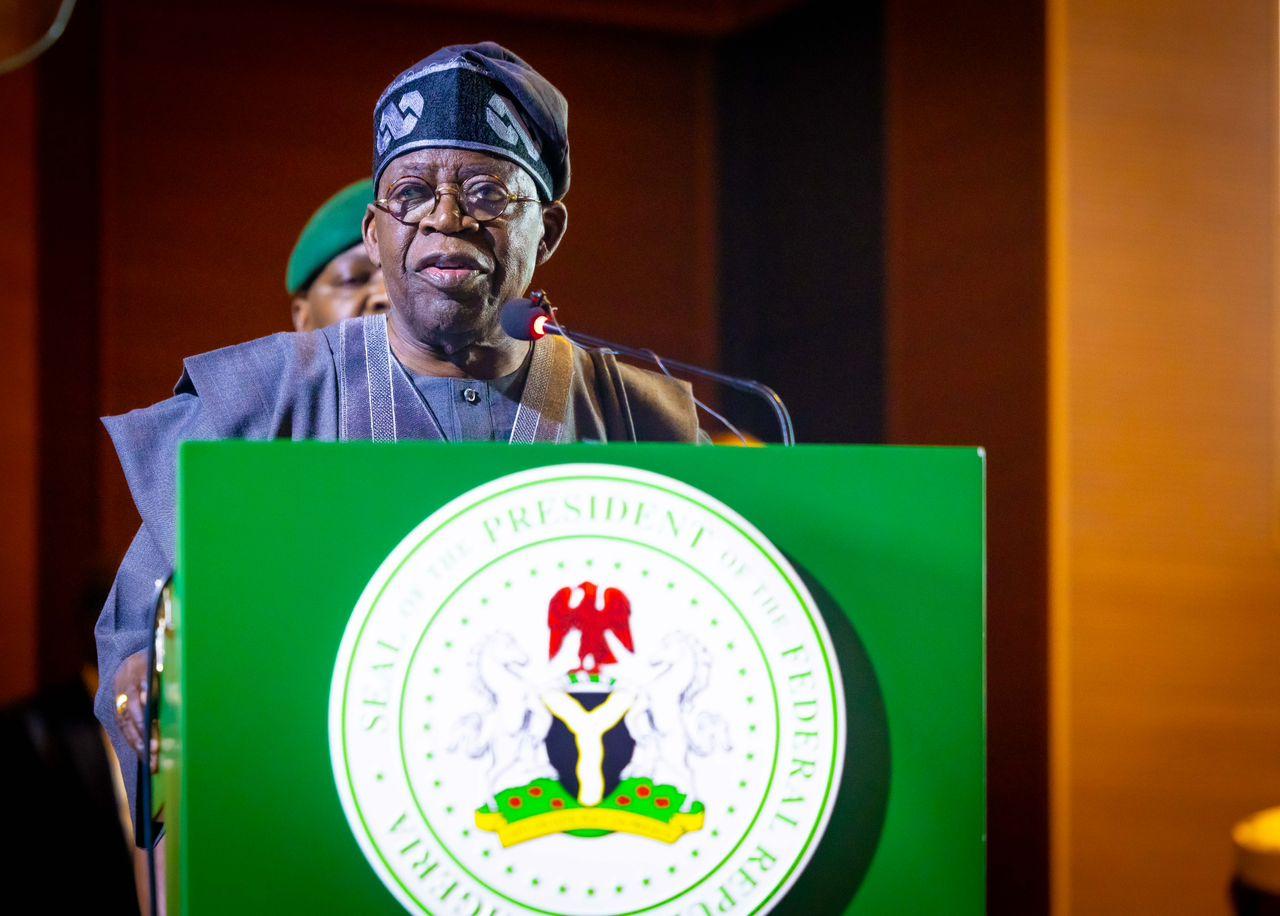
President Bola Tinubu says his administration is rewriting Nigeria’s decades-long story of economic underperformance through far-reaching reforms designed to unlock the country’s enormous economic potential.
Tinubu said this at the 32nd Nigerian Economic Summit held in Abuja on Monday, October 26, 2026.
The president, who was represented by Vice President Kashim Shettima, said his administration began its tenure with difficult economic decisions aimed at addressing structural challenges that had hindered Nigeria’s growth and development for decades.
“There is no shortcut to economic growth,” stressing that the government had embarked on a difficult economic reset to establish a sustainable foundation for national prosperity.
According to him, the administration is pursuing its original mission of transforming Nigeria’s economic fortunes and reversing years of performance below the country’s potential.
“We came to rewrite the story of a nation that has performed below its potential for far too long,” Tinubu said.
He explained that the reforms were necessary to dismantle longstanding economic barriers, strengthen national productivity and create opportunities for Nigerians across different sectors.
The president said rescuing the economy involved more than improving economic indicators, noting that the ultimate objective was to improve livelihoods and expand opportunities for citizens.
“For us, rescuing the economy means rescuing livelihoods and transforming the fortunes of young jobseekers, farmers, manufacturers, entrepreneurs and innovators,” he said.
Tinubu stressed that economic stability remained essential to harnessing the opportunities presented by Nigeria’s growing population and abundant human and natural resources.
“We cannot harness the immense opportunities offered by our growing population without first stabilising the economy,” Tinubu said.
He said the administration had created conditions for the public and private sectors to invest, expand their operations and generate productive employment.
According to him, the government has introduced reforms to dismantle structural barriers that prevented the country’s resources from translating into widespread prosperity.
“These reforms are restoring confidence, strengthening our economic foundations and laying the groundwork for sustainable growth,” the President said.
PDP tackles Tinubu: We’re not responsible for hunger in Nigeria
Tinubu said the administration was encouraged by the progress recorded so far, adding that the next phase required greater attention to productivity, employment quality and the effective utilisation of the workforce.
He stressed the need to improve the quality of work, reduce underemployment and harness the potential of Nigeria’s underutilised workforce.
The President said sustainable prosperity would require greater productivity from workers, businesses and investments across the economy.
“Our pursuit of prosperity demands greater productivity from every worker, enterprise and investment,” he said.
He noted that the government must assess infrastructure investments based on the economic activities they generate, while education should be evaluated by the skills and productivity it delivers.
“We must judge infrastructure by the economic activity it generates and education by the skills and productivity it delivers,” Tinubu said.
He added that industrial policies should be measured by their impact on the competitiveness of Nigerian businesses and their ability to stimulate investment, technological advancement, exports and employment.
The President said the achievements of his administration’s economic reforms had been documented.
He cited figures from the National Bureau of Statistics (NBS) showing that Nigeria’s inflation-adjusted Gross Domestic Product grew by 3.89 per cent in the first quarter of 2026, compared with 3.13 per cent in the corresponding period of 2025.
On economic diversification, Tinubu said non-oil activities accounted for 96.08 per cent of the country’s GDP, while manufacturing grew by 3.29 per cent and the oil sector expanded by 2.57 per cent.
He said the figures had strengthened the government’s confidence in its economic recovery strategy and efforts to diversify the country’s sources of growth.
However, Tinubu emphasised that the administration’s ambition extended beyond favourable economic statistics to achieving measurable improvements in the living conditions of Nigerians.
He disclosed that Nigeria’s capital importation reached 10.37 billion dollars in the first quarter of 2026, representing an increase of 83.83 per cent over the corresponding period in 2025, with contributions from portfolio and foreign direct investments.
The President said the government would continue to ease regulatory burdens, strengthen transparency, ensure policy predictability and expand access to finance to attract more investments.

- Don’t let loneliness choose for you, By Funke Egbemode - October 27, 2026
- Tinubu: My govt rewriting Nigeria’s economic underperformance story with reforms - October 27, 2026
- PDP tackles Tinubu: We’re not responsible for hunger in Nigeria - October 27, 2026