

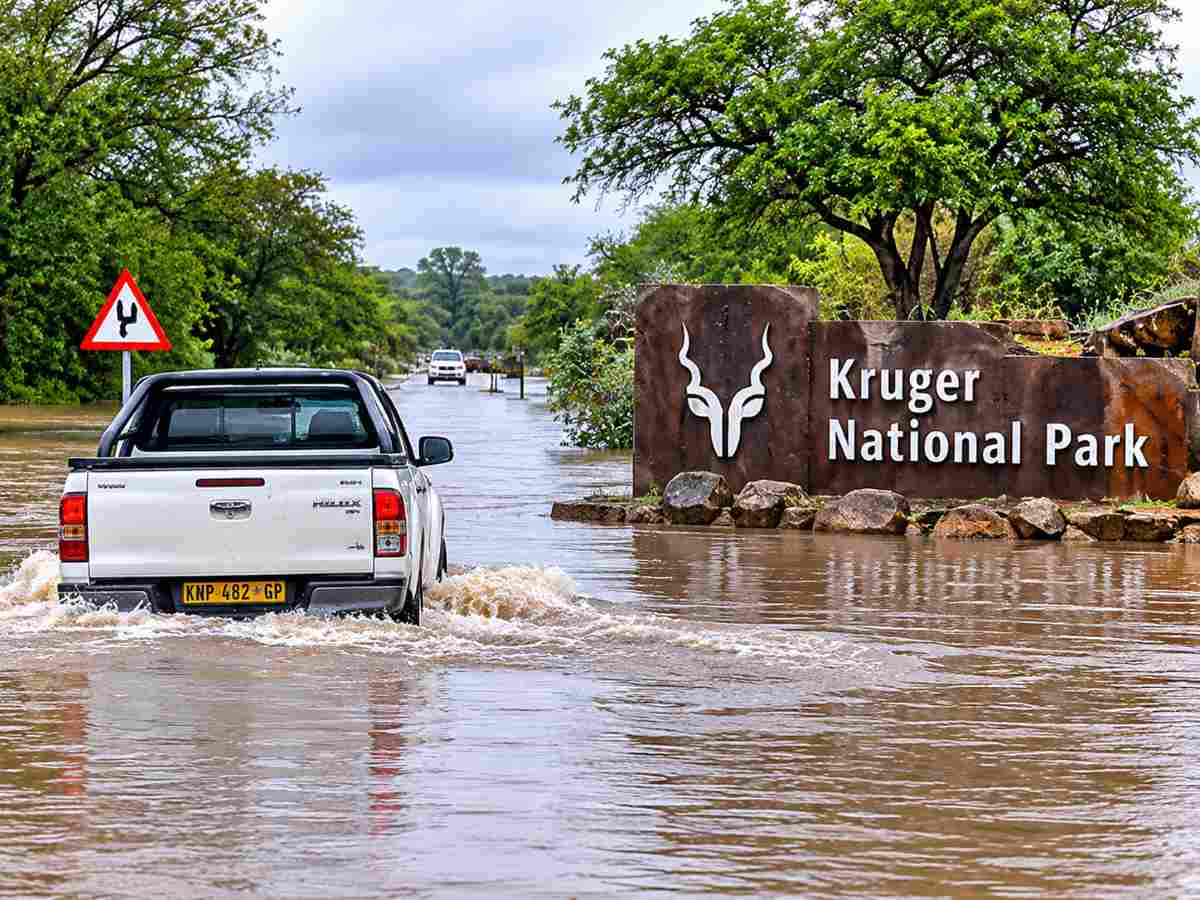
outh Africa’s iconic Kruger National Park is facing a $29.2m funding shortfall for the reconstruction of roads, bridges and tourist facilities damaged by devastating floods in January 2026, threatening its tourism recovery and conservation operations.
The recovery programme is estimated to cost R950m ($57.7m), but only R469m ($28.5m) has been secured from the park management, national government and insurance settlement, leaving R481m ($29.2m) outstanding.
The funding figures were provided by South Africa’s Forestry, Fisheries and the Environment Minister, David Maynier, as authorities struggle to restore critical infrastructure at one of Africa’s largest and most important wildlife destinations.
South African National Parks (SANParks), which manages the reserve, has committed R100m ($6m), while the national government has allocated R218m ($13.2m). An insurance settlement contributed another R150m ($9.1m).
SANParks has so far spent about R87m ($5.3m) on restoration work, while projects worth an additional R188m ($11.4m) have received approval.
The floods forced authorities to temporarily close the park after heavy rainfall caused several rivers to overflow, destroying infrastructure and cutting off access to parts of the reserve.
At the height of the disaster, 15 tourist camps were closed, while some sections of the park became inaccessible.
The damage has also affected the park’s tourism business, with visitor numbers in February 2026 declining by about 7,000 compared with the same period in 2025, to approximately 90,000 guests.
Kruger recorded 1.87 million visitors in the 12 months to March 2025.
NDC urges Nigerians to vote out Tinubu over fresh $7.7bn loan
The decline highlights the economic consequences of prolonged infrastructure damage at a destination that attracts international tourists and supports businesses across South Africa’s Limpopo and Mpumalanga provinces.
Beyond tourism, the park plays a major conservation role, providing habitat for threatened wildlife, including the black rhinoceros.
SANParks Chief Executive Officer, Hapiloe Sello, said the organisation was grateful that the disaster did not result in any loss of life despite the extensive destruction.
She commended park employees for their preparedness and response, saying their efforts helped prioritise the safety of visitors and staff during the emergency.
Some damaged facilities have already been restored.
In September, Maynier marked the reopening of the Letaba High-Level Bridge, reconstructed culverts along the H4-1 road between Skukuza and Lower Sabie, and restored facilities at Letaba Rest Camp.
The Letaba bridge provides an important connection between the northern and southern sections of the park, while the H4-1 is one of its busiest tourist routes.
At Letaba Rest Camp, 25 damaged accommodation units have been restored, while repairs to another 64 units are expected to allow their gradual reopening.
Maynier said the reconstruction programme would go beyond replacing damaged infrastructure, with new projects designed to make the park more resilient to increasingly severe weather events.
The approach reflects growing concerns over the vulnerability of South Africa’s tourism infrastructure to extreme rainfall and other climate-related disasters.
Kruger National Park covers approximately two million hectares across Limpopo and Mpumalanga provinces. Established in 1898 and formally proclaimed in 1926, the park celebrated its centenary in 2026.
It supports an extensive range of wildlife, including 147 mammal species, 507 bird species, 114 reptile species and 336 tree species.
Securing the outstanding R481m is therefore critical not only to restoring tourism facilities but also to protecting the infrastructure supporting one of Africa’s most important wildlife conservation destinations.

- FG blames gas crunch for worsening power outages - November 6, 2026
- Oil thieves steal 3.3m barrels as NUPRC revenue drops N2.1trn - November 6, 2026
- NDLEA uncovers foreign drug cartels using Nigeria as transit hub - November 6, 2026