

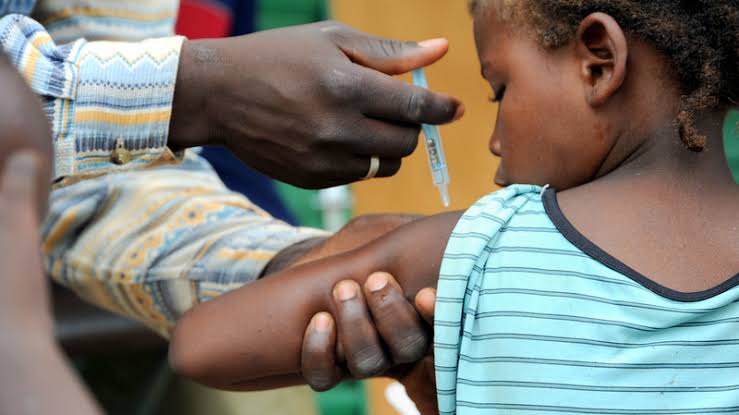
The Kaduna State Government has partnered with the Gavi Vaccine Alliance, the World Health Organisation (WHO), UNICEF and other development partners to strengthen routine immunisation and reduce the growing number of zero-dose children in the state.
The collaboration followed a high-level immunisation delegation’s visit to Kaduna on Monday, November 9, 2026, to assess challenges affecting vaccine delivery and primary healthcare services.
The Executive Secretary of the Kaduna State Primary Health Care Board, Prof. Bello Jamoh, said the state had identified key challenges and was committed to deploying human and financial resources to improve immunisation coverage.
Jamoh noted that while Kaduna had recorded improvements in infant and neonatal mortality, skilled birth attendance and healthcare utilisation since the 2018 National Demographic and Health Survey, the rising number of zero-dose children remained a major concern.
According to him, the immunity gap has contributed to outbreaks of vaccine-preventable diseases, including diphtheria.
Jamoh said the state and its partners, including Gavi, WHO, UNICEF, the Gates Foundation and the National Primary Health Care Development Agency (NPHCDA), had developed action plans with clearly defined responsibilities to improve immunisation outcomes.
Jamoh also commended Governor Uba Sani for demonstrating political commitment to strengthening primary healthcare.
Gavi’s Chief Country Delivery Officer, Dr Thabani Maphosa, said the visit was aimed at understanding Kaduna’s priorities and identifying areas for partnership.
He commended the Kaduna State Government for openly discussing its healthcare challenges and noted that initiatives such as DRIVE were helping to address vaccine stock-outs and improve supply chains.
Maphosa stressed the need for stronger coordination and effective implementation of agreed interventions.
The Director of Disease Control and Immunisation at NPHCDA, Dr Garba Rufai, said the delegation also engaged community members to understand barriers to immunisation.
Rufai disclosed that a recent disease outbreak in one community claimed the lives of five children, prompting increased awareness and mobilisation for vaccination.
UNICEF: 12 million girls married off yearly before 18
Rufai commended community leaders for involving ward heads, men and household heads in encouraging parents to vaccinate their children.
UNICEF Nigeria Deputy Representative, Rownak Khan, said the delegation reviewed Kaduna’s routine immunisation plans and visited health facilities to assess services, including vaccination, nutrition and family planning.
Khan warned that many children remained unvaccinated, leaving them vulnerable to diseases such as diphtheria and measles.
Khan urged the state government to adequately fund healthcare while assuring that UNICEF would continue supporting Kaduna in health, nutrition, education and child protection.
She added that UNICEF’s interventions had reduced vaccine stock-outs from nearly 80 per cent to about 25 per cent.
Also speaking, the Director of WHO’s Department of Immunisation, Vaccines and Biologicals, Dr Kate O’Brien, described vaccines as safe and life-saving, urging parents to ensure their children complete their immunisation schedules to protect them against preventable diseases.

- Gavi, WHO, UNICEF partner Kaduna govt to boost children immunisation - November 10, 2026
- 2027: INEC removes 1.6m invalid records from voter register - November 10, 2026
- Stock market rebounds as investors gain N2.32trn - November 10, 2026