

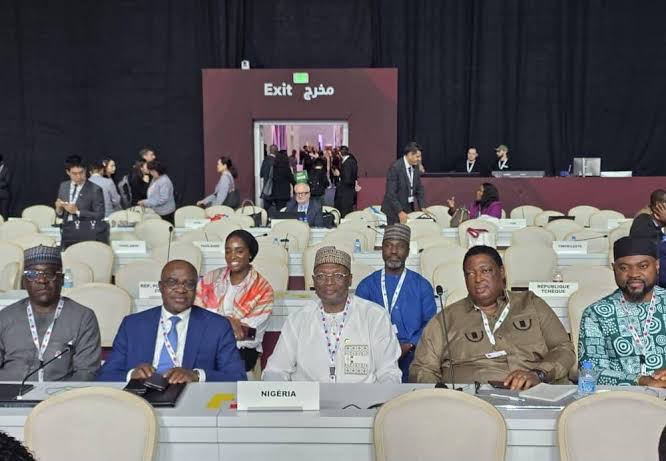
Nigeria has secured re-election to the governing council of the International Telecommunication Union (ITU), earning another four-year term for the 2027–2030 period.
The election took place on Monday at the ITU Plenipotentiary Conference in Doha, Qatar, where Nigeria emerged among 48 countries elected to the council.
The council oversees the organisation’s policies, activities and strategies between sessions of the Plenipotentiary Conference.
It also coordinates working groups on telecommunications issues and prepares strategic and financial plans for consideration at subsequent conferences.
Other African countries elected alongside Nigeria include Algeria, Côte d’Ivoire, Egypt, Ghana, Kenya, Mauritius, Morocco, Rwanda, Senegal, South Africa, Tanzania and Tunisia.
In the Americas, Argentina, Brazil, Canada, Cuba, the Dominican Republic, Jamaica, Mexico, Paraguay and the United States secured seats.
France, Germany, Italy, Spain, Sweden, Switzerland, Türkiye and the United Kingdom were elected from Western Europe, while Azerbaijan, Bulgaria, Czech Republic, Poland and Romania will represent Eastern Europe and Northern Asia.
Australia, Bahrain, China, India, Indonesia, Japan, South Korea, Kuwait, Malaysia, Qatar, Saudi Arabia, Thailand and the United Arab Emirates were elected from Asia and Australasia.
Meanwhile, 12 individuals were elected to the ITU’s Radio Regulations Board for the same four-year period.
The independent body, which operates within the ITU’s Radiocommunication Sector, oversees regulatory matters relating to the international use of radio-frequency spectrum and satellite orbit resources.
Nigeria’s inflation slows to 14.06% despite faster monthly price increases
The election followed the re-election of Doreen Bogdan-Martin as ITU Secretary-General and Adel Darwish as Deputy Secretary-General earlier at the conference.
Eric Fournier was elected Director of the Radiocommunication Bureau, while Seizo Onoe retained his position as Director of the Telecommunication Standardization Bureau.
Nele Leosk was also elected Director of the Telecommunication Development Bureau.
The Plenipotentiary Conference, which began on November 9, will run until November 27 at the Doha Exhibition and Convention Centre.
Member states are expected to consider the organisation’s strategic and financial plans, alongside other issues affecting global telecommunications and digital technologies.

- Cat beats airport security, flies from Egypt to UK - November 16, 2026
- Drug-resistant infections could kill 39 million people by 2050 — WHO - November 16, 2026
- I once tried ingesting broken glass — Kunle Afolayan’s son - November 16, 2026