


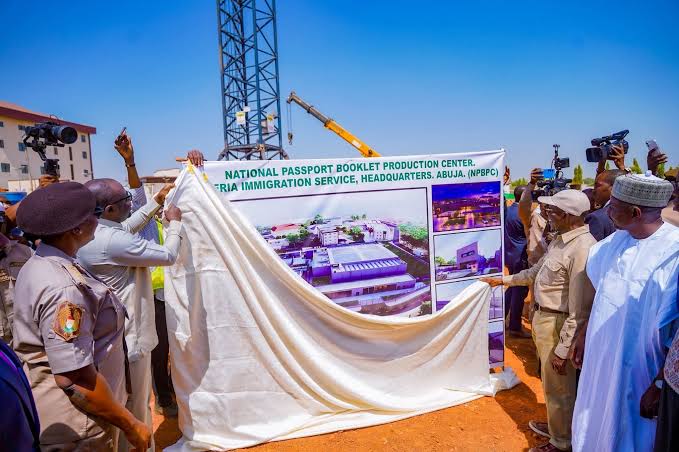
Nigeria will begin local production of international passport booklets in May 2027, with a new manufacturing facility expected to produce six million passports annually, the Minister of Interior, Olubunmi Tunji-Ojo, has said.
Tunji-Ojo disclosed this on Friday during the groundbreaking ceremony for the construction of a $70 million National Passport Manufacturing Centre in Abuja.
He said the facility, expected to be completed and commissioned in May 2027, would reduce Nigeria’s dependence on foreign suppliers, address passport booklet shortages and protect the country against disruptions in the global supply chain.
The minister said the centre was being developed in partnership with Iris Smart Technologies without direct financial expenditure by the Federal Government.
According to him, the facility will have an initial production capacity of six million e-passport booklets annually, which will later be expanded to 10 million.
He noted that Nigeria currently requires between 1.8 million and two million passports annually, adding that the new facility would provide sufficient capacity to meet domestic demand and serve other countries.
Tunji-Ojo described the project as a major milestone in the transformation of the Nigeria Immigration Service (NIS) under President Bola Tinubu’s administration.
He said Nigeria would become the first country in West Africa to manufacture e-passport booklets when the facility becomes operational.
Nigerian Embassy in Qatar cuts passport turnaround to two weeks
The minister also said only three African countries—South Africa, Ethiopia and Algeria—currently manufacture passports, adding that the new Nigerian facility would operate at the highest level of e-passport manufacturing.
He said the centre was designed not only to meet Nigeria’s needs but also to provide manufacturing capacity for ECOWAS and other countries.
Speaking at the event, the Comptroller-General of the Nigeria Immigration Service, Kemi Nandap, said Nigerians had endured years of passport booklet shortages and prolonged waiting periods.
She said the challenges had demonstrated the need for Nigeria to control critical parts of its passport supply chain.
Nandap said the manufacturing centre was designed to strengthen national security and sovereignty, improve supply-chain resilience, develop local human capital and enhance passport services for Nigerians.

- Morocco tipped to retain AFCON title as CAS prepares final verdict - November 23, 2026
- Four killed as gunmen attack Omo-Agege’s campaign rally in Delta - November 23, 2026
- APC dares authors of fake INEC letter to provide evidence - November 23, 2026