


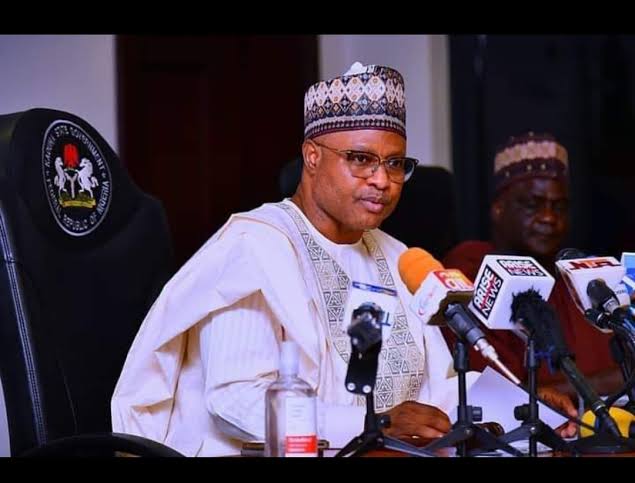
The Kaduna State Government has introduced mental health in schools programme, becoming the first state to adapt the WHO Mental Health in Schools framework into a state-wide, school-based programme.
The Kaduna State Commissioner for Health, Umma Ahmed, made this known while inaugurating a five-day Training of Trainers workshop for teachers in Kaduna Central on the development supported by UNICEF on Tuesday, November 24, 2026.
Ahmed said under the initiative, each counselling support unit, led by school principals, would train class teachers on promoting mental health in their respective schools.
According to her, the training will help identify students in need of early assistance, offer basic counselling, and refer children to a primary healthcare centre of excellence or specialist for care.
Ahmed urged health facilities to always be prepared to receive referred students to be attended professionally, adding that when a school refers a child, facilities must be ready to receive the child with skill and with compassion.
Also speaking, the Director-General of the Kaduna State Substance Abuse and Mental Health Services Agency (KADSAMHSA), Dr Joseph Ike, said distressed pupils in classrooms had too often faced either punishment or silence.
Ike said for too long a child in distress in classrooms has met one of two responses – punishment or silence – adding that the programme gives that child a trained teacher who notices, listens and knows exactly where to go next.
He said similar training will be provided for trainers in Kaduna North and Kaduna South as part of measures for counselling support units across 259 schools in the state.
Daura Emir barred from official duties over sexual assault
Ike noted that the targeted 259 schools comprises 69 public basic education schools, 115 public senior secondary schools, and 75 private schools.
The KADSAMHSA added that the training of facilitators zone by zone would ensure every school is reached by personnel with thorough knowledge of the programme.
“Getting the trainers right is how we get 259 schools right. We are training them zone by zone so that every school is trained by people who know this programme inside out,” Ike said.
In his remarks, the Chairman of the State Universal Basic Education Board (SUBEB), Mubarak Mohammed, explained that adult response in the classroom often shapes whether a child feels supported or overlooked.
Mohammed said sometimes, the difference between a child who feels supported and one who feels overlooked begins with the response of an adult in the classroom.

- Kaduna set record as govt unveils health programme to reach 259 schools - November 24, 2026
- Yul Edochie’s wife to court: I’m not husband snatcher - November 24, 2026
- Court sends businessman to Kuje prison over N10.1bn fraud - November 24, 2026