


Crude oil prices fell on Thursday, November 26, 2026, following the previous session’s sharp rise, as supply concerns lingered after Yemen’s Houthis hit Saudi Arabia’s largest oil refinery.
Brent crude futures were down 96 cents, or 1.01%, at $93.65 a barrel at 0923 GMT, while US West Texas Intermediate crude futures fell 43 cents, or 0.51%, to $83.25 a barrel.
There will be no settlement for WTI on Thursday because of the United States Thanksgiving holiday.
PVM Oil Associates analyst Tamas Varga said: “The perceived supply surplus in the coming months and quarters and sticky inflation, which forces central banks to raise rates, resulting in a stronger dollar, will possibly set a ceiling on any attempt to push prices significantly higher.
“The new trading range, it appears, is around $88-$97, basis Brent.”
Brent settled up 3.5% in the previous session, while WTI climbed 2% after Yemen’s Iran-aligned Houthis said they had attacked Saudi Arabia’s Ras Tanura oil refinery and Riyadh’s financial district.
The refinery, which is Saudi Arabia’s largest, is part of a complex that also serves as a major export terminal for Saudi crude, and analysts expect the latest Houthi attacks to increase the geopolitical risk premium.
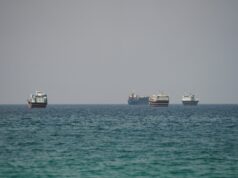
Shipping has also been disrupted through the Strait of Hormuz, where oil supply had been recovering to near pre-war levels.
FG flags off N1.45trn Lagos ports modernisation project, targets 20,000 jobs
The Fars news agency cited the Iranian Army as saying in a statement that an oil tanker hit a naval mine and caught fire in a “restricted zone” in the strait on Wednesday.
That report came after state media said two oil tankers struck mines and exploded in the strait on Wednesday.
“The broadening of the Middle East conflict threatens to halt the recovery in oil flows in recent weeks. Persian Gulf crude exports rose last week but remain on a declining trend,” ANZ analyst Daniel Hynes said.
OPEC+ ministers will hold meetings on November 29 to decide their 2027 output policy, Reuters reported.
They face the challenge of balancing output with the United Arab Emirates (UAE) no longer in the group, and with Iraq and Kazakhstan pressing OPEC+ to raise its estimate of their oil production capacity.

- Oil prices steady amid supply concerns - November 26, 2026
- Troops rescue 5 kidnapped victims, nab 2 suspects in Kaduna - November 26, 2026
- FG flags off N1.45trn Lagos ports modernisation project, targets 20,000 jobs - November 26, 2026