


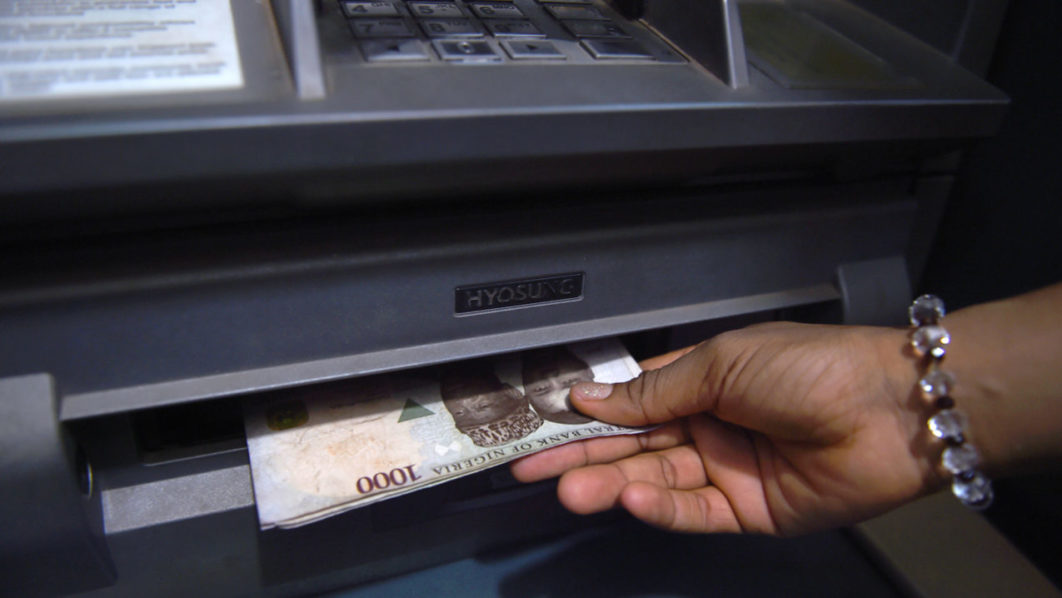

Automated Teller Machine (ATM) withdrawals in Nigeria surged to record levels in the first quarter of 2025, defying the Central Bank of Nigeria’s (CBN) newly introduced withdrawal fees.
According to data from the CBN’s Q1 2025 Statistical Bulletin, total ATM withdrawals stood at ₦15.97 trillion between January and March 2025 — a 192.7% increase compared to ₦5.46 trillion recorded during the same period in 2024.
ATM usage also rose sharply, with 411.42 million transactions processed in Q1 2025, up from 210.66 million in Q1 2024, representing a 95.3% increase in volume.
The report indicates that Nigerians are withdrawing larger sums per transaction.
In January 2025, ATMs dispensed ₦4.81 trillion from 147.24 million transactions.
In February, transaction volumes dropped to 134.59 million, but the total value rose to ₦5.40 trillion.
By March — the first full month under the new CBN fee regime — withdrawals hit a record ₦5.76 trillion, even as transaction counts declined further to 129.59 million.
This divergence, analysts note, shows that many customers adjusted to the higher fees by consolidating their withdrawals into fewer but larger transactions.
The average withdrawal size jumped from about ₦32,660 in January to more than ₦44,500 in March.
Compared to March 2024’s ₦23,500 average, this marks an 89% year-on-year increase.
The comparison with 2024 highlights the magnitude of growth.
January 2024 recorded ₦2.15 trillion in withdrawals from 69.62 million transactions.
By January 2025, the figures had more than doubled in both value and volume.
February 2024’s ₦1.72 trillion rose by 215% to ₦5.40 trillion in February 2025, while March 2025’s ₦5.76 trillion was more than three times the ₦1.60 trillion withdrawn in March 2024.
The surge followed the CBN’s revised ATM withdrawal fee policy, announced in February 2025 and implemented in March.
The new guidelines eliminated the previous allowance of three free “Not-On-Us” transactions — withdrawals from other banks’ ATMs — and introduced a new charge structure.
Withdrawals at another bank’s on-site ATM now attract ₦100 per ₦20,000 withdrawn, while off-site ATMs carry an additional surcharge of up to ₦500.
The policy was intended to help banks recover rising operational costs and promote more efficient ATM use.
However, the latest figures show that rather than discouraging usage, Nigerians continued to rely heavily on ATMs — withdrawing more cash despite the higher costs.
For banks, the surge means increased revenue from interbank withdrawal fees but also greater strain on ATM networks and cash logistics.
For consumers, inflationary pressures appear to be driving the trend, as households and businesses withdraw larger sums to cope with rising living and operating expenses.
Ultimately, the data suggest that despite new CBN charges, Nigerians are more dependent than ever on ATMs — withdrawing record amounts of cash in fewer but higher-value transactions.