The Bauchi State Government has announced that the Basic Education Certificate Examination (BECE) is now compulsory for all students completing basic education in both public and private schools across the state.
According to a statement from the State Ministry of Education, the policy aims to ensure that every student receives the certification necessary to pursue further academic opportunities.
The BECE is a key requirement for admission into senior secondary schools and other higher institutions of learning.
This initiative is part of a broader strategy under the leadership of Governor Bala Abdulkadir Mohammed to enhance educational standards and equip young people with the qualifications and skills needed for future academic and career success.
The Ministry urged parents, guardians, and school administrators to ensure that all eligible students are properly registered and take part in the examination.
The statement was issued by Jalaludeen Usman, the Ministry’s Information and Public Relations Officer.
5 arrested in Bauchi for producing fake fertilizer
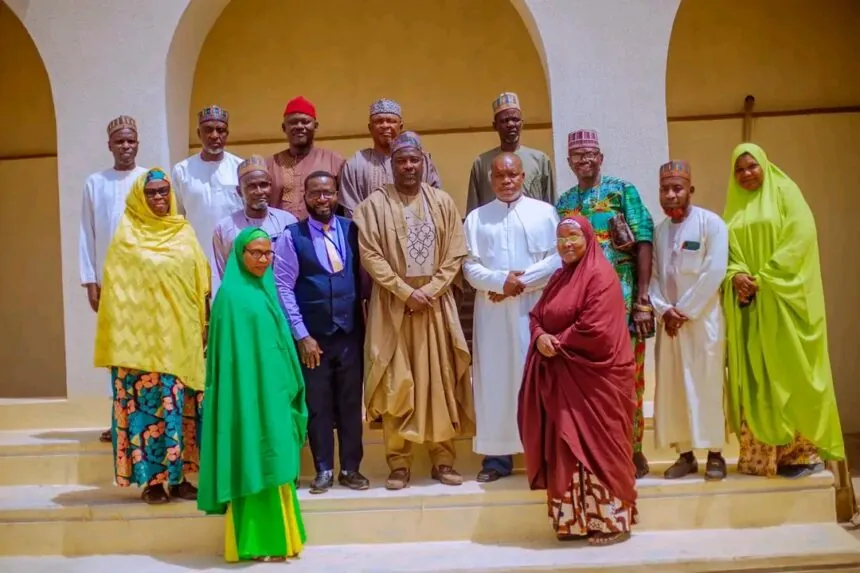
In a related development, the Catholic Diocese of Bauchi, led by Rev. Fr. Emmanuel Kafas, paid a courtesy visit to the Ministry of Education to discuss the academic calendar and the contributions of religious bodies to educational planning.
Rev. Fr. Kafas expressed appreciation for the warm welcome extended by the Ministry, describing it as a reflection of the government’s openness.
He commended the administration for recognizing the role of the Catholic Church in the state’s education sector and for granting approvals to all church-run institutions.
He reaffirmed the Church’s commitment to supporting education in the state through the implementation of quality and standardized curricula.
Receiving the delegation on behalf of the Commissioner for Education, Dr. Lawal Mohammed Rimin Zayam, the Ministry’s Permanent Secretary, Ali Babayo, emphasized the collaborative nature of academic calendar planning.
He stated that the Ministry involves all relevant stakeholders, including religious organizations, in the decision-making process.
“We don’t just sit in the Ministry and create the academic calendar. It’s a collective process that involves input from all stakeholders,” he said, adding that while the Christian Association of Nigeria (CAN) is already represented, the Catholic Diocese would also be invited to the next review meeting.
Babayo encouraged religious groups and other stakeholders to always communicate their concerns, reaffirming the government’s commitment to inclusiveness and mutual cooperation.
“We want inclusive education for everyone. No matter the issue, come to us, and let’s resolve it together,” he stated.
This development follows a recent misunderstanding between the Ministry and some faith-based schools concerning the closure of schools during the last Ramadan period.

- Senator Philip Aduda resigns from PDP - March 17, 2026
- Kaduna emerges model for land administration in Nigeria - March 17, 2026
- Nigeria, UAE seal $200m defence deal - March 17, 2026