The Nigerian Safety Investigation Bureau (NSIB) has identified poor infrastructure maintenance and operational lapses as the major causes of the Abuja-Kaduna train derailment of August 26, 2025.
In its preliminary report released on Wednesday, the bureau said 21 passengers were injured—contrary to the Nigeria Railway Corporation’s (NRC) earlier claim of 20—though no lives were lost.
The affected passengers were given first aid before being evacuated to hospitals.
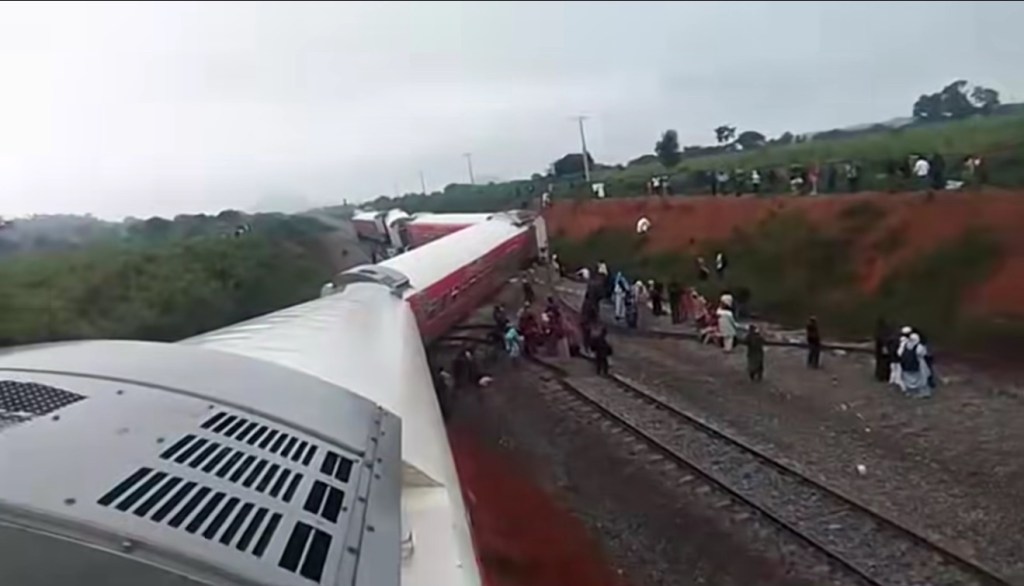
The accident involved NRC’s train AK1, powered by locomotive CDD5c2 2701, which derailed at about 11 a.m. near Asham Station.
Several carriages overturned, sparking panic among passengers, some of whom initially feared a terrorist attack.
While the NRC had blamed the incident on human error and misuse of the emergency brake, the NSIB’s report pointed instead to faulty infrastructure.
Investigators found that a broken point clip and a failed automatic switch mechanism at Asham forced railway staff to manually operate and lock the switch, creating unsafe conditions that led to the derailment.
The crash damaged over 300 sleepers, destroyed hundreds of track fasteners, and wrecked parts of the signalling system.
The bureau revealed that the same section had suffered a derailment 13 months earlier, after which only superficial repairs were carried out.
“Some sleepers damaged in the previous incident were only patched, rather than properly replaced,” the report stated.
The NSIB also cited systemic weaknesses in the NRC, including inadequate training, lack of refresher courses for staff, and unavailability of critical equipment such as OEM spare parts, CCTV cameras, clocks, and communication devices.
The bureau recommended urgent measures, including full replacement of damaged sleepers and point switches, restoration of signalling and monitoring equipment to OEM standards, refresher training for personnel, and clearance of all caution zones along the corridor.
Bimbo Oladeji, Director of Public Affairs and Family Assistance at the NSIB, said the preliminary findings were subject to further analysis, with a final report expected in the coming months.
“The final report will present detailed conclusions and additional recommendations to enhance rail safety in Nigeria,” he said.
The Abuja-Kaduna corridor, a strategic transport link used by thousands daily, has faced repeated setbacks from vandalism, terrorist attacks, and now safety lapses.
Analysts warn that without urgent reforms, public trust in the railway system will continue to erode.
Though no lives were lost in the August derailment, the NSIB stressed that the incident highlighted the high cost of neglect.
It urged systemic reforms to ensure rail travel in Nigeria meets international safety standards.

- FG targets $1trn economy through funding for women-led businesses - March 6, 2026
- Petrol hits N995 as Dangote adjusts prices - March 6, 2026
- EFCC returns N279m to Wole Soyinka Centre - March 6, 2026