

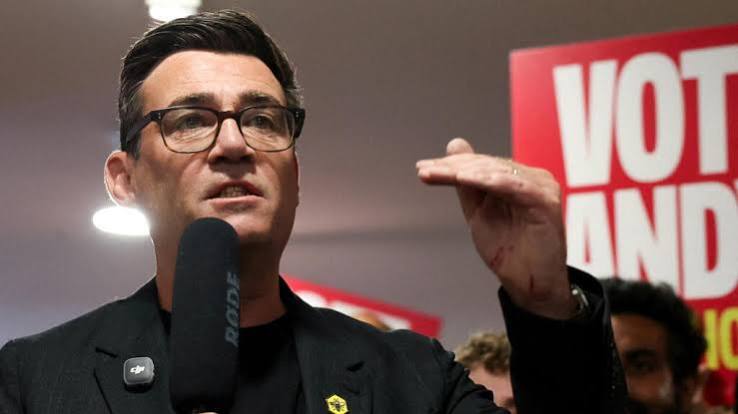
Andy Burnham will officially take office as Britain’s new prime minister on Monday, taking charge of a Labour government facing economic headwinds, declining public confidence and growing political pressure.
The former Greater Manchester mayor replaces Keir Starmer, whose resignation comes just two years after leading Labour to a decisive election victory that ended 14 years of Conservative rule.
Burnham, 56, is expected to be invited by King Charles III to form a new government before delivering his first speech outside 10 Downing Street, where he will outline his vision for the country and the priorities of his administration.
According to his team, the new prime minister will focus on rebuilding trust in government, tackling the cost-of-living crisis, stimulating economic growth and expanding devolution to local communities across the UK.
One of his first major decisions will be naming a new Cabinet, with particular attention on who will succeed Rachel Reeves as Chancellor.
Known as the “King of the North” for his tenure as Greater Manchester mayor, Burnham returned to Parliament only four weeks ago after Labour turned to him following Starmer’s resignation.
Senior party figures believe he is best placed to challenge the growing influence of Nigel Farage’s Reform UK ahead of the next general election.
Starmer stepped down in late June after months of political turbulence marked by scandals, policy reversals and declining support.
Burnham now assumes office at a difficult time, with Britain’s economy struggling to generate growth, public debt remaining high and strict fiscal rules limiting government spending.
16-year-old Nigerian dies after lake incident in UK
The transition will begin with Starmer formally tendering his resignation to King Charles III at Buckingham Palace before making a final statement outside Downing Street. Burnham will then meet the King, receive the mandate to form a government and return to No. 10 to address the nation.
A veteran Labour politician, Burnham served as an MP from 2001 to 2017 and held ministerial roles under former prime ministers Tony Blair and Gordon Brown before becoming mayor of Greater Manchester.
He has since cultivated an image as a champion of regional communities, combining a grassroots political style with a strong social media presence.
With a general election expected in 2029, Burnham has limited time to improve Labour’s fortunes and deliver on key campaign promises.
Recent opinion polls have suggested Reform UK could pose a serious electoral challenge if public dissatisfaction with Labour continues.
Speaking to supporters on Friday, Burnham described his return to national leadership as Labour’s “last chance” to regain the confidence of British voters.
Critics, meanwhile, argue that Starmer’s government struggled to adapt to office after its election victory in July 2024.

- Bayern Munich coach Kompany hospitalised after collapsing during training - October 23, 2026
- CBN grants JPMorgan approval to establish Merchant Bank in Nigeria - October 23, 2026
- Pope Leo cancels Italy trip after cancer surgery - October 23, 2026