


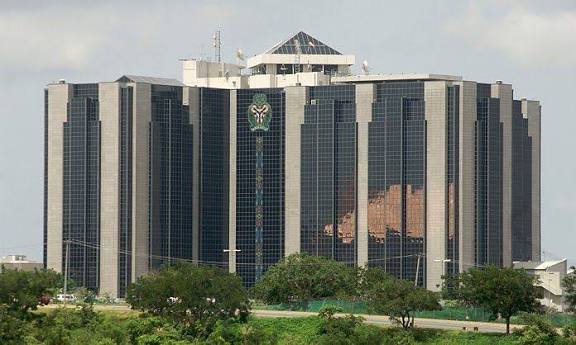
Business leaders and economists have projected that the Central Bank of Nigeria’s Monetary Policy Committee will likely retain the Monetary Policy Rate at 26.5 per cent when it begins its two-day meeting on Monday, citing global economic uncertainties and inflationary risks.
The stakeholders said although businesses would welcome a reduction in interest rates to lower borrowing costs and stimulate investment, prevailing geopolitical tensions, particularly the renewed conflict involving the United States and Iran, make further monetary easing unlikely at this time.
Their position comes despite the Central Bank’s latest Inflation Expectations Survey, which showed that 61.1 per cent of Nigerians favour a cut in interest rates ahead of the committee’s meeting.
The Chief Executive Officer of the Centre for the Promotion of Private Enterprise, Dr Muda Yusuf, said rising global crude oil prices triggered by the Middle East crisis could worsen inflation, making a rate cut difficult.
“I expect the MPC to hold the rate because it is too early to relax monetary policy. The current geopolitical tensions have implications for inflation, especially as energy prices continue to rise,” Yusuf said.
He added that while high interest rates remain a burden for businesses, the committee was also unlikely to raise rates further because inflation had shown only a slight moderation.
The President of the Lagos Chamber of Commerce and Industry, Leye Kupoluyi, said manufacturers and other businesses would benefit from lower borrowing costs, describing interest rates as a major factor driving the cost of doing business.
“Everyone wants lower interest rates because businesses depend on credit. Lower rates will encourage investment and reduce production costs, which will ultimately benefit consumers,” he said.
However, Kupoluyi urged caution, noting that the committee would have to balance inflation concerns with the need to support economic growth.
Professor of Economics and Public Policy at the University of Uyo, Akpan Ekpo, also predicted that the MPC would maintain the current rate, warning that the uncertainty surrounding the US-Iran conflict could heighten inflationary pressures.
“If I were a member of the MPC, I would leave the rate unchanged for now and assess developments before the next meeting,” he said, urging the government to focus more on supporting the manufacturing sector to boost job creation.
The Chief Executive Officer of Economic Associates, Dr Ayo Teriba, said while businesses and households desired lower interest rates, the MPC would rely on economic data not publicly available before making its decision.
“I would like to see both the MPR and the Cash Reserve Ratio reduced, but the committee has access to more information than the public, so I will wait to hear the rationale behind whatever decision it takes,” Teriba said.
Business groups have consistently argued that high borrowing costs continue to constrain investment, particularly in the manufacturing sector, where operators say access to affordable long-term financing is essential for expansion, increased production and job creation.

- Rainbow Coalition has reduced political hostility in FCT — Wike - October 23, 2026
- Nigerian Breweries unveils digital learning centre in Abuja school - October 23, 2026
- Unilever Nigeria’s nine-month profit rises 20% to N26.4bn - October 23, 2026