
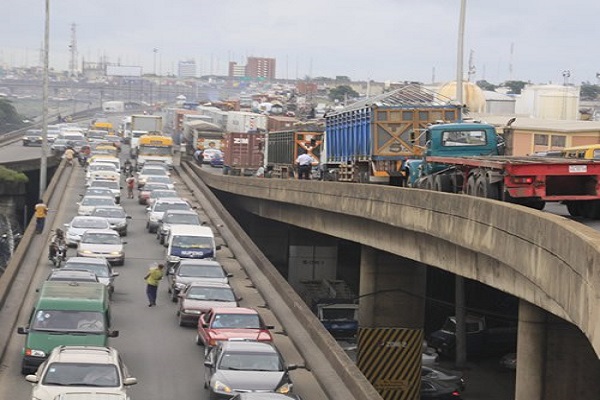

Growing worry is building over the worsening state of the Apapa Bridge and surrounding port access roads, just as 23 vessels loaded with fuel, food supplies, and industrial materials are expected to arrive at Lagos ports between December 29 and 31.
Data from the Nigerian Ports Authority (NPA) shows that both Apapa and Tin-Can Island ports are preparing for heavy year-end activity, even though road infrastructure around the port corridor remains under intense pressure.
According to the NPA’s latest Shipping Position report, the incoming ships are carrying containers, crude oil, fertiliser, buckwheat, diesel, aviation fuel, petrol, fuel oil, and bulk urea. Three of the vessels have already arrived and are waiting to berth.
The report also notes that about 20 vessels are currently at the ports, offloading cargo ranging from bulk sugar, fresh fish, and base oil to gas, soya beans, general goods, containers, aviation fuel, and petrol — a sign of steady cargo movement through Nigeria’s busiest ports.
However, the expected spike in truck movement has renewed concerns about the structural strength of the Apapa Bridge and nearby roads — the main routes used by tankers, container trucks, and other port vehicles.
Speaking with journalists, Adekoya Hassan, Senior Special Assistant on Transportation and Logistics to Governor Babajide Sanwo-Olu, described Apapa as vital to the nation’s economy.
He warned that rising truck traffic could endanger the bridge, saying any failure could halt port activities and hurt the economy.
He urged the Federal Ministry of Works to give urgent attention to the corridor, even while other national projects are ongoing.
Truck drivers are already feeling the impact. Chairman of Apapa Truck Cargoes, Saheed Mahmoud, said the bad road is damaging vehicles and increasing the risk of accidents, pleading for immediate repairs.
Stakeholders warn that with dozens of vessels offloading fuel and essential goods, delays in fixing the Apapa Bridge and access roads could worsen congestion, raise accident risks, and roll back improvements recently achieved in port operations.

- Ogun APC Caucus endorses Senator Adeola as consensus guber candidate - April 13, 2026
- EFCC warns banks against issuing loans without collateral - April 13, 2026
- After failed VP run, Okowa declares for Senate - April 13, 2026