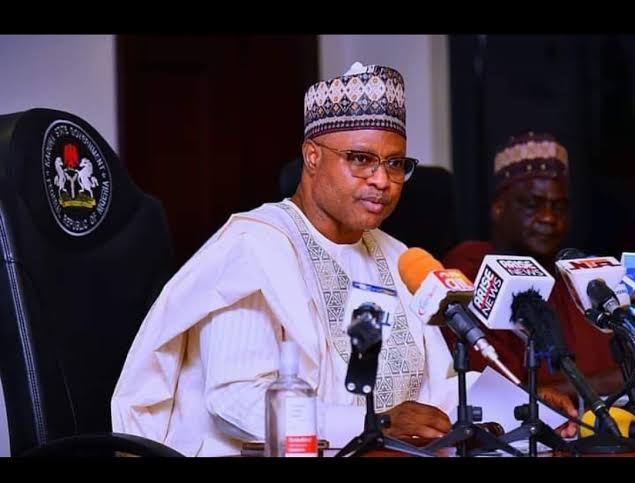
Governor Uba Sani of Kaduna State has reaffirmed his administration’s commitment to transforming the livestock industry, bridging infrastructure gaps, expanding market access, and attracting private investment into the agricultural sector.
Speaking through the Secretary to the State Government, Dr. AbdulKadir Muazu Meyere, at the Arla-Dano Open Day on Wednesday, the Governor revealed that Arla Farms has invested €10 million in establishing a state-of-the-art Damau Household Milk Farm in Kubau Local Government Area in 2023.
According to him, the farm, when operating at full capacity, targets an annual milk output of 4–5 million kilograms, contributing significantly to local milk production and creating both direct and indirect employment opportunities.
Governor Sani noted that his administration has put in place strong institutional frameworks to sustain and expand investment in agriculture.
“In the livestock subsector, Kaduna State has established the Kaduna State Livestock Regulatory Authority (KADLRA), the Kaduna State Livestock Transformation Company, and the Kaduna Ranch Development Company — all designed to work in synergy,” he stated.
The Governor expressed delight over the unveiling of key initiatives, including the Nigeria Dairy Center of Excellence, the Sedentarization and Climate Change Resilience in Nigeria (SCREEN) Project, and the commissioning of a new yoghurt factory.
He added that these projects will empower smallholder farmers through modern technologies to enhance milk yield and quality, support local sourcing, and improve incomes.
“These efforts translate to more income for farmers, more jobs for our youth, and more nutritious products for our people,” he said.
Governor Sani further expressed optimism that the multi-stakeholder collaboration that birthed the Damau Milk Farm Project will spur sustainable growth across Nigeria’s dairy value chain, positioning Kaduna as a leading hub.
Representing President Bola Tinubu, Minister of Livestock Development, Alhaji Idi Mukhtar Maiha, commended both the Federal and Kaduna State Governments, alongside Arla Foods, for their “win-win initiative.”
He explained that Arla’s investment aligns with the Federal Government’s policy on local content development and backward integration in the dairy sector.
However, the Minister lamented Nigeria’s low milk output, noting that the country produces only 0.7 million litres annually, far below its national demand.
“Our average per capita milk consumption is 8.7 litres per year — alarmingly lower than the WHO’s recommended 210 litres. While local cows yield between 0.5 and 1.5 litres daily, the global average is 6.6 litres. This productivity gap must be bridged,” he said.
Maiha added that Nigeria spends over $1.5 billion annually on milk imports, despite having millions of cattle and capable producers.
He said the creation of the Ministry of Livestock Development aims to unlock the country’s livestock potential, reduce import dependence, mitigate farmer-herder conflicts, and enhance nutrition and prosperity.
“That vision is taking shape through investments like Arla’s and ongoing reforms that are already yielding results,” he said.
The Minister described Damau as the emerging dairy hub of Nigeria, citing major projects such as Arla Farm, the Damau Household Milk Farm, and other dairy development initiatives.
He explained that the Damau Household Milk Farm — initiated by the Kaduna State Government and supported by investors and development partners — provides settlement for 1,000 households, with improved cows, pasture, veterinary services, and other basic amenities.
Arla, he noted, serves as the off-taker of milk from the farm, while the Danish Government is supporting two projects to enhance climate resilience and productivity — the Partnership for Green and Productive Dairy in Nigeria and the Sedentarization and Climate Change Resilience in Nigeria (SCREEN) initiative.
“These projects are building the capacity of local producers, improving livelihoods, and documenting valuable lessons from the Damau model,” the Minister added.

- Sokoto cleric defies Sultan, holds Eid prayers - March 19, 2026
- Chad shuts Sudan border, orders military on high alert after drone incident - March 19, 2026
- Army urges calm as shooting exercise begins in Kaduna - March 19, 2026